

US Dollar Index (DXY) Consolidates in Narrow Range Amid Soft US Data
Saturday, August 29, 2026
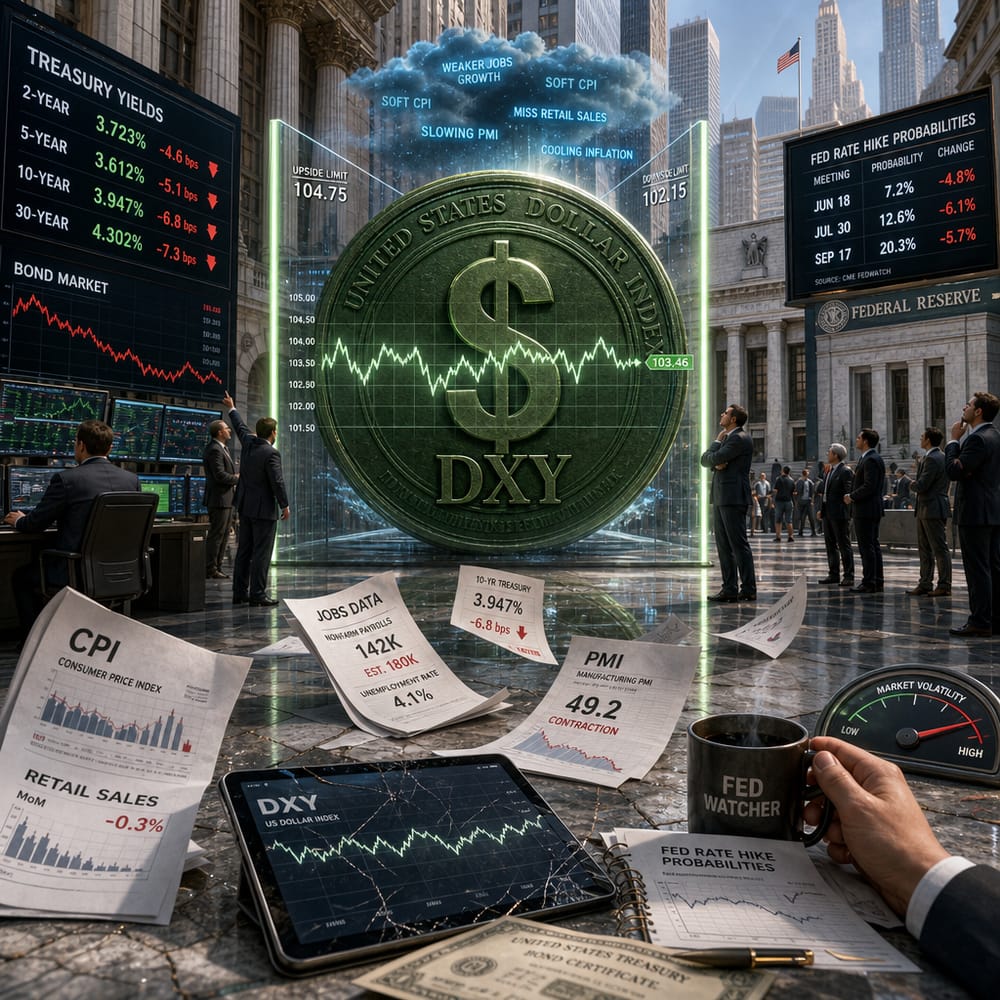
WHAT'S UP WITH THE DOLLAR? THE DXY IS STUCK IN NEUTRAL
Picture this: the US Dollar Index (DXY) is like your buddy's old clunker parked in the driveway. It has potential, but lately, it just won’t budge. That’s right—the mighty dollar is caught in a tight squeeze, stuck in a narrow range thanks to some seriously soft US economic data. It’s like watching paint dry, but stick with me because there's a lot to unpack here.
First, let's set the scene. The DXY measures the US dollar against a basket of other major currencies. When it moves, it's like a ripple effect across the financial world. But right now? It's like someone hit the pause button. Blame it on the latest round of US macroeconomic data that didn’t quite hit the mark. We’re talking lower-than-expected GDP growth, disappointing job numbers, and inflation that refuses to chill out. All these factors combined have put a damper on bond yields and dimmed hopes for any further action from the Federal Reserve on interest rates.
Now, why does this matter to you, the savvy retail investor scrolling through your phone, sipping your morning coffee? Understanding what’s keeping the DXY in place could help you spot potential breakout scenarios or even cook up some nifty range-trading strategies. Let’s dig into the nitty-gritty.
WHAT TO WATCH FOR
Think of the DXY as a boxer circling the ring, waiting for the right moment to strike. For those tracking the DXY, the key levels to keep an eye on are around 102 on the downside and 104 on the upside. A break in either direction could signal a whole new trend, triggering ripples—or in this case, waves—across global markets.
SOFT DATA & DOLLAR DYNAMICS
Now, how does the limp data impact the dollar’s muscle? Well, weak economic data tends to keep the Fed's hands tied when it comes to raising interest rates. Higher rates usually attract foreign investors looking for better returns, boosting demand for the dollar. But with the current data, any Fed rate hikes look as likely as snow in July. The result? A dollar that’s going nowhere fast.
IMPLICATIONS OF A RANGE-BOUND DXY
The DXY playing it safe in a narrow range might sound as exciting as watching a snail race, but it comes with its set of implications. For one, it means less volatility, which some might argue is a good thing—like a calm sea versus a stormy one. However, prolonged stagnation also means fewer trading opportunities. Traders thrive on movement, and without it, they’re left twiddling their thumbs.
CENTRAL BANK POLICY: A POTENTIAL GAME CHANGER
So, what could finally shake things up? Enter the central banks. A shift in monetary policy, whether from the Fed or other major players like the European Central Bank or the Bank of Japan, can jolt the DXY out of its torpor. The Fed has been tight-lipped lately, with Chairman Kevin Warsh calling inflation “concerning” but giving no hint on future rate changes. It's like being at a silent disco—lots of expectations, but not much noise. Keep your ears peeled, though, because any hawkish whispers could send the DXY on a wild ride.
RANGE-TRADING STRATEGIES
For those itching to make a move, range-trading could be your ticket. This involves buying near the low end of the range and selling near the high end, essentially playing the DXY like a pinball machine. But tread carefully; this strategy is like surfing—a thrill if you nail it, a wipeout if you don’t.
In conclusion, while the DXY is chilling in neutral, this lull presents an opportunity to strategize. Whether you’re eyeing a breakout, planning a range-trade, or just playing the waiting game, the DXY’s next move could offer significant insights or opportunities. Just remember, in the world of investing, things can change faster than you can say “currency pair.”
Keep your eyes peeled, your mind sharp, and your investment strategy even sharper. The DXY may be stuck in neutral for now, but as any savvy investor knows, the markets aren’t parked for long.
This article is for informational purposes only and is not investment advice. Always do your own research or consult a licensed financial professional before making investment decisions.
© Copyright 2024. All Rights Reserved.
© Copyright 2024. All Rights Reserved.