

US Dollar Bounces Amid Iran Sanctions and Treasury Bond Buybacks
Thursday, August 27, 2026
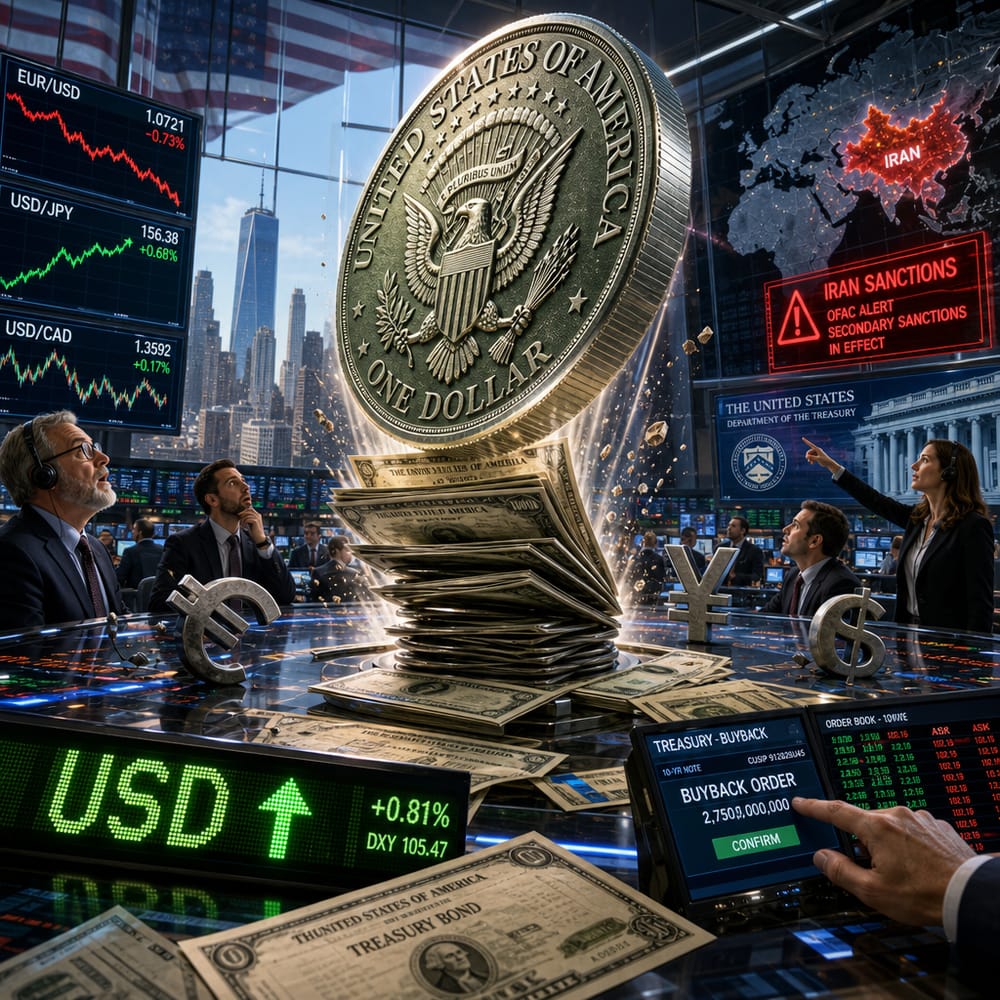
The US Dollar Bounces Amid Iran Sanctions and Treasury Bond Buybacks
If you've ever wondered how a geopolitical chess game can shake the almighty US dollar, look no further than this week’s market gymnastics. Amidst a backdrop of fresh US sanctions on Iran and whispers of Treasury bond buybacks, the greenback is flexing its muscles once again. Call it market drama with a side of economic intrigue.
Why should you care? Because understanding how these events impact currency markets is like having a crystal ball for short-term financial movements. So strap yourselves in, folks, as we dive into why the US dollar is strutting down currency street like it just won a pageant.
THE SANCTION SAGA: HOW POLITICS HITS YOUR WALLET
First, let's talk sanctions. The US recently slapped some new penalties on Iran, targeting its oil exports—the lifeblood of its economy. In the grand theater of geopolitics, this is equivalent to pulling the fire alarm during a performance. Everyone scrambles, uncertainty reigns, and markets react quicker than a caffeine-charged day trader.
So, how do these sanctions make the US dollar flex its muscles? Simply put, when there's geopolitical tension, investors often flock to what they perceive as ‘safe havens.’ And guess what’s at the top of that list? Yep, the US dollar. It’s a bit like how everyone heads to the campfire when the woods get too dark and spooky. More demand for the dollar means its value rises against other currencies such as the euro, yen, and Canadian dollar. In the world of currency trading, this is as spicy as it gets.
THE BOND BUYBACK BUZZ: CENTRAL BANK STYLE
Now, let’s sprinkle in some Treasury bond buyback talk. When the government whispers about buying back its own debt, it’s not just a bureaucratic snooze-fest. For currency traders, it’s like hearing the cool kids are throwing a party, and they want in.
Why the fuss over buybacks? When the US Treasury buys back bonds, it effectively reduces the supply of those bonds in the market. Less supply often means higher prices. Higher bond prices lead to lower yields (the income from the bond), making US debt less attractive to foreign investors. As investors sell their bonds, they typically convert their dollars back into their home currency, which could put downward pressure on the dollar. But hold that thought! In our current scenario, it seems the market believes that these buybacks are part of a broader strategy to stabilize or boost the economy, reinforcing confidence in the dollar.
THE CURRENCY PAIRS IN THE SPOTLIGHT
Let's follow the currency pair parade, shall we? The euro is stumbling against the dollar, and the EUR/USD pair has taken a dunk, showcasing that the eurozone's woes are magnified when the US dollar is playing Hercules. Meanwhile, the Japanese yen is doing its own version of a cha-cha with the dollar, as the USD/JPY pair dances upwards. Japan’s low-interest rates have made the yen a weaker contender in this heavyweight bout.
And then there’s the Canadian dollar, that friendly northerly cousin to the US dollar. The USD/CAD has also seen some action, with the greenback gaining ground. Oil prices—Canada’s economic darling—are jittery due to those Iran sanctions, adding another layer of complexity to the exchange rate dance.
WHY IT ALL MATTERS
You might be thinking, "So what? I don’t trade currencies!" But here’s the kicker: currency movements influence a lot more than just international tourists and currency traders. A strong dollar makes US exports more expensive and imports cheaper, impacting everything from big corporations to the price tags on your favorite imported goods. Plus, if you're dabbling in international investments, currency shifts can make your returns look like either a jackpot win or a bad joke.
In the cocktail of factors that determine currency values, geopolitical events like sanctions and financial maneuvers like Treasury buybacks are potent ingredients. The key takeaway for everyday investors? It pays to keep an eye on these stories because they ripple out to influence markets far and wide.
So, whether you’re an investment newbie or a seasoned pro, understanding how these events interconnect opens up a bigger picture. It’s not just about numbers on a screen—it’s about the global stories that influence those numbers. And if you want to be in the know, you’ve got to follow the stories, wherever in the world they may lead.
This article is for informational purposes only and is not investment advice. Always do your own research or consult a licensed financial professional before making investment decisions.
© Copyright 2024. All Rights Reserved.
© Copyright 2024. All Rights Reserved.