

US Commerce Department Tightens Advanced Semiconductor Controls
Sunday, November 22, 2026
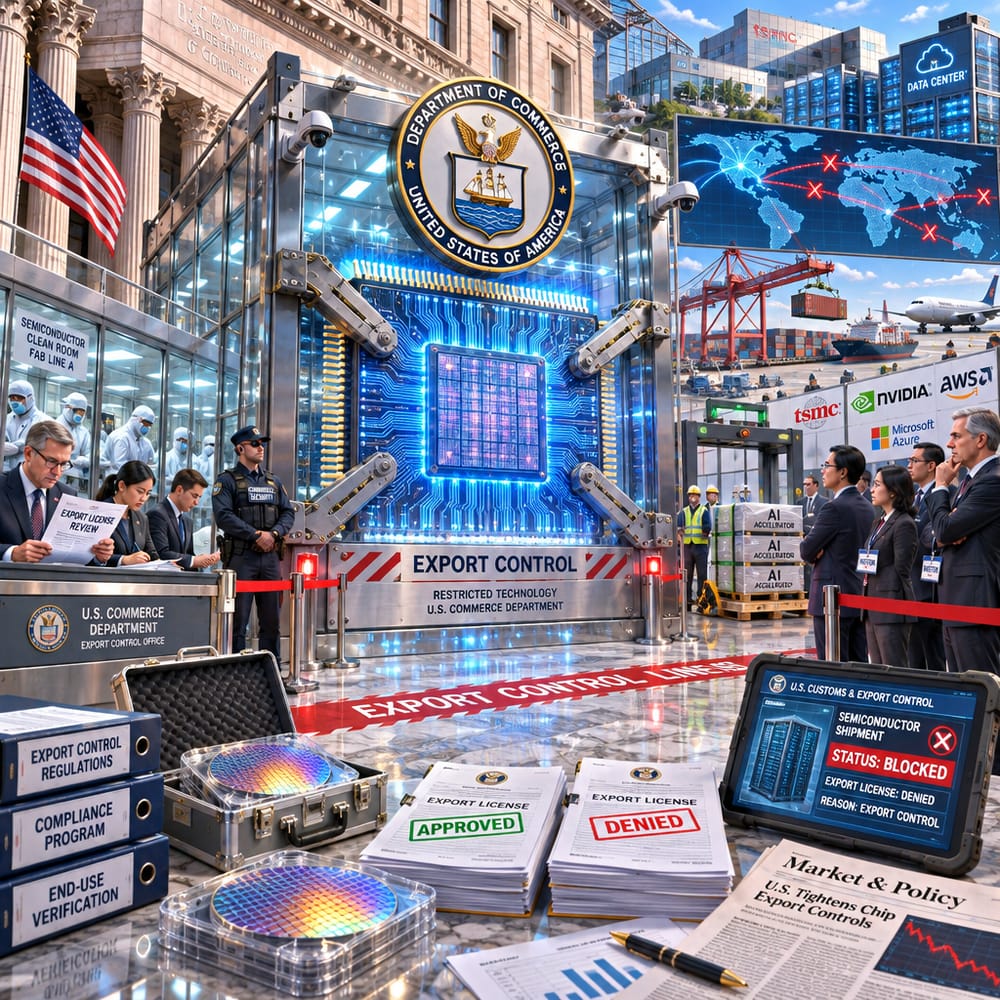
US COMMERCE DEPARTMENT TIGHTENS ADVANCED SEMICONDUCTOR CONTROLS
In the latest twist to the global tech drama, the U.S. Department of Commerce has slapped new restrictions on exporting advanced semiconductors to certain foreign players. Think of it as the governmental version of a parental lock — but for high-tech chips. These restrictions might not seem like earth-shattering news on the surface, but in the world of semiconductors, it's like dropping Mentos into a Coke bottle. Now, let's dive into why these tiny chips have gigantic implications.
If semiconductors were a movie character, they’d be the unsung hero who saves the day but never gets the girl. These minute yet mighty pieces of technology are the backbone of everything from your smartphone to the vast AI systems that seem to know more about you than your mom. However, the global supply chain of semiconductors is about as straightforward as a Hollywood love triangle, and tightening controls could lead to plot twists not even the best screenwriters could predict.
So, what's the game plan here? In a nutshell, the U.S. wants to curb foreign actors' access to its chip technology. And when we say "foreign actors," we mostly mean China, a key player in the global tech stage that the U.S. sees as a bit too eager to get its hands on these advanced chips. The primary goal is to stifle the pace at which foreign countries can develop AI technologies.
But wait, what does this mean for the likes of TSMC, the giant semiconductor titan from Taiwan? Well, let's just say it's a bit like telling a marathon runner they can't lace up their favorite trainers. TSMC might have to rethink how it navigates these new restrictions, considering its prominent role in the semiconductor supply chain. While they're not just conjuring chips out of thin air, TSMC does have a knack for innovation and adaptability. They’ve been down similar roads before and have the bruises to prove it.
For tech companies, these new regulations are kind of like a surprise pop quiz — it’s time to show off how well they've prepared. This will likely push them to explore alternative supply chains or innovate their production processes. However, the stakes are much higher here than getting a bad grade. We're talking potential disruptions to the global semiconductor supply chain that could send shockwaves through the tech world.
Now, let's talk about the long-term effects on AI development. These new restrictions could be akin to putting a speed limiter on a Ferrari. Companies might find themselves in a tech traffic jam, slowing down the rapid pace of AI advancements. The U.S. wants to remain the frontrunner in AI development, and these controls are a strategic move to try and preserve that lead. However, this could lead to a tech cold war scenario, where countries find themselves in a race to develop homegrown solutions to circumvent these controls.
In the world of AI cloud services, this shift could drive innovation as companies look to overcome these hurdles. We might see a boom in domestic tech development, as companies like TSMC and its U.S. counterparts strive to fill the gaps left by restricted access to certain technologies.
For investors, these new developments are a mixed bag. Stocks in U.S. semiconductor companies could experience volatility as companies assess the impact of these restrictions on their bottom lines. Meanwhile, tech giants heavily invested in AI might face bumpy rides as they navigate the changing landscape.
In conclusion, the U.S. Commerce Department’s decision to tighten semiconductor controls is far from a simple move. It’s a strategic maneuver in the complex chess game of global tech dominance. Whether it results in checkmate, a stalemate, or a whole new game, only time will tell. But one thing’s for sure — in this high-stakes world, semiconductor chips are more than just pieces of silicon. They're the key to the future of technology, and as such, they are watched with bated breath by governments, companies, and investors alike.
This article is for informational purposes only and is not investment advice. Always do your own research or consult a licensed financial professional before making investment decisions.
© Copyright 2024. All Rights Reserved.
© Copyright 2024. All Rights Reserved.