

Upgrades in Consumer and Health Sectors: Urban Outfitters & Quest Diagnostics
Thursday, August 20, 2026
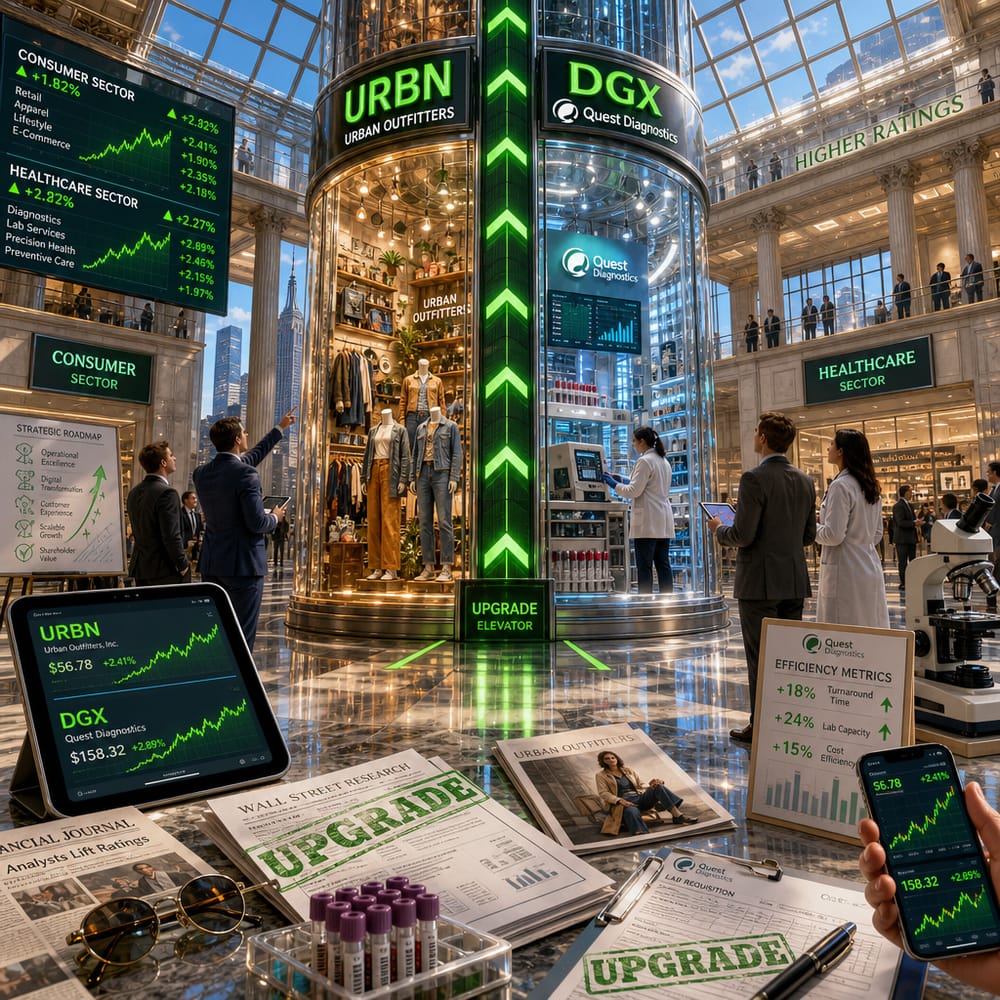
URBAN OUTFITTERS AND QUEST DIAGNOSTICS: WHY THESE UPGRADES MATTER
Here's something you don't hear every day: retail fashion and lab diagnostics are the belles of the ball on Wall Street. Urban Outfitters and Quest Diagnostics just got the financial equivalent of an Instagram blue check. Yes, upgrades. And here's why you should care.
Urban Outfitters, that quirky retailer where you can snag everything from crochet crop tops to vinyl records, has caught the eye of analysts due to its strategic transformation. If you thought Urban Outfitters was just a hangout for your niece who's too cool for school, think again. The company has been busy reinventing itself, and it's not just about upping their funky fashion game.
In the fast-paced world of retail, Urban has leaned heavily into a lifestyle approach. Think curated home collections and larger-than-life experiential stores that make shopping more like going to an amusement park. Who needs a couch when you’ve got a retail playground, right? The icing on the cake: a solid e-commerce strategy that seems to have hit a sweet spot with millennials and Gen Z alike. That's no small feat when people are buying everything from groceries to new hobbies online.
Meanwhile, Quest Diagnostics, the folks who make giving blood feel like a spa day, are getting their props for operational efficiency. Quest has been flexing its muscles in automation and digital health, and analysts like what they see. They're rolling out innovations faster than you can say "hemoglobin test," streamlining operations, and driving costs down like it’s Black Friday in July.
You might be thinking, "Okay, so what?" Well, here’s where it gets interesting. Both companies are outperforming their sector peers in ways that make investors perk up. Urban Outfitters is outshining traditional retailers who are still figuring out how to move beyond brick-and-mortar. They've managed to turn stores into destinations, not just places where you begrudgingly go to return that online impulse buy.
Quest, on the other hand, is setting the bar high for other healthcare providers grappling with labor shortages and rising costs. In a sector notorious for its complexity and regulation overload, Quest is showing that agility and innovation aren't just for tech companies.
So, what does this mean for you, the intrepid investor with one eye on your portfolio and the other on the latest Netflix series? These upgrades could signal a potential for growth in the consumer and health sectors that’s hard to ignore. The stocks might just be the underdogs ready to take a victory lap.
For Urban Outfitters, it’s about capturing the zeitgeist—a cultural exactness that speaks to younger generations. Unlike the proverbial retail dinosaurs, they’re not sticking their heads in the sand when it comes to consumer trends. They're embracing change, and it’s paying off.
For Quest Diagnostics, it's about leveraging technology to stay ahead. In a world where efficiency is king, they're proving that being tech-savvy isn't just a nice-to-have, it's essential. That's a narrative investors love to hear in a sector often bogged down by outdated processes.
But remember, nothing in investing is a sure bet. While Urban Outfitters and Quest Diagnostics are riding high on their upgrades, it’s always wise to do your homework and see how these moves align with your investment strategy. Are they the next big thing or just a flash in the proverbial pan? Only time will tell. But for now, these companies are the talk of the town—and they’re giving investors something to think about in sectors that might otherwise feel as exciting as watching paint dry.
So next time you’re scrolling through your investment app, you might want to give these up-and-comers a second glance. Their upgrades could be the spark that lights up your portfolio—or at the very least, give you something to talk about at your next virtual happy hour. Cheers to that.
This article is for informational purposes only and is not investment advice. Always do your own research or consult a licensed financial professional before making investment decisions.
© Copyright 2024. All Rights Reserved.
© Copyright 2024. All Rights Reserved.