

UnitedHealth Group (UNH): Q2 Earnings Beat and Guidance
Saturday, August 22, 2026
UNITEDHEALTH'S IMPRESSIVE Q2: WHAT'S DRIVING THE HEALTHCARE GIANT'S SUCCESS?
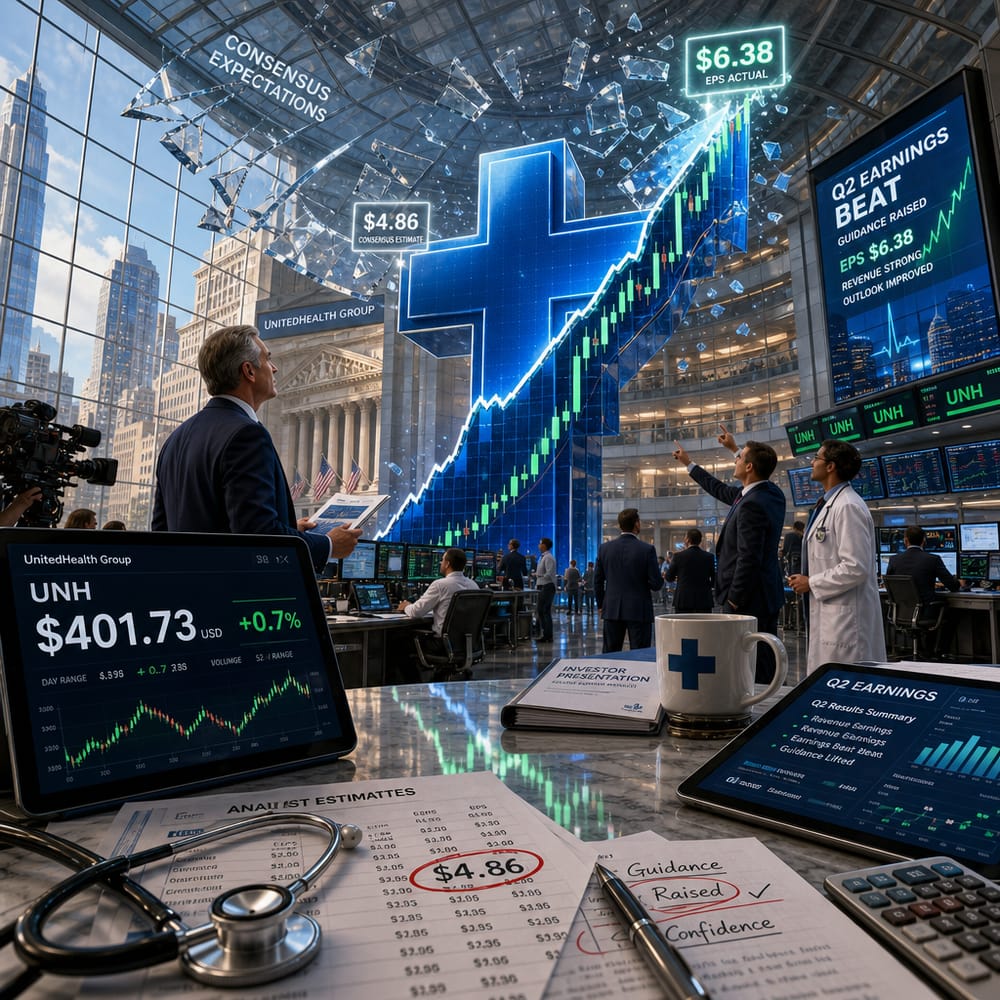
Take a moment to let that marinate: UnitedHealth Group just unleashed a colossal earnings surprise that left Wall Street doing a double take. Yeah, we're talking adjusted earnings per share of $6.38 when the experts were expecting just $4.86. That's like showing up to a hot dog eating contest and pulling a Kobayashi.
But wait, there's more. Even the stock managed to shimmy up by 0.7%, closing at a cool $401.73. So what's the secret sauce behind UnitedHealth's jaw-dropping performance, and what does it mean for the healthcare sector as a whole? Like, how did they pull this off?
WHAT FUELED THE EARNINGS BEAT?
Picture this: UnitedHealth is like the Swiss Army knife of the healthcare world. It's got managed care, healthcare services, and a sprinkle of Optum. What brought the cheddar in Q2 was their diversified revenue streams, with Optum playing the role of the valedictorian. Optum, by the way, is UnitedHealth's healthcare services arm, handling everything from data analytics to pharmacy care services. It's like the nerdy kid who wins all the awards at the science fair.
While the broader insurance market was dealing with higher claims costs, thanks to the ongoing health needs from the pandemic aftermath and an aging population, UnitedHealth managed to keep its balance sheet in check. How? By leveraging its massive data capabilities to better predict and manage costs. Think of it as having a crystal ball that doesn’t just look cool on the mantle—it's actually useful.
IMPACT ON THE HEALTHCARE SECTOR
Now, let's pan out to the bigger picture. UnitedHealth's Q2 performance isn't just a victory lap for the company. It's a nuanced sonnet to the healthcare sector’s resilience.
When a titan like UnitedHealth beats expectations, it injects optimism into the sector, drawing investor dollars like a magnet. In a world where the healthcare landscape is ever-evolving, thanks to regulatory shifts and technological advancements, UnitedHealth's performance is a testament to the importance of adaptability and innovation.
For other players in the sector, this could mean a fresh wave of investments, as investors look to ride the coattails of healthcare’s robust performance. The market sentiment is clear: health is wealth, especially when a company like UnitedHealth demonstrates how profitable that wealth can be.
IMPLICATIONS FOR INSURANCE VALUATION
Here's where things get spicy for the financial wizards out there. UnitedHealth's performance is bound to send ripples through insurance valuation multiples—basically, the price investors are willing to pay for a company relative to its earnings capability. With such a solid earnings report, UnitedHealth might just set a new benchmark.
Investors could start re-evaluating the valuation multiples of other insurance companies, leading to a potential re-rating of the sector. UnitedHealth's success story makes a strong case for revisiting how profitability and risk are assessed in the insurance realm. In simpler terms, expect some serious number crunching as analysts adjust their spreadsheets to reflect this new reality.
WRAPPING IT UP
UnitedHealth's Q2 achievement isn't just a story of numbers. It's a narrative of strategic prowess, sectoral impact, and potential market recalibration. As healthcare continues to be a focal point for investors, UnitedHealth's performance could serve as a harbinger for what's possible when innovation meets execution.
So, while everyone's keeping an eye on macroeconomic trends and the ever-looming mountain of national debt, UnitedHealth is quietly laying the groundwork for a new chapter in the healthcare saga. In an industry where the stakes are as high as a giraffe's neck, UnitedHealth is proving that with the right tools, vision, and execution, those stakes are worth the gamble.
This article is for informational purposes only and is not investment advice. Always do your own research or consult a licensed financial professional before making investment decisions.
© Copyright 2024. All Rights Reserved.
© Copyright 2024. All Rights Reserved.