

Unexpected July Payroll Loss Raises Doubts About Further Fed Tightening
Thursday, August 13, 2026
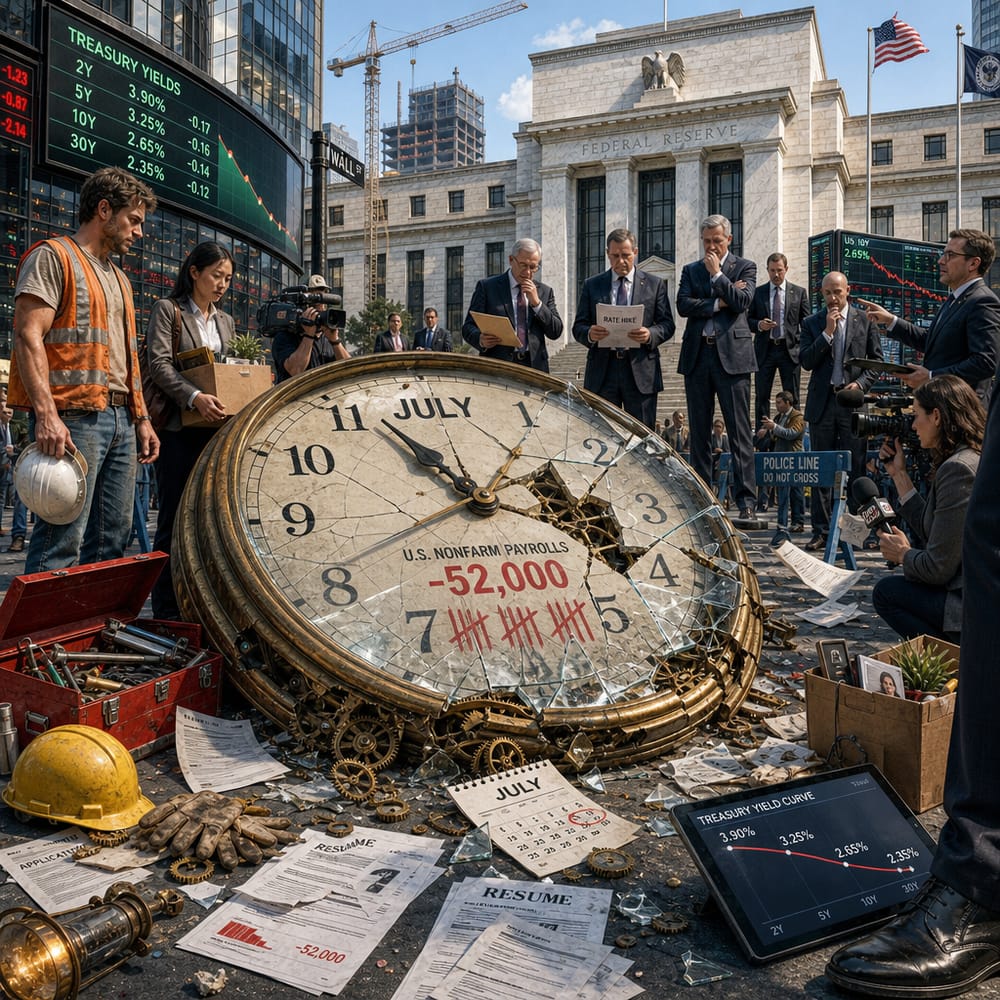
JOB MARKET JOLT: UNEXPECTED JULY PAYROLL LOSS PUTS FED IN A TIGHT SPOT
Picture this: the U.S. economy just stumbled and spilled its coffee all over its meticulously pressed suit. In July, the job market pulled a disappearing act, shedding 23,000 jobs when everyone was expecting to see numbers go up, not down. It’s the kind of twist that makes you wonder if you accidentally switched to a crime drama instead of an economic forecast.
But why should you care about some bureaucratic numbers taking a nosedive? Because this little blunder could be the plot twist that changes everything about how the Federal Reserve plays its game of rate hikes. If you think interest rates are just some far-off gibberish that bankers mumble about, think again. The ripple effect from this could splash right into your finances, impacting everything from your mortgage rates to your stock portfolio.
THE SURPRISING TURN IN THE JOB MARKET
First up, let’s tackle the elephant in the room: why on earth did the job market stumble like your uncle at a wedding after a few too many? Theories abound, but a common culprit seems to be a cooling economic climate. Sectors like construction and manufacturing have slowed, and businesses are becoming cautious, watching their cash registers with a hawk eye instead of hiring new hands.
Now, don't panic and start hoarding canned goods just yet. While a slight slip in jobs might sound ominous, it’s not a full-blown crisis. Yet. What it definitely is, though, is a reason for the Federal Reserve to maybe keep its finger off the rate-hiking trigger, at least for now.
FEDERAL RESERVE: PAUSE OR PLAY?
The Federal Reserve has been on a mission to wrangle inflation, hiking interest rates like they’re trying to climb Everest. But with July’s job loss surprise, it might be time for the Fed to take a breather and reassess its strategy. Traditionally, the Fed uses rate hikes to cool off an overheated economy. But with the job market showing signs of shivering, such a move might be like pouring ice water on an already chilly day.
A pause in rate hikes could mean easier borrowing conditions. Think lower interest rates on loans and credit cards. It’s a chance for businesses to borrow more cheaply, potentially leading to more investments and, fingers crossed, more jobs. However, it also means the Fed is threading the needle between preventing inflation and not stifling growth. A delicate operation, to say the least.
WHAT COULD THIS MEAN FOR YOUR INVESTMENTS?
Now, what’s the deal for retail investors like you? Well, if the Fed decides to hold off on rate increases, Treasury yields might stay lower for longer. That’s usually good news for stocks, as investors may ditch low-yielding bonds in favor of higher-risk, higher-return equities. Cue potential gains in stock markets, as investors pour back into equities looking for growth.
However, the landscape is anything but simple. If the economy’s truly slowing down, corporate earnings could take a hit, affecting stock valuations. It’s like a teeter-totter between economic growth prospects and the appeal of stocks over bonds. A cliffhanger that could keep investors on their toes, scanning news feeds like a Wall Street pro on a caffeine high.
THE LONG VIEW: MORE THAN JUST A BLIP?
While a singular month’s data, like July’s job report, isn’t the holy grail of economic forecasting, it does offer a peek into possible longer-term trends. If job losses persist, brace yourself for the dreaded “R” word: recession. But let’s not get ahead of ourselves—the current job slip could just be a bump, not a roadblock.
For the cautious investor, the current scene advises holding a diversified portfolio. Balance your exposure to both stocks and bonds, keep an eye on sectors that could benefit from lower interest rates—think tech or consumer goods—and, as always, hedge your bets without going all in on one rollercoaster ride.
So, as you mull over your next move, remember: the economic playbook is being rewritten in real-time. Whether the Fed decides to hit the snooze button on rate hikes or keeps its foot on the gas, one thing’s for sure—staying informed and adaptable is your best strategy in navigating these ever-evolving financial waters.
This article is for informational purposes only and is not investment advice. Always do your own research or consult a licensed financial professional before making investment decisions.
© Copyright 2024. All Rights Reserved.
© Copyright 2024. All Rights Reserved.