

Unexpected July Jobs Drop
Friday, August 07, 2026
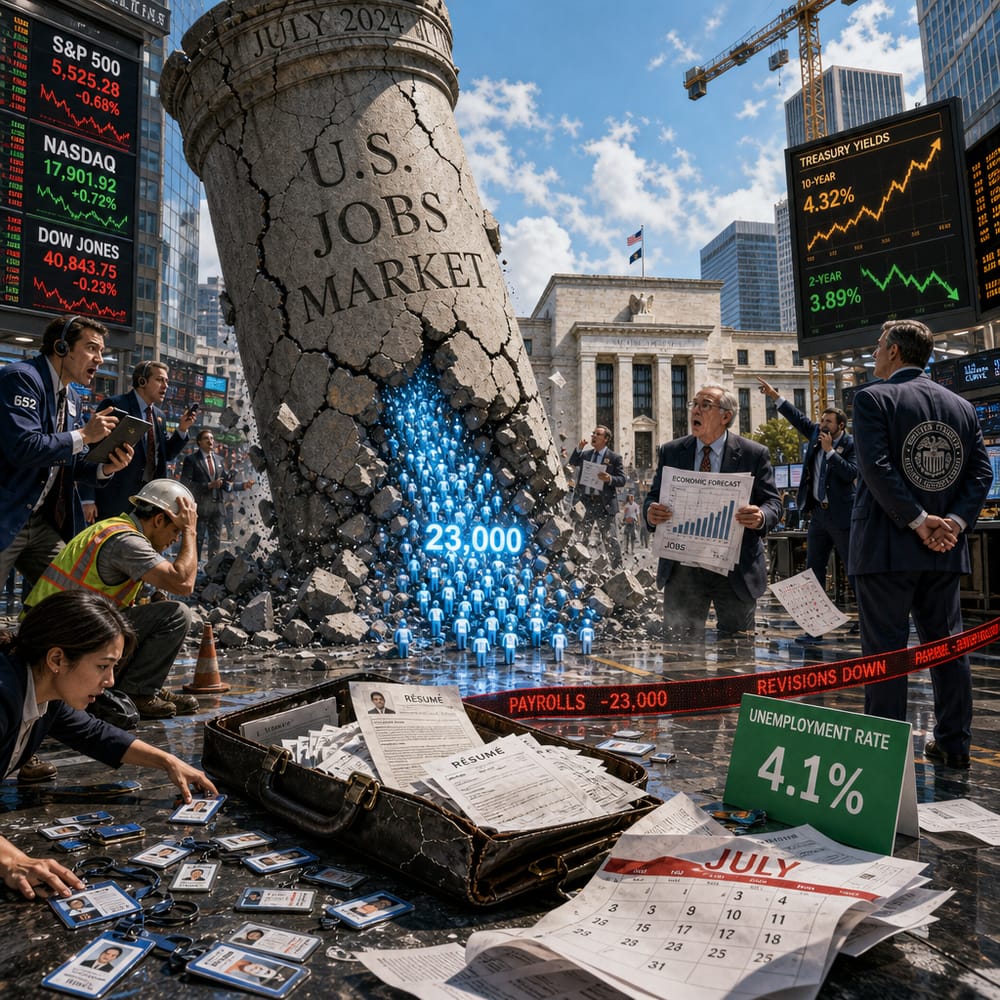
Why did Wall Street pop the champagne after a report showed the U.S. economy shedding jobs in July? Because in the topsy-turvy world of finance, less can mean more. On paper, losing 23,000 jobs when you were supposed to add 83,000 sounds as promising as a karaoke night gone bad. Yet, this surprise twist helped the S&P 500 and Nasdaq dance to record highs, while the Dow tiptoed upward too. It all comes down to interest rates, and for now, this jobs hiccup means the Federal Reserve might keep their fingers off the rate hike button.
It seems like Wall Street is thrilled by the idea that the Fed might just chill. The unemployment rate dipped to 4.1%, and that’s a positive spin nobody expected. Because when jobs disappear but unemployment rates drop, it suggests that fewer folks are actively looking for work. It’s a mixed bag, but at least one for now that suggests the Fed might take a breather on raising rates.
So why would fewer jobs and lower unemployment make investors so happy? It’s all about the Federal Reserve and those ever-crucial interest rates. Lower rates mean cheaper borrowing costs, which tends to send the stock market into a tizzy like a Black Friday sale. The immediate fallout? Treasury yields dropped like a mic, with the 10-year note dipping more than 3 basis points, and the shorter-term 2-year note slipped over 5 basis points. That's a flashing signal to investors that rate hikes are likely on pause.
But hold on, this story has more layers than a mille-feuille. If you peek under the hood of these job figures, you'll find some interesting tidbits. The manufacturing sector, for instance, remained a rare bright spot, bucking the trend. Meanwhile, the tech sector has been a bit of a drama queen, with software companies swinging wildly due to concerns about AI’s impact and some rather high-priced acquisitions. The likes of Twilio and Atlassian, though, still managed to give investors something to cheer about with strong quarterly results.
Now, all eyes are on the next big test: inflation data due next week. This will either confirm or refute the dovish whispers currently swaying the markets. Consumer Price Index (CPI) and Personal Consumption Expenditures (PCE) figures will be watched as closely as the final season of your favorite binge-worthy series. These numbers will indicate if the Fed's pause button should stay pressed or if there's a plot twist ahead.
There’s also a subplot playing out in consumer behavior. The dip in labor force participation suggests that fewer people are in the job hunt. This might hint at some fragility in consumer spending strength, which is a worry for corporate earnings. Companies are wary of tightening consumer wallets, even as some sectors, like those in baby and kids’ food, are seeing growth. Credit card balances are keeping pace with inflation, indicating that Americans are leaning on plastic a bit more to keep up with rising costs.
What does all this mean for the regular Joe or Jane investor? For starters, it’s a good reminder to keep a keen eye on the economic data and Fed meetings. Stocks are having a moment, and while it's tempting to ride that wave, always remember the market's mood can shift faster than the latest TikTok trends. Stay diversified, keep an eye on those bonds with attractive tax-free yields, and perhaps think twice before staking it all on the software sector which seems to be the market's current drama king.
In this convoluted carnival of finance, where bad news is sometimes good news, and jobs are lost but unemployment drops, the only certainty is uncertainty. Yet, as the markets rally, remember there’s always another report, another shift, and another opportunity just around the corner. So, stay sharp, stay invested, and enjoy the ride, because it’s likely to be as unpredictable as a summer blockbuster with a surprise twist ending.
This article is for informational purposes only and is not investment advice. Always do your own research or consult a licensed financial professional before making investment decisions.
© Copyright 2024. All Rights Reserved.
© Copyright 2024. All Rights Reserved.