

Unexpected July Job Losses — First Net Drop Since February
Tuesday, August 11, 2026
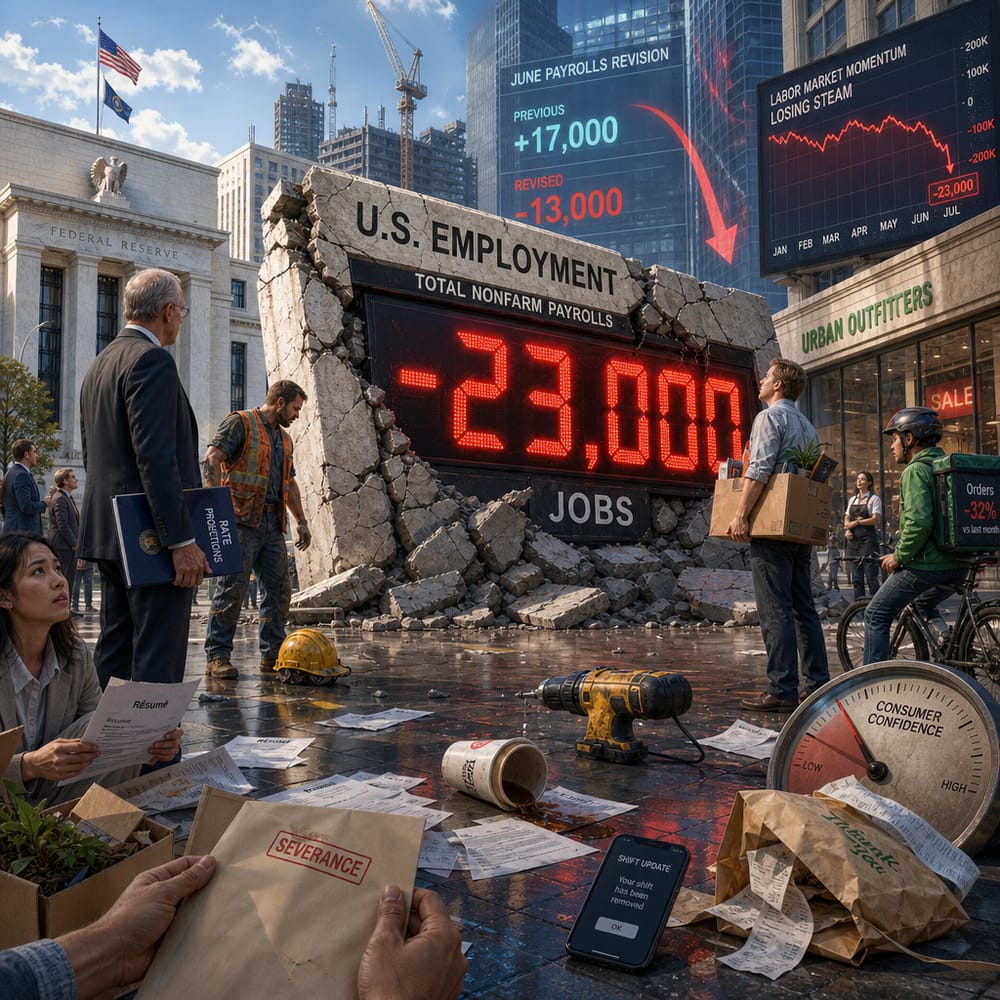
UNEXPECTED JULY JOB LOSSES: THE ECONOMY'S PLOT TWIST
Brace yourself, folks: the U.S. economy just delivered an unexpected plot twist worthy of a summer blockbuster. Employers cut 23,000 jobs in July, marking our first net job loss since February. It's like the labor market decided to take a surprise vacation without telling anyone. But don't start panicking just yet—this twist might have some interesting consequences.
That job loss headline might have you thinking our economy is unraveling faster than a cheap sweater, but let's dive a bit deeper. These figures reveal a labor market softer than we’ve seen in a while, with previous June numbers getting a downward revision. Translation? Our labor market isn’t the invincible powerhouse we thought it was.
IMPLICATIONS OF DECLINING LABOR FORCE PARTICIPATION
Now, the numbers are just one side of the story. The participation rate is the real party guest who's gone missing. It’s shrinking, and that’s making everyone a tad uneasy. Why? Well, it could mean folks are discouraged and just sitting this one out. Think of it as the economic equivalent of ghosting a party because the vibe just isn’t right.
If people are leaving the workforce, that spells trouble for long-term economic health. Fewer workers mean less productivity, less innovation, and a shakier foundation for growth. Plus, it could put a damper on consumer spending, which is like the lifeblood of our economy. When people aren’t working, they’re not spending—simple as that.
FEDERAL RESERVE'S RATE DECISION DILEMMA
The Federal Reserve is probably feeling like it's stuck between a rock and a hard place. The cooler job market and mellow wage growth might relieve some pressure on them to hike interest rates. Rate hikes, after all, are their go-to weapon against inflation, but they’re not exactly popular at parties because they can slow down economic growth.
However, this scenario is like the Fed getting handed a box of chocolates, only to find they’re all filled with Brussels sprouts. Less need for rate hikes sounds sweet, but a shrinking labor force participation rate hints at a deeper malaise in the economy. It’s a dilemma where they might have to choose between bad and worse.
SECTORS FEELING THE PINCH
Certain sectors are feeling the pinch of job losses more acutely. Traditional manufacturing and retail, already beleaguered by changing consumer habits and technological advancements, are likely bearing the brunt. While tech giants like Nvidia are off dreaming up new ways to finance AI chips as essential assets, sectors like retail are stuck figuring out how to keep customers coming back.
This labor market twist also trickles down to consumer spending. If fewer people are earning paychecks, that’s fewer dollars circulating in the economy. Less spending could put a damper on businesses that rely heavily on consumer purchases—think retail, travel, and leisure.
BIG PICTURE: A CAUTIONARY TALE
In the grand economic narrative, this jobs report is a chapter that warrants a little caution. It’s a reminder that while the economy has its bright spots, like Nvidia’s ambitious plans or the ongoing AI boom, there are also vulnerabilities that shouldn’t be ignored.
For the average retail investor, this isn’t the time to jump ship but to stay informed and maybe recalibrate expectations. This isn’t the end of the world, but a reminder that the steady climb we hoped for might be more of a rollercoaster.
Keep your eyes open and your seatbelts fastened. The economy might be sending mixed signals, but understanding these shifts is key to navigating the twists and turns ahead. Remember, every plot twist in the economic storyline presents not just challenges but also opportunities for those who are ready to seize them.
This article is for informational purposes only and is not investment advice. Always do your own research or consult a licensed financial professional before making investment decisions.
© Copyright 2024. All Rights Reserved.
© Copyright 2024. All Rights Reserved.