

Unemployment Rate Falls, But Labor Force Shrinks: Discouraged Workers Signal Weakness
Monday, August 10, 2026
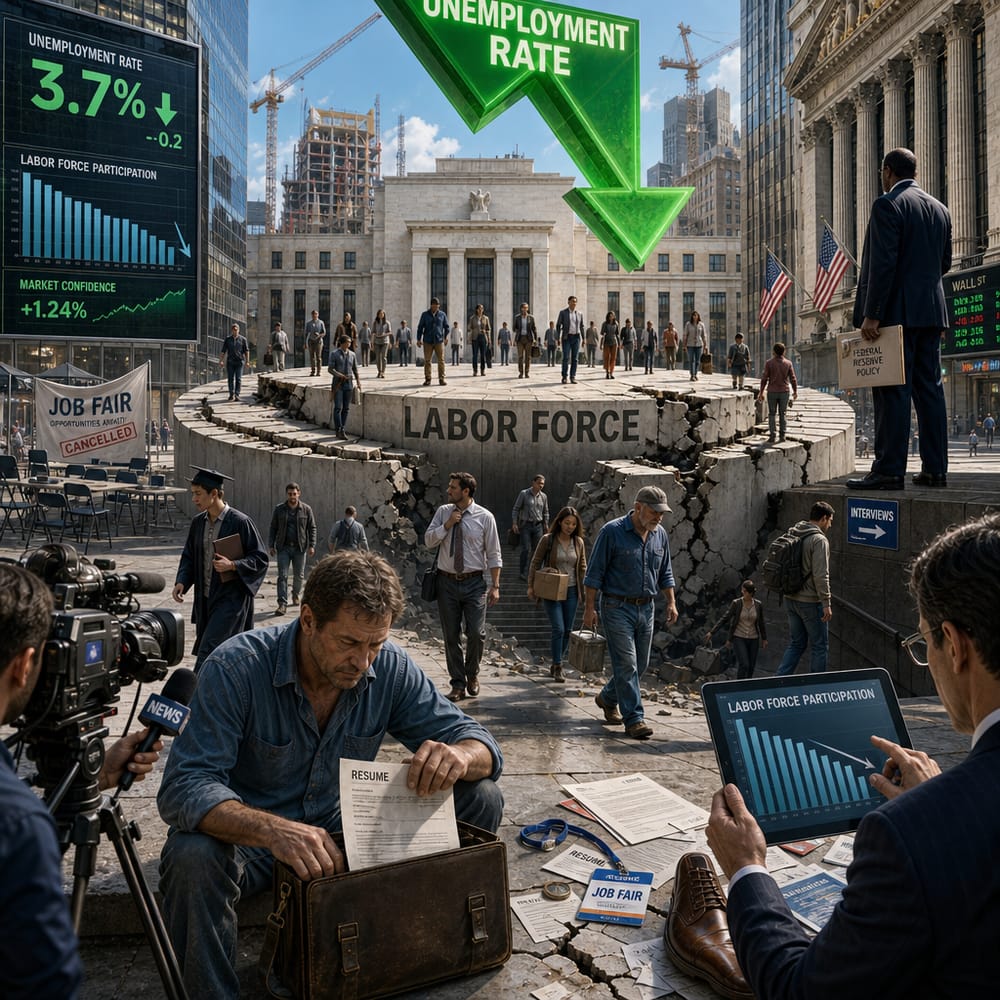
DISCOURAGED WORKERS AND THE SHRINKING LABOR FORCE: A NOT-SO-ROSY JOB MARKET
Picture this: a job market looking sprightly on paper, but beneath the surface, troubling signs are lurking like sharks in a swimming pool. July's unemployment rate dipped down a notch, and you might be popping the champagne, thinking it's party time. But hold your horses, because this isn't the hiring extravaganza we'd expect. Instead, it's a tale of discouraged workers throwing in the towel and exiting the labor force — a dynamic that spells trouble for the economy and the Federal Reserve's future moves.
Now, let's pull back the curtain on why workers are making like Houdini and vanishing from the labor market. A medley of factors is playing conductor here. First up is the lingering specter of economic uncertainty. With global tensions like the U.S.-Iran conflict casting a cloud over markets, confidence isn't exactly brimming. People are hesitating to jump ship into new jobs or even hang around the workforce if they suspect the economic seas are about to get choppy.
Then, there's the shifting work landscape. Remote work became the belle of the ball during the pandemic, but now some companies are playing hardball, pushing for a return to the office. Not everyone's thrilled about donning business casual again, and some are opting for the nearest exit instead.
Moreover, while higher wages have been dangled like carrots in front of potential workers, inflation has been chomping away at those gains. The promise of a fat paycheck isn't quite as alluring when you see your grocery bills ballooning like a hot air balloon.
So, why does this swirling maelstrom of a shrinking workforce matter to you? Well, it directly influences what the Federal Reserve might do next. The Fed has a delicate balancing act — promoting employment while keeping inflation in check. If they see more people leaving the labor force, they might hit pause on any plans to hike interest rates. But if inflation keeps strutting its stuff, they'll have to weigh their options with extra caution.
The Fed looks at the labor market like a hawk. They want to see a buoyant job market as a sign of a healthy economy. But when folks stop looking for jobs, it muddies the waters. It might make unemployment look prettier than it truly is. If fewer people are on the hunt, it skews the numbers, giving an illusion of improvement.
This trend isn't just a page-turner for economists and policy wonks. It has real-world consequences. A smaller labor force can lead to slower economic growth. Less spending, less production, and a narrowing tax base mean an economy running with one leg tied. It's like trying to win a race hopping on one foot — tricky at best, disastrous at worst.
So, what's the takeaway from this labor force exodus? For investors, it means watching the Fed's next moves with eagle eyes. The central bank's decisions on interest rates are like casting ripples in a pond, affecting everything from your mortgage rate to the performance of stocks.
As you scroll through the sea of financial updates, remember this: beneath the headlines of unemployment rates dipping, a deeper story is unfolding. It's about the people who haven't just lost jobs, but hope. And while the Fed might have its hands full trying to tame inflation, this underlying issue of discouraged workers can't be swept under the rug.
Whether the Fed decides to hit pause or proceed with caution on rate hikes, one thing is clear: the labor market is sending mixed signals. And for investors, understanding these undercurrents is crucial to navigating the tides of financial markets and economic recovery.
So, next time the unemployment rate makes headlines, take a deeper dive into the numbers. Because, as we've learned, not all that glitters is gold. And in the world of economic indicators, the truth often lies in the details — waiting for those willing to look beyond the surface.
This article is for informational purposes only and is not investment advice. Always do your own research or consult a licensed financial professional before making investment decisions.
© Copyright 2024. All Rights Reserved.
© Copyright 2024. All Rights Reserved.