

Unemployment Rate Drops Amid Labor Force Exit
Thursday, July 30, 2026
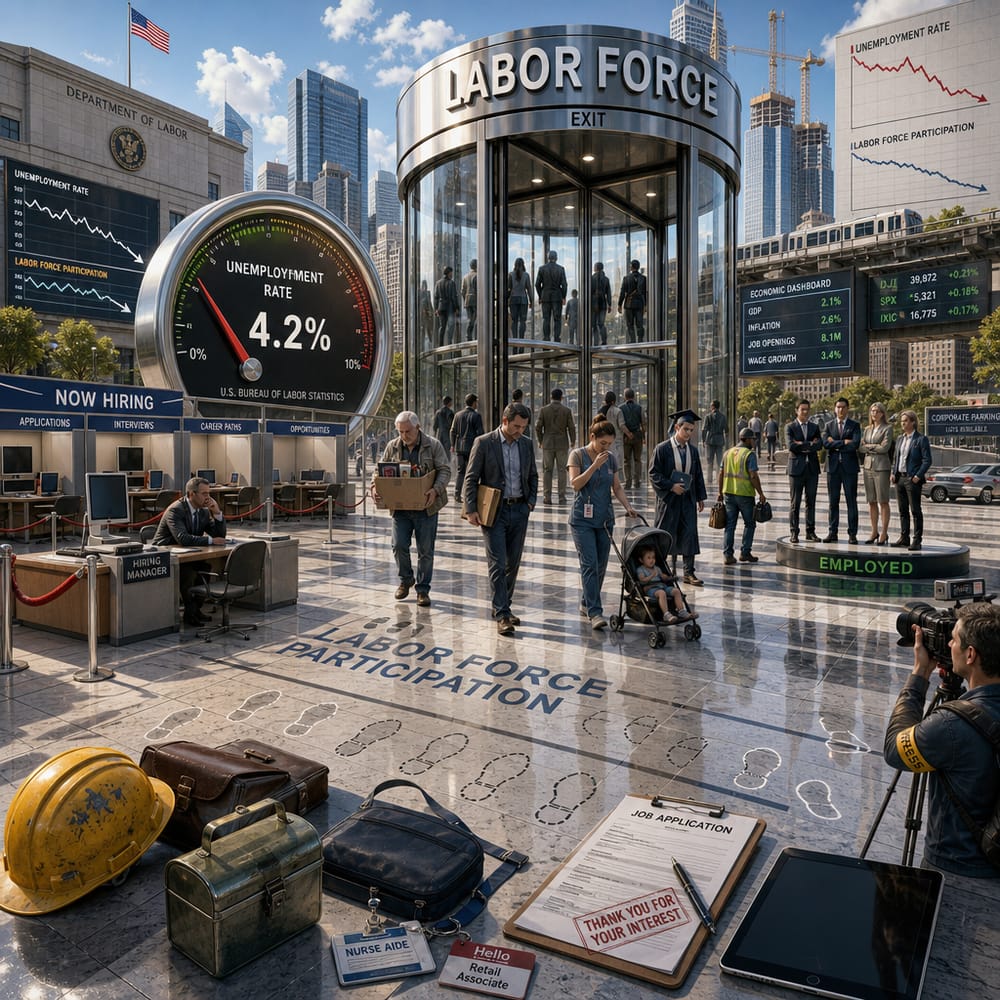
THE VANISHING ACT: WHY A FALLING UNEMPLOYMENT RATE MAY STILL SPELL TROUBLE
Ladies and gents, gather 'round for the latest economic magic trick: the unemployment rate just took a bow at 4.2% in June. But before we pop the champagne and toast to a thriving job market, let's peek behind the curtain. This drop wasn’t conjured by employers handing out job offers like candy on Halloween — alas, no. Instead, it seems like a segment of our workforce has ghosted the economy, slipping out of the labor market altogether. So, what's going on?
There’s an old saying: statistics are like bikinis; what they reveal is tantalizing, but what they conceal is crucial. Our job market's latest bikini is certainly drawing attention, but the real intrigue is in what's hidden beneath — a declining labor force participation rate. This key metric doesn't get the same spotlight as unemployment, but it's the unsung hero (or villain) of economic reports.
WHY ARE PEOPLE EXITING FROM THE WORKFORCE?
Before you panic, think of the labor force participation rate as a backstage pass to understanding why unemployment might be dropping. Imagine a workplace with ten people: if two leave the workforce, the unemployment rate looks better even if those two aren’t working. Voilà — statistical sleight of hand.
Now for the gritty details: the reasons behind folks exiting the workforce are as varied as a Netflix genre library. First off, demographics. An aging population isn't just a topic for a National Geographic documentary; it’s a real player here. Baby boomers are retiring in droves, but instead of relaxing on a beach, they’re causing ripples in our economic data.
Then there's the lingering specter of the pandemic. Many people, reassessing life priorities, decided they preferred personal time or early retirement over the daily grind. Remote work was a game-changer, but not everyone returned to the office. Childcare issues, health concerns, or the pursuit of that passion project they always dreamed of—these reasons are nudging people out of the workforce.
IMPACT ON ECONOMIC GROWTH AND POLICY
With a shrinking workforce, there’s less fuel for the economy's engine. Fewer workers mean less productivity, which can throttle economic growth and put a damper on GDP numbers. For businesses, this translates to a smaller talent pool, potentially driving up wages — good for workers, but potentially inflationary for the economy.
Enter the Federal Reserve, the economic puppeteer. With fewer people working, the Fed might misread signals and make decisions based on incomplete data, like a chef who’s only tasted the sauce, not the soup. Inflation concerns still loom large, and if people are spending less due to decreased income, it could stabilize prices. But balancing inflation with growth becomes a complex dance.
SO, WHAT’S NEXT?
The shrinking labor force is a puzzle that demands creative solutions. One option is encouraging immigration to fill workforce gaps, though that’s a political hot potato. Another is investing in automation and technology, but that brings its own challenges and opportunities.
Education and training can also be key. Upskilling workers so they can transition to new roles or industries is vital. Think of it as a career makeover, where your plumber neighbor might become a coder or a data analyst. It’s about reshuffling the deck to ensure we have the right skills for tomorrow’s jobs.
In short, what looks like a drop in unemployment might be more of a red flag than a gold star. Retail investors, take note: beneath these headlines lie the real stories shaping our financial future. So, while it's tempting to cheer for a falling unemployment rate, remember to check for the hidden strings and the invisible hands guiding the market's dance.
Stay sharp and keep questioning. After all, in the world of economics, things are rarely as simple as they appear.
This article is for informational purposes only and is not investment advice. Always do your own research or consult a licensed financial professional before making investment decisions.
© Copyright 2024. All Rights Reserved.
© Copyright 2024. All Rights Reserved.