

Unemployment Claims Fall Again: Tight Labor Market Persists
Friday, August 28, 2026
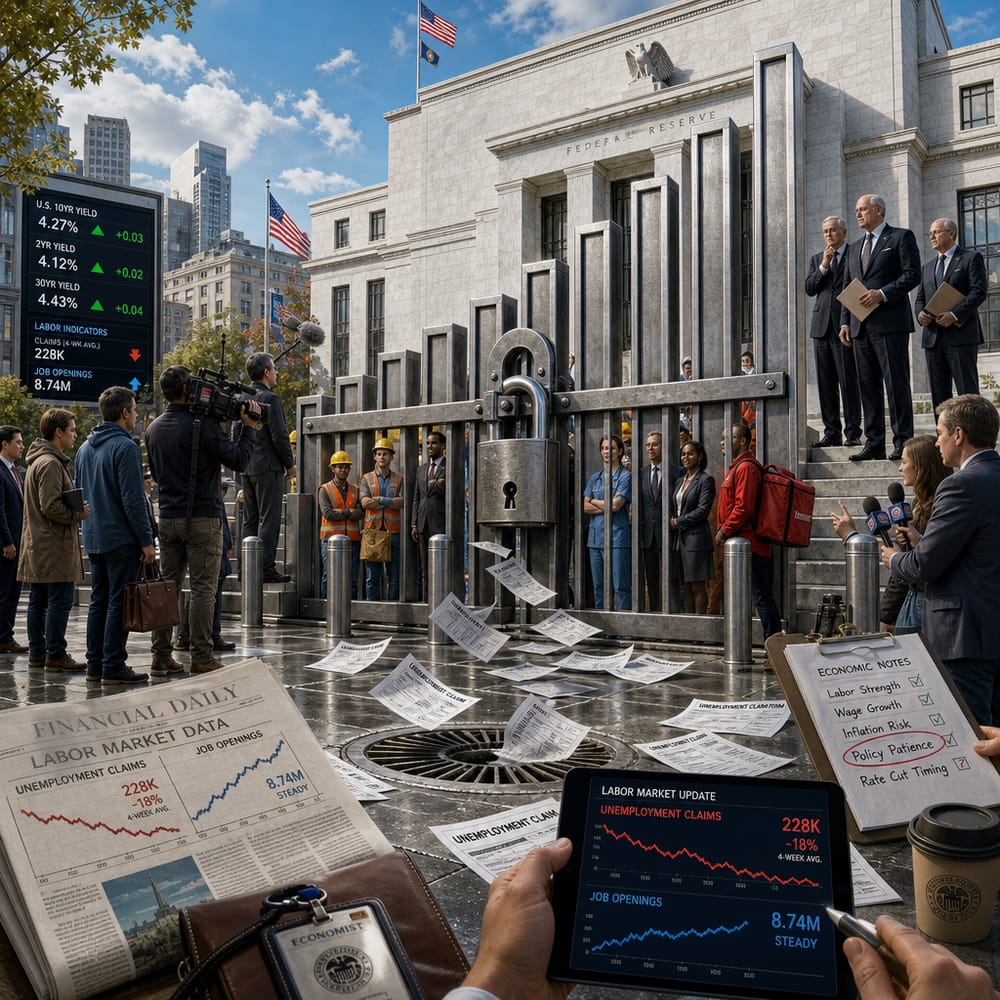
UNEMPLOYMENT CLAIMS FALL AGAIN: TIGHT LABOR MARKET PERSISTS
Hold onto your hats, folks, because the job market is hotter than a jalapeño on a sunny day. In the latest twist of economic fate, U.S. initial unemployment claims have taken another tumble. This is like watching a game of economic musical chairs where everyone keeps their seat. But what does this mean for the economy, your wallet, and those mysterious folks at the Federal Reserve who make decisions that sound like spells from a Harry Potter book? Let's break it down.
First things first, the decline in unemployment claims isn't just a quirky stat for economists to geek out over. It’s a flashing neon sign that the labor market is tighter than your favorite pair of skinny jeans after Thanksgiving. Fewer unemployment claims mean fewer people are losing their jobs, implying companies are hanging onto their workers with a grip like a toddler on a teddy bear. In plain speak, the job market's looking pretty resilient.
So, what's cooking over at the Federal Reserve? Good question. With a strong labor market, the Fed might just keep its cool and stick to its cautious approach on monetary policy. Translation: Don't expect any sudden moves on interest rates unless something unexpected happens. In the Fed’s playbook, a robust labor market often means the economy's on solid footing, reducing the need for drastic measures to kickstart growth.
But why should you care about interest rates? Well, my friend, they're the little levers that control everything from your mortgage payments to the interest on your credit card. If rates go up, borrowing money gets pricier; if they go down, consumers and businesses might feel more inclined to spend, spend, spend! By holding rates steady, the Fed is essentially giving the green light for the economy to keep humming along without throwing a wrench in the works.
And let’s not ignore the elephant in the room: consumer spending. With more people employed, there’s more money burning holes in pockets across America. When folks have cash to spare, they hit the stores, restaurants, and, let's be honest, Amazon. This surge in spending can be a boon for economic growth, as businesses see more demand and, in turn, might invest in expansion or hire more workers. It’s a snowball effect of economic goodness.
However, it’s not all rainbows and butterflies. A too-tight labor market can also mean businesses struggle to find the right talent, possibly stifling their growth ambitions. And let's not forget about inflation, that sneaky little gremlin that can drive prices up when demand outpaces supply. The Fed’s task is a balancing act: encouraging growth without letting inflation run wild.
So, where does this leave the stock market? Investors are keeping a close eye on these unemployment figures, and the market's mood swings could hinge on what they mean for future Fed actions. If the Fed stays the course on interest rates, it could signal stability to investors. But any unexpected tweak in policy could send shockwaves through the market faster than you can say "interest rate hike."
In this economic soap opera, the labor market is playing the role of the steady, reliable character. But just like any good drama, surprises can pop up when you least expect them. For now, the decline in unemployment claims is a bright spot in the economic landscape, suggesting that the job market isn't just surviving—it's thriving.
For everyday retail investors scrolling through their phones, the takeaway is clear: a strong job market is generally a good thing. It supports economic growth and keeps the Fed from making any knee-jerk reactions. But remember, the economic landscape is as unpredictable as a cat on catnip, so stay sharp and keep an eye on those Fed announcements. After all, they might just be the plot twist in the next episode of this financial saga.
This article is for informational purposes only and is not investment advice. Always do your own research or consult a licensed financial professional before making investment decisions.
© Copyright 2024. All Rights Reserved.
© Copyright 2024. All Rights Reserved.