

Unemployment Claims Drop to 206K: Labor Market Still Resilient Amid Energy Shock
Friday, August 21, 2026
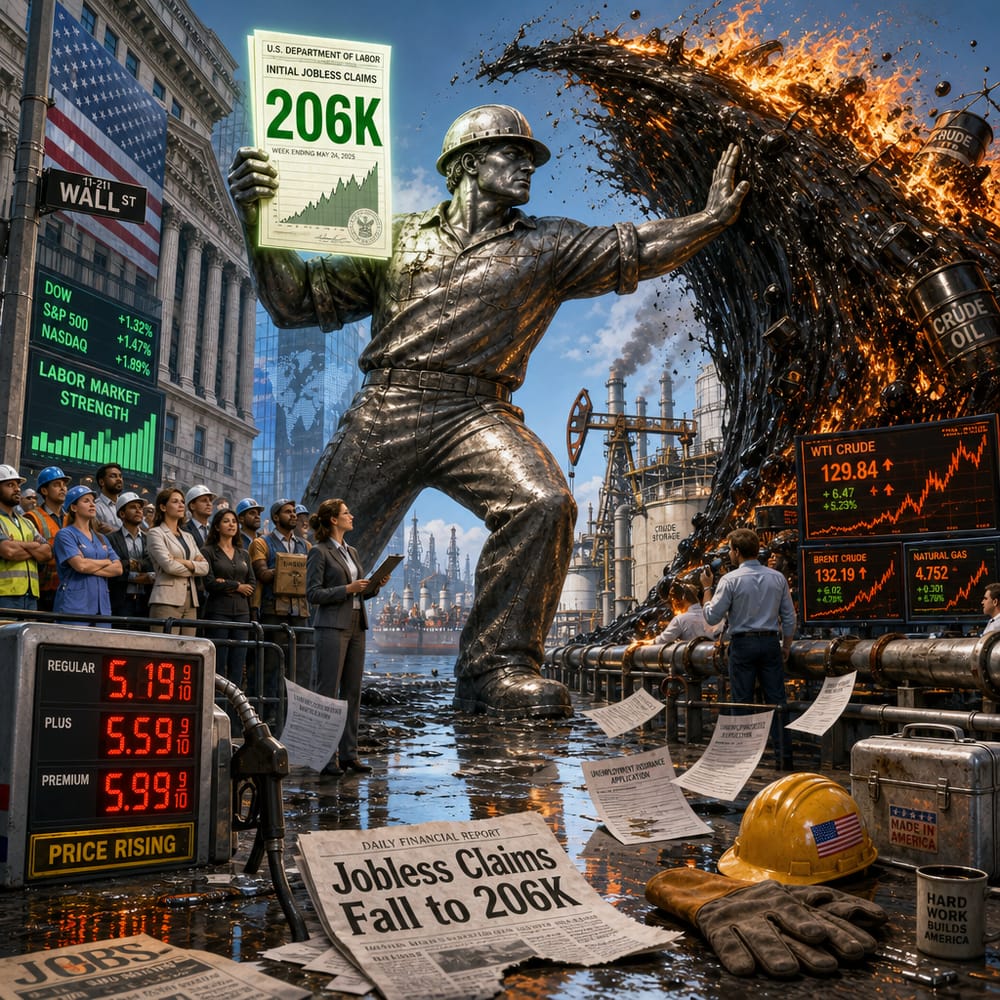
UNEMPLOYMENT CLAIMS DROP TO 206K: LABOR MARKET STILL RESILIENT AMID ENERGY SHOCK
In the grand theater of economic drama, the job market just tossed a curveball that would make even a seasoned Wall Street trader hit the pause button. Despite the ominous clouds of energy price hikes casting a shadow over consumer wallets, the latest data reveals initial unemployment claims in the U.S. have dropped to a cool 206,000. That's right, folks. While everyone was biting their nails over what rising oil prices might do to the economy, the job market pulled a Houdini act and slipped out of the clutches of doom and gloom.
So, what's the secret sauce behind this labor market resilience? Is it sheer tenacity, or is there a little more at play here? Let's dig deeper.
THE FACTORS BEHIND THE STRENGTH
First things first: let's talk about why the labor market is keeping its chin up. For starters, there's the not-so-secret weapon of American ingenuity. Companies have been playing a game of adaptation akin to economic Whac-A-Mole. When energy prices spiked, businesses didn't just sit there and take the hit. They're getting savvy with logistics, optimizing supply chains, and, yes, investing in automation and tech to keep operations lean and mean.
Moreover, consumer spending hasn't exactly taken a nosedive. Even with higher energy costs, people are still shelling out for goods and services, keeping businesses afloat and job numbers steady. It's like the economy got a shot of espresso when we least expected it.
But wait, there's more. Government spending on infrastructure projects is acting like a sturdy crutch, offering jobs in construction and beyond. And let's not forget the ripple effect of the tech sector's relentless expansion, which always finds a way to hire, even when the going gets tough.
UNEARTHING THE ENERGY PRICE IMPACT
Now, about those pesky energy prices. The geopolitical tensions behind this surge are no small potatoes. Historically, rising energy costs have a knack for pulling the rug out from under job growth, as high operational costs lead to cuts. However, the current job market appears to be standing its ground. How? Well, partly because many sectors have already built up some resilience during the pandemic's rollercoaster of challenges.
That said, if energy prices don't cool their jets soon, we might see industries that rely heavily on fuel—think transportation, logistics, and manufacturing—start to feel the pinch. This could potentially slow down job growth in those areas. It's a classic case of "wait and see," but one thing's for sure: businesses are bracing themselves for impact, hoping to ride out the storm.
RISKS ON THE HORIZON
Let's not pop the champagne just yet. While the labor market is defying odds, a few storm clouds linger. Rising interest rates are one, as they make borrowing more expensive for businesses. Higher rates can lead to decreased investment in growth and potentially fewer job openings. And let's not forget the looming debt concerns making headlines, as discussed by market gurus like Ray Dalio.
And there's the wildcard factor: geopolitical events. As energy prices are tied to international affairs, any further upheavals could have a domino effect, shaking the very ground the labor market stands on. Tensions in regions that supply a significant chunk of the world's oil could send ripples throughout global markets, impacting trade and employment.
SO, WHAT'S NEXT?
In the short term, it seems like the job market's got a solid grip on the steering wheel, keeping it on the straight and narrow. But for retail investors keen on reading between the lines, the message is clear: stay vigilant. Keep an eye on how geopolitical tensions evolve and what that means for energy prices. As for businesses, adaptability remains king. Investing in flexibility, whether it be in tech, workforce management, or operational efficiency, could be the golden ticket to weathering any upcoming storm.
For now, the labor market's resilience is a testament to a broader economic narrative—one where adaptability and foresight are your best allies. So, while everyone else is busy forecasting the next big crisis, retail investors, you've got a front-row seat to one of the most intriguing economic plays of our time. Keep your eyes peeled and your portfolios ready for some twists and turns ahead.
This article is for informational purposes only and is not investment advice. Always do your own research or consult a licensed financial professional before making investment decisions.
© Copyright 2024. All Rights Reserved.
© Copyright 2024. All Rights Reserved.