

Unanticipated Job Losses in July Undermine Optimism on Labor Strength
Thursday, August 20, 2026
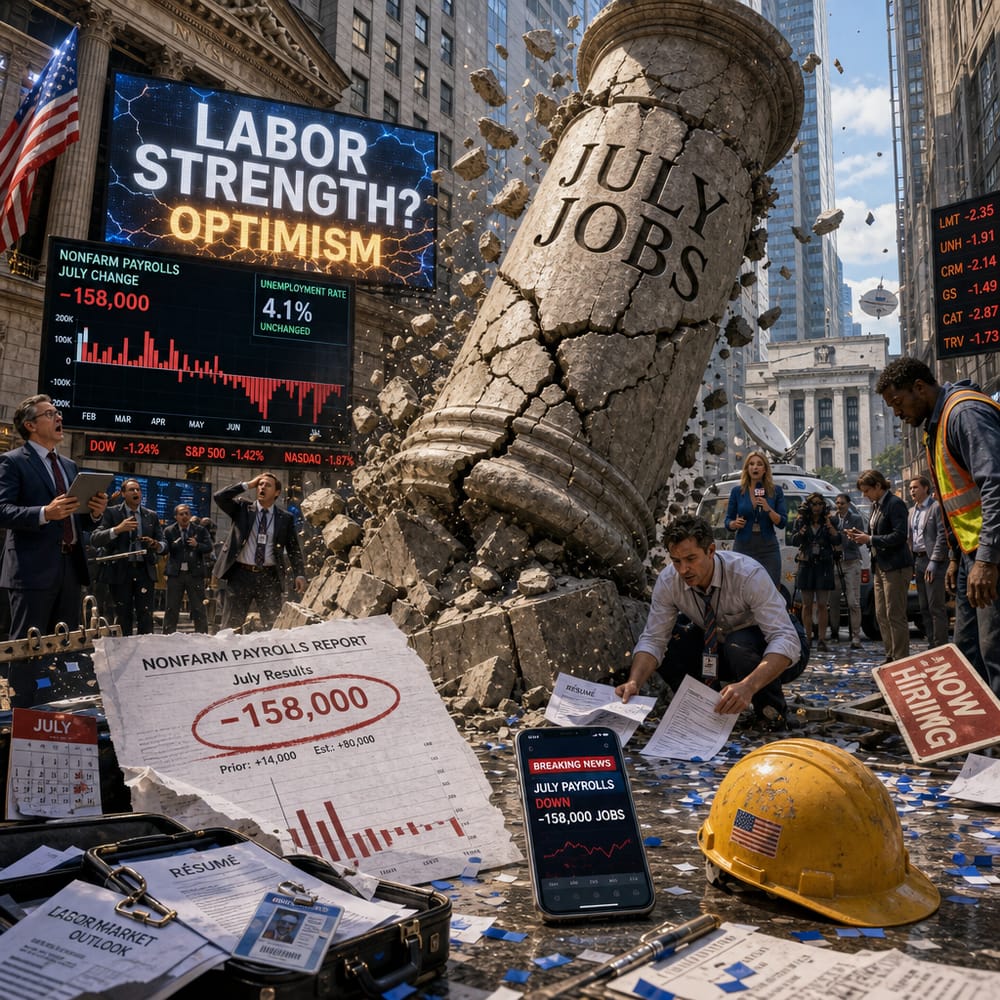
UNANTICIPATED JOB LOSSES IN JULY UNDERMINE OPTIMISM ON LABOR STRENGTH
Well, this wasn’t on the menu. July’s employment report rolled in with a curveball that no one ordered—a surprise contraction in nonfarm payrolls. And just like that, the seemingly rock-solid labor market might be showing a few cracks. As we all try to digest this unexpected entrée, the real question is whether this is just the chef’s special of the day or a new staple on the economic menu.
For months, the labor market has been the backbone of our economy’s recovery narrative, promising strength and resilience like a feel-good workout montage. But then July happened. Instead of the expected job gains, nonfarm payrolls took a nosedive. Suddenly, all those optimistic headlines about labor strength feel a tad like yesterday’s old news. So, what gives?
IS THIS A BLIP OR A TIP-OFF?
First, let’s talk about whether this job loss is a one-off glitch or if it’s whispering something more ominous about the labor market’s future. On one hand, it could be just a summer lull—everyone loves a vacation, right? Hiring might have slowed down temporarily as businesses paused to reassess strategies. But on the flip side, it could be the first hint of a broader cooling trend. With inflation jitters, rising costs, and inventory build-up, businesses might be tightening their belts in anticipation of leaner times.
CONSUMER SENTIMENT IN THE CROSSHAIRS
So, how does this little labor hiccup play out in the lives of everyday folks? In terms of consumer sentiment, it’s like finding a scratch on your brand-new car. It doesn’t change everything, but it sure makes you more cautious. If job losses persist, wallets could start closing up, impacting consumer spending—the lifeblood of the U.S. economy. And if consumers start penny-pinching more, retailers could feel the pinch, leading to a ripple effect across various sectors.
THE FED AND THE RATE HIKE DANCE
Now, let’s talk about the Federal Reserve, because they’ve been the DJ spinning the tunes at the rate hike dance party. They’ve been waiting to see if the labor market can take a hit like Rocky Balboa and come back swinging. But with this job loss, the question is whether the Fed will decide to slow its rate hike roll. In a world where tightening too much could throttle growth, these job numbers might just convince the Fed to ease off the accelerator a bit.
Walmart’s recent earnings report showed some signs of consumer restraint, as shoppers turn more cautious. With the retail giant experiencing a rare sales miss, it’s clear that even the big players are feeling the tremors of changing consumer behavior. If more businesses follow suit, the Fed will have even more reason to reconsider its rate strategy.
WHAT ABOUT INTEREST RATES?
And speaking of rates, let’s not forget that Treasury yields have been on a rollercoaster of their own. Recent interventions and buyback programs aimed at easing market pressures have stirred the pot, and Treasury yields are inching their way back up after a brief decline. While the Fed’s rate decisions primarily influence short-term rates, the yield on long-term bonds can impact everything from mortgage rates to car loans. If Treasury yields keep climbing, borrowing costs could rise, adding another layer of complexity to the economic puzzle.
SO, WHAT SHOULD RETAIL INVESTORS DO?
For retail investors, this might be a good time to reassess portfolios. Are you ready to weather a potential downturn if this job loss is a sign of things to come? Diversification could be your best friend right now. Keep a close eye on sectors that tend to be more resilient in downturns—think consumer staples and healthcare. And if you’re eyeing bonds, pay attention to those pesky Treasury yields; they’ve got more twists than a soap opera plot.
In the grand scheme of things, July’s job report might be just a small detour in an otherwise strong labor market journey. Or, it might be the first warning sign that we’re in for some bumps ahead. Time will tell whether this is an anomaly or a trend. For now, it’s a good reminder to stay vigilant and prepared as we ride the economic rollercoaster together.
This article is for informational purposes only and is not investment advice. Always do your own research or consult a licensed financial professional before making investment decisions.
© Copyright 2024. All Rights Reserved.
© Copyright 2024. All Rights Reserved.