

Ukraine-Russia Tensions Impact Global Markets Amid Grain Terminal Attacks
Thursday, August 13, 2026
UKRAINE-RUSSIA TENSIONS IMPACT GLOBAL MARKETS AMID GRAIN TERMINAL ATTACKS
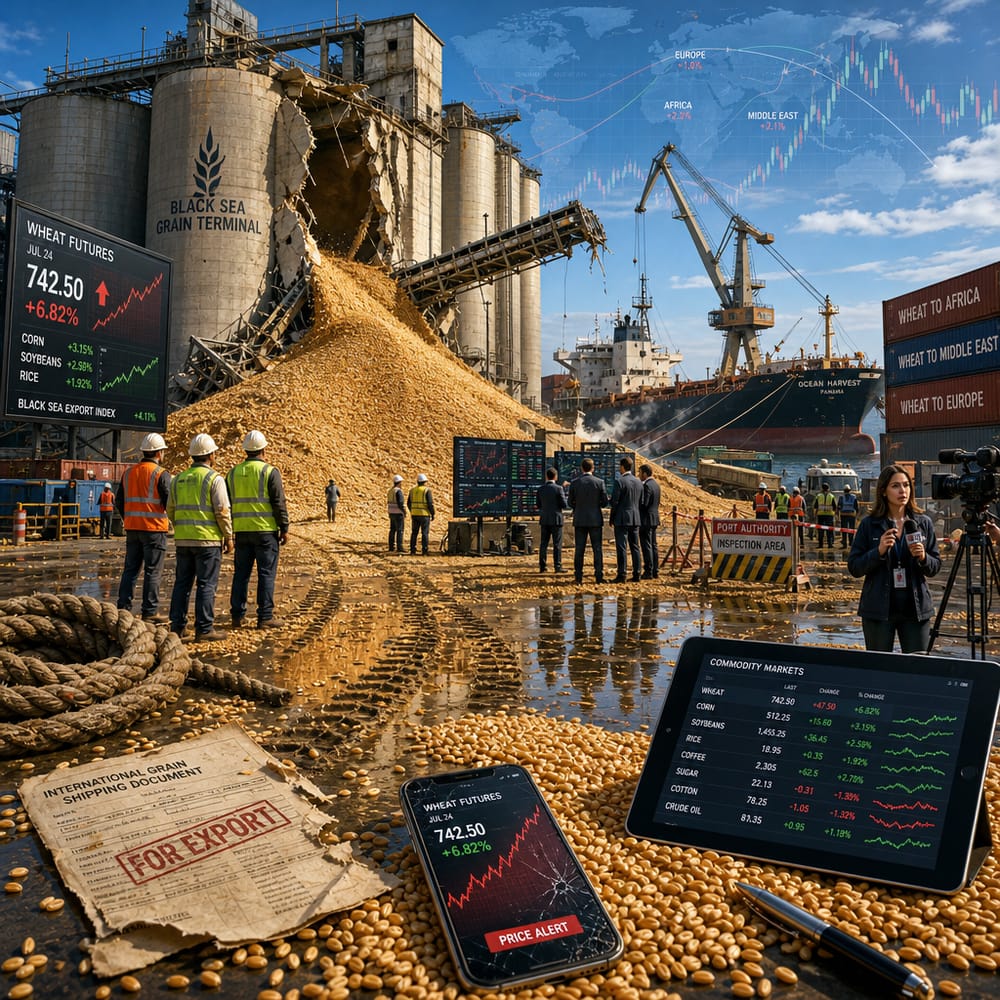
In a geopolitical chess match where Ukraine just shouted "check," global markets felt the tremor. The latest move? Ukraine's bold attack on Russian grain export terminals in the Black Sea, an area as crucial to the global food supply as your morning cup of joe is to your daily routine. Now, market watchers worldwide are bracing for potential tremors in food security and commodity prices.
So, what does this mean for your investment portfolio? Or for the price of your cereal? We're about to find out.
MARKETS ON EDGE
First, let's talk about the ripple effects of geopolitical tension. As soon as news of Ukraine’s assault on the Russian port city of Novorossiysk hit the wires, economists and traders alike began clutching their stress balls. Why? Because markets hate uncertainty, and this development throws a hefty dose of it right into the mix.
With the Dow Jones, S&P 500, and Nasdaq all teetering on the edge of mild upticks, the big question hanging over Wall Street is how this conflict might upend global commodity flows. Add to this the fact that everyone from soybean farmers in Iowa to rice traders in Bangkok has a finger on the pulse of grain market movements.
GRAIN PAINS AND GAINS
The immediate concern here is straightforward: grain prices. Russia and Ukraine together account for a hefty share of global grain exports. Disruptions at Russian ports could mean one thing — a tight squeeze on supply. And if Economics 101 has taught us anything, it's that when supply dwindles, prices go up.
Remember the Great Toilet Paper Panic of 2020? Well, a similar frenzy might hit the grain market. We've seen a similar playbook during past geopolitical standoffs, and it's a classic case of supply-demand imbalance leading to price hikes.
INFLATION IN THE CROSSHAIRS
But it's not just about what you'll pay for a loaf of bread. There’s a ripple effect here that could nudge inflation expectations, which have been a major concern for central banks around the globe. Inflation isn’t just a number — it’s the ghost in the room that haunts every economic decision from interest rates to salary negotiations.
If grain prices surge, it could feed into broader price indices. Grocery bills might start resembling receipts from a high-end restaurant. This would be particularly unwelcome news as central banks are already fighting inflation like dueling knights. The potential rise in food prices may force monetary policymakers to keep interest rates higher for longer, just when we all thought the battle against inflation was nearing a truce.
THE BIG PICTURE
But let's zoom out a bit. While this feels like a grainy drama on a vast geopolitical landscape, it’s important to remember that the financial markets are a complex web. There's no one-to-one reaction here. Oil prices, for instance, have recently dipped, giving a slight reprieve from the gas pump blues. This might help offset some inflationary pressures from the grain market.
Additionally, global markets are not just a monolithic entity. They're more like a dysfunctional family reunion — some get along, some side-eye each other from across the room. Stocks linked to consumer staples and commodities might see some short-term turbulence, but elsewhere, tech stocks and emerging markets may chart their own paths, driven by entirely different forces.
WHAT TO WATCH
So what should you, the everyday investor, do amid this geopolitical whirlwind? Keep your eyes on the headlines, yes, but don’t get caught in the media maelstrom. Diversify your portfolio to hedge against unpredictable market swings. Consider commodities as part of a balanced diet for your investments, but don’t bet your 401(k) on wheat futures alone.
And remember, while the markets are like a soap opera with no commercial breaks, your investment strategy should be more like a good novel — thoughtful, measured, and not overly reactive to every twist and turn.
As this story unfolds, it’s clear that while Ukraine and Russia make their moves in the grand chessboard of geopolitics, the rest of us need to keep playing our own strategic financial game. And who knows? This might just be the plotline that makes you look like the savvy investor at the next dinner party.
This article is for informational purposes only and is not investment advice. Always do your own research or consult a licensed financial professional before making investment decisions.
© Copyright 2024. All Rights Reserved.
© Copyright 2024. All Rights Reserved.