

UBS Downgrades DKS: Retail Sentiment Shifts as Sector Comes Under Pressure
Saturday, August 29, 2026
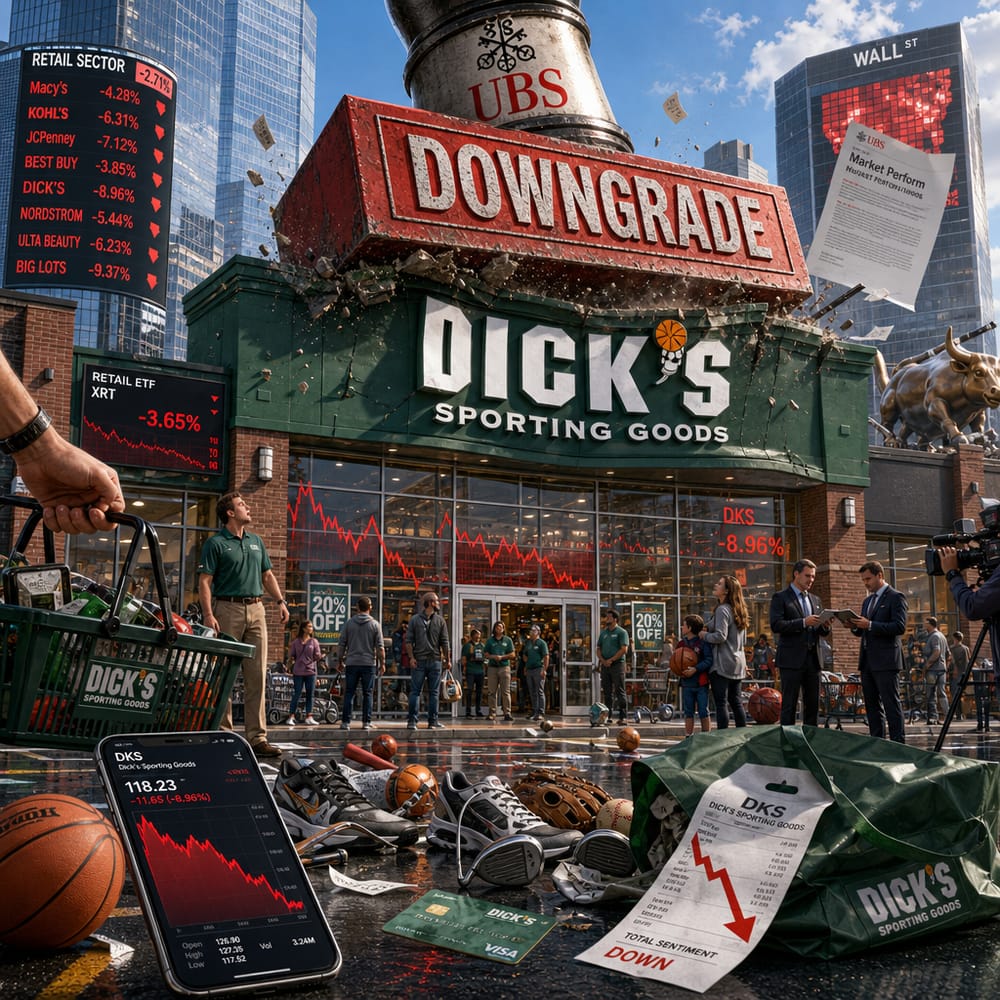
DICK'S SPORTING GOODS IN TROUBLE? WHY UBS THINKS SO AND WHAT IT MEANS FOR THE RETAIL SECTOR
When UBS gives a company the thumbs down, it’s like Gordon Ramsay spitting out your soufflé. Dick's Sporting Goods, the beloved haunt of weekend warriors and leisurely shoppers alike, just received a downgrade from UBS, shifting from "Outperform" to "Market Perform." If you’re scratching your head wondering what this Wall Street lingo means, let’s break it down: UBS thinks Dick's won't be doing any victory laps in the near future.
But why single out Dick's when the retail sector has been a mixed bag of surprises and slumps? Let's dive into the nuts and bolts of UBS's cautionary tale and see how this reflects on the broader retail landscape.
WHY THE DOWNGRADE?
UBS isn’t exactly betting against Dick's, but they’re pulling the reigns. Several factors are at play here, including concerns about consumer spending and economic headwinds. With inflation nibbling away at everyone’s wallets like a sneaky squirrel, consumers are more focused on essentials than that shiny new kayak for the summer adventure.
Dick's, in its own right, has been a strong player in selling not just goods but experiences. However, when people start pinching pennies, even the most dedicated fan of retail therapy starts to re-evaluate where they drop their dollars. UBS’s downgrade suggests a pause in growth, rather than a sheer plummet, indicating that while Dick's is still running the race, it's not pacing for a win anytime soon.
THE BIGGER PICTURE IN RETAIL
This downgrade isn’t just a blip on Dick's radar; it could be a cloud casting a shadow over the entire retail sector. Consumer discretionary stocks, those companies that sell goods and services non-essential to the average Joe, are watching this closely. With economic indicators sending mixed messages and the whiff of uncertainty lingering like a critter in a campsite, retailers are feeling the pressure.
Broadly, the retail landscape has been battling against macroeconomic winds. Inflation remains a buzzkill at financial get-togethers, and with the Federal Reserve keeping its cards close to the chest on interest rate decisions, caution is the name of the game. The savvy shopper is not just price-sensitive but increasingly choosy, leading to shifts in demand patterns that retailers must navigate with precision.
WHAT THIS MEANS FOR OTHER CONSUMER STOCKS
If you were hoping to find a pot of gold with other consumer discretionary stocks, now might be the time to sit tight. Retailers are bracing for a bit of a bumpy ride. Like Dick's, other players in the sector could see cooling enthusiasm from investors as analysts and stock watchdogs adjust their outlooks.
However, not all is doom and gloom. Companies that can pivot, innovate, and adapt to changing consumer behaviors may find new opportunities to shine. Those who can tap into niche markets, or who have a strong online presence might manage to ride out the storm with fewer scratches.
The key takeaway here? Watch for stock movements in the sector like a hawk eyeing its prey. The landscape is shifting, and while Dick's might be taking the brunt of the downgrade spotlight, it’s good advice to keep your eyes peeled for how this sentiment ripples across other retail names.
STAYING AHEAD IN CHOPPY WATERS
For retail investors digesting this news with your morning coffee, the message is clear: Proceed with caution but don’t sell the farm. Keeping a diversified portfolio is the best shield against market unpredictability. This way, if one sector goes wobbly, another may help keep things balanced.
Remember, this is not the first time a storm cloud has loomed over the retail sector, and it won’t be the last. Keep your seatbelts fastened and your eye on the horizon. After all, the market is a bit of a wild ride, and savvy investing is about steering wisely rather than watching helplessly from the sidelines.
This article is for informational purposes only and is not investment advice. Always do your own research or consult a licensed financial professional before making investment decisions.
© Copyright 2024. All Rights Reserved.
© Copyright 2024. All Rights Reserved.