

U.S. Unemployment Holds at 4.1%, CPI at 3.3% as of July
Thursday, August 20, 2026
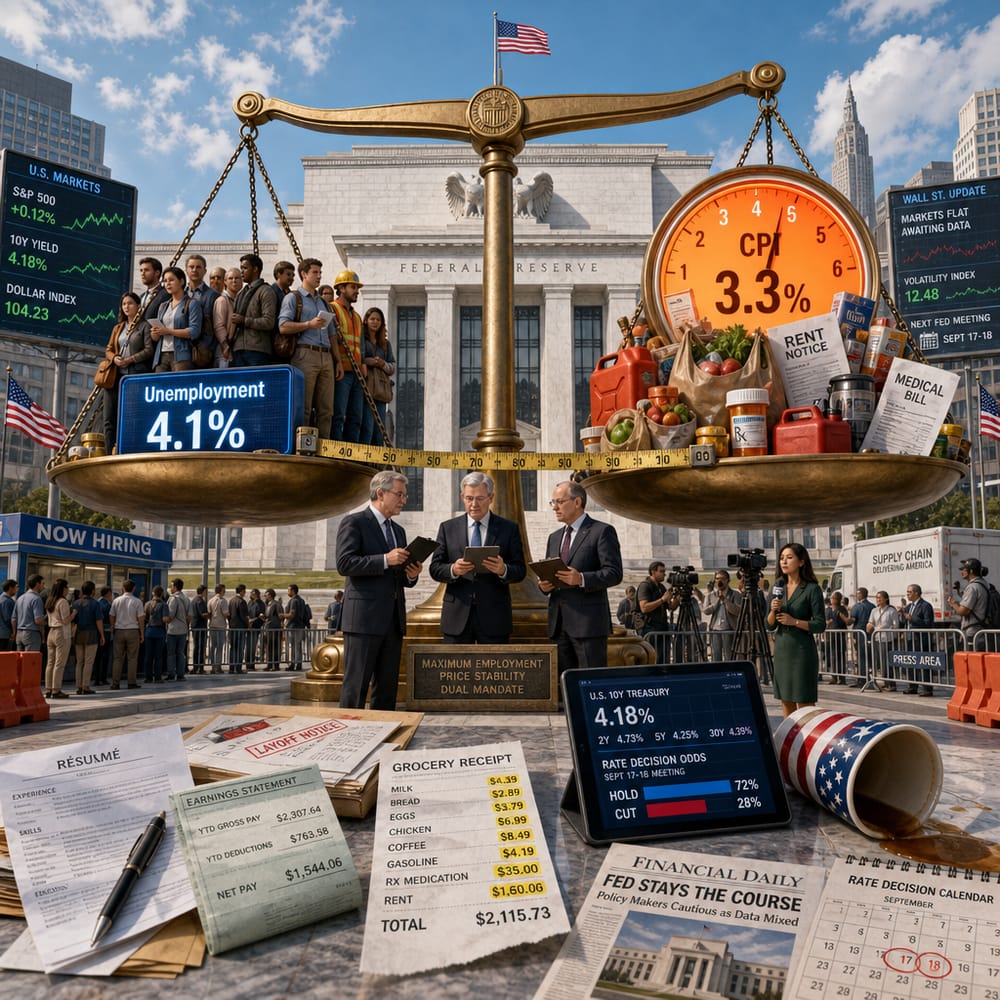
FLATLINING AT 4.1%: THE CURIOUS CASE OF U.S. UNEMPLOYMENT
The U.S. unemployment rate is sticking to 4.1% like a stubborn piece of gum on a hot sidewalk, and the Consumer Price Index (CPI) has decided to settle in at 3.3%. But what does this all mean for the economic soap opera we call the U.S. economy? Buckle up, because these numbers are not just for economists to debate over lattes. They're the pulse of the American economic scene—and they may just be the clues to your next investment move.
Let's crack open this fortune cookie one piece at a time.
WHAT'S THE DEAL WITH UNEMPLOYMENT?
So, the unemployment rate is holding steady at 4.1%. On the surface, that might sound like a healthy hum of economic activity. After all, it means most folks looking for a job have one. But dig a bit deeper, and you might hear a faint, ominous whisper: "labor market slack." This is economic speak for underutilization in the workforce. It suggests that while people have jobs, they might not be the right jobs—they're underemployed, working part-time involuntarily, or simply not in their field.
The Fed, our economic guardian angel (or gremlin, depending on the day), keeps a sharp eye on this number. Why? Because a tight labor market usually means it's time to adjust interest rates. But with this kind of slack, the Fed might just sit on their hands a little longer, keeping rates where they are.
ENTER THE CPI: A LOVE STORY WITH INFLATION
Meanwhile, the CPI is hanging out at 3.3%, a figure that might not immediately raise eyebrows but does suggest that inflation is still feeling a bit spry. In layman’s terms, this number measures how much more you're paying for your basket of groceries compared to last year. It's a peek into your wallet’s unhealthy obsession with emptying.
For the Fed, the 3.3% CPI suggests a delicate dance. A little inflation? Good. It means the economy is moving. Too much? Well, then it’s time for the Fed to act like a parent catching a kid with too much candy—time to rein it in with rate hikes.
WHAT'S NEXT FOR THE FED?
This is where our steady unemployment rate and trusty CPI become the Batman and Robin of monetary policy. The Fed is treading carefully, watching these indicators like a hawk. If unemployment suddenly dips, signaling a tighter labor market, expect the Fed to reach for its rate-hiking toolkit. But with current conditions, they might just opt for a wait-and-see approach, keeping interest rates steady to encourage more economic activity.
For investors, this means preparing for a landscape that could shift quickly if the Fed decides it’s time to shake things up. A rate hike could mean a stronger dollar, affecting everything from consumer spending to corporate profits.
OPPORTUNITIES AND RISKS IN THE MARKETPLACE
Now, if you’re diving into the stock market looking for treasure, these metrics are your map. A steady unemployment rate combined with moderate inflation suggests that consumer staples and tech—sectors that benefit from sustained consumer spending and business expansion—might be where you want to angle your ship.
On the flip side, sectors like luxury goods or industries heavily reliant on borrowing might face more turbulent seas if inflation doesn't cool off as quickly as the Fed would like.
And let’s not forget global influences. Oil prices are on the rise, geopolitical tensions are simmering, and corporate earnings are playing their own tune. Walmart, for example, is singing a happy tune with upbeat earnings, while Alibaba is plodding along to a different rhythm thanks to heavy investment in AI.
CONCLUSION: KEEP YOUR EYES ON THE BALL
In the world of economic indicators, the unemployment rate and CPI are two heavyweights. They give us a glimpse into the health of the economy and hint at what the future holds for monetary policy. For investors, understanding these numbers is key to navigating potential risks and uncovering opportunities.
So, whether you’re a seasoned investor or just dabbling in the market, keep a close watch. The economic story is unfolding, and these numbers are the plot twists. The question is, will you be ready to act when the next chapter hits?
This article is for informational purposes only and is not investment advice. Always do your own research or consult a licensed financial professional before making investment decisions.
© Copyright 2024. All Rights Reserved.
© Copyright 2024. All Rights Reserved.