

U.S. Treasury’s Bond Buybacks Weaken Dollar, Boost G10 FX
Tuesday, August 25, 2026
TITLE: U.S. Treasury’s Bond Buybacks Weaken Dollar, Boost G10 FX
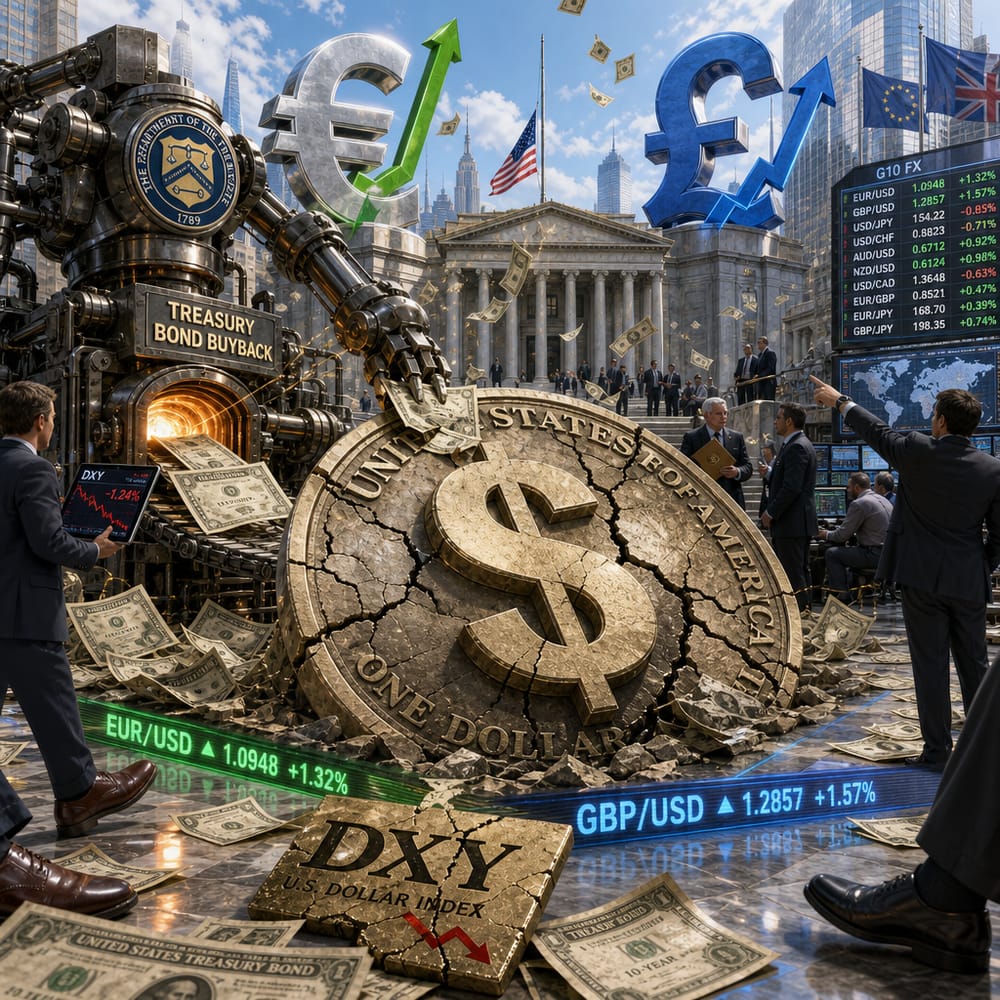
The U.S. Treasury is pulling a sneaky move on the financial chessboard, and it's sending shockwaves across the globe. This time, Uncle Sam's got a new trick up his sleeve: increased bond buybacks. Don’t glaze over just yet. This isn't your typical, eye-glazing financial report. Think of it like a magic trick where you know it's happening but can't quite put your finger on how it works – except this time, it's the dollar disappearing from the strong side of the stage.
So what’s the play here? These bond buybacks have pumped up like a bodybuilder on protein shakes, causing the greenback to hit the gym for lighter weights. A weaker dollar is now the talk of the town, and currencies like the euro and pound are basking in the newfound attention. Let’s dig into the hows and whys of this fiscal gambit and what it means for your wallet.
HOW BOND BUYBACKS WEAKEN THE DOLLAR
At the heart of this story is a classic case of supply and demand. When the Treasury buys back its bonds, it's essentially reducing the supply of these IOUs floating around, which normally would make bonds more valuable, right? But here's the catch: investors, holding onto their shiny bonds, suddenly find themselves with more cash and fewer places to stash it. So, they turn around and pump that cash into other assets, including non-dollar currencies. More demand for euros and pounds means they get a boost, while the dollar's weightlifting routine gets lighter.
But why would Uncle Sam do this? By buying back bonds, the Treasury is essentially trying to put a lid on interest rates, making borrowing cheaper. Think of it like a low-interest loan for the country. In the long run, this can spur economic growth. But the short-term effect is a weaker dollar, which brings us to the next chapter of our tale.
THE LONG-TERM DOLLAR DANCE
The big question on everyone’s mind: Is the dollar going to keep skipping leg day? A weaker dollar can be a double-edged sword. On one hand, it makes U.S. exports cheaper and more competitive abroad – hello, boost in trade. On the other hand, it makes imports pricier, potentially fanning the flames of inflation.
For investors, a weaker dollar often nudges them to diversify. After all, if your dollar's losing muscle, those euros and pounds start looking like lean, mean investing machines. But, tread carefully; currency markets are notoriously fickle and can turn on a dime – or a euro cent.
WINNERS IN THE GLOBAL CURRENCY GAME
So, who's popping champagne over at the currency exchange? The G10 currencies – the big players like the euro and pound – are the immediate beneficiaries. As the dollar unfurls the white flag, these currencies are flexing their muscles. The EUR/USD and GBP/USD pairs are seeing the love, with traders eyeing them like a hawk on a mouse hunt. For those trading in currency pairs, it’s like Christmas has come early, with new profit opportunities wrapped up under the tree.
But don’t just take the easy wins for granted. Keep an eye on global economic indicators. A stronger euro or pound might sound delightful now, but if Europe’s economy starts sputtering or if Brexit woes rear their ugly head again, the tides could swiftly change.
THE BIGGER PICTURE
What’s the takeaway here? The Treasury’s bond buyback move is a clear reminder of how fiscal policies can ripple through currency markets, investor sentiment, and, ultimately, your portfolio. While it might feel like a game of Monopoly where someone’s just flipped the board, understanding these moves means you’re not just a piece in the game – you’re a player.
As the dollar dances to this new tune, keep your investment strategy nimble. Diversification is your best friend here – not just across assets but across currencies too. Because as the saying goes in finance, the only constant is change. And with the Treasury’s latest maneuver, change is definitely afoot.
This article is for informational purposes only and is not investment advice. Always do your own research or consult a licensed financial professional before making investment decisions.
© Copyright 2024. All Rights Reserved.
© Copyright 2024. All Rights Reserved.