

U.S. Treasury's Bond Buyback Expansion and Its Market Impact
Saturday, August 29, 2026
MARKETS, MORALITY, AND THE MYSTIQUE OF TREASURY BONDS: DIVE INTO THE DRAMA
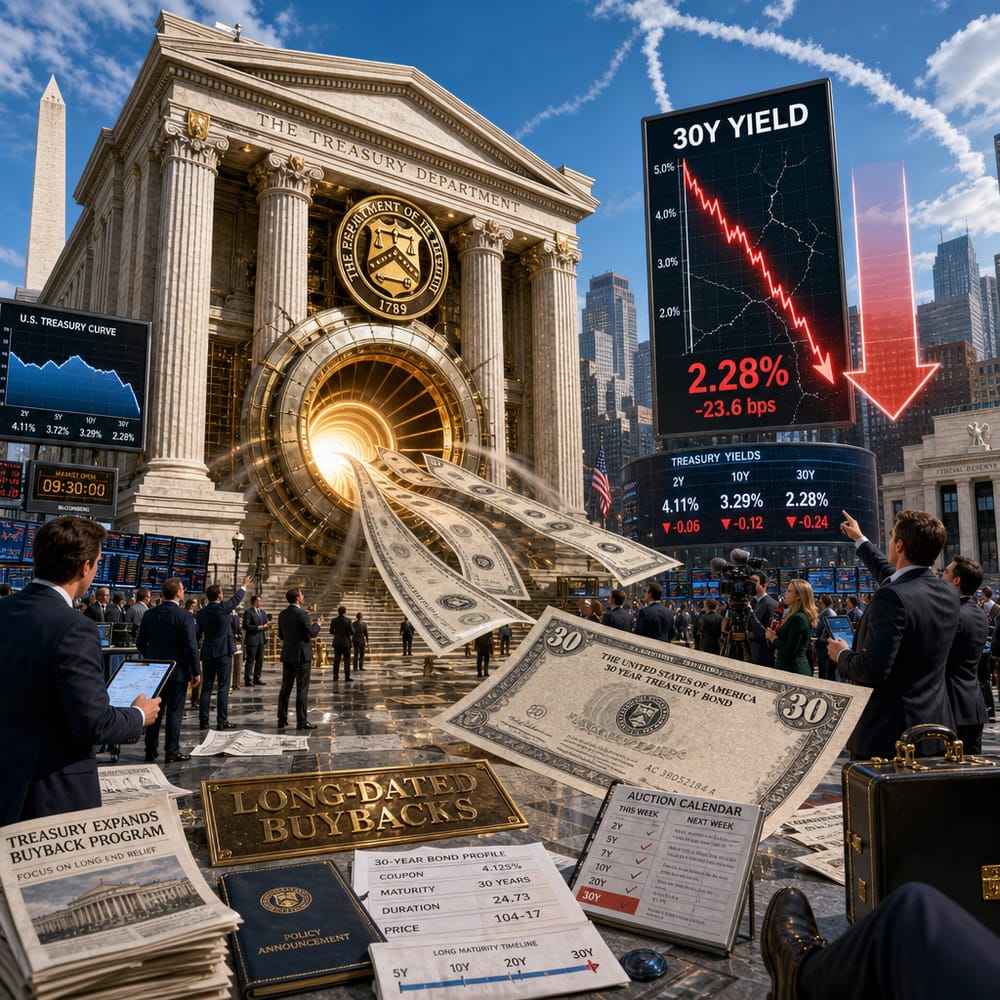
Picture this: You’ve just hit play on your favorite binge-worthy show, and the ever-so-familiar “previously on” montage kicks in. Today, our star is none other than the U.S. Treasury, with a plot twist that’s hotter than a summer blockbuster. The Treasury has just announced it’s doubling its long-dated bond buybacks, a move that’s already caused a noticeable nosedive in 30-year Treasury yields. So, grab your popcorn and settle in, because this financial thriller is about to get juicy.
THE TREASURY’S BLOCKBUSTER MOVE
The U.S. Treasury, traditionally as predictable as a metronome, has thrown a curveball by ramping up its bond buyback program. Essentially, it’s on a shopping spree for its own IOUs, and doubling down on bonds that won’t mature for decades. Why? In the grand theater of fiscal policy, this is all about liquidity — making sure there’s enough cash sloshing around the market, and managing the costs of all that government debt.
The immediate effect? A plunge in the yields of 30-year Treasury bonds. You might be wondering, what’s the big deal about bond yields dropping? Well, let’s break it down: When yields fall, prices rise. So, investors holding these bonds get a nice little boost in their portfolios, even if their coupon payments don’t change.
THE RIPPLE EFFECT
Now, this isn’t just an isolated maneuver. The Treasury’s move might be as much about soothing market fears as it is about influencing fiscal policy. By bolstering liquidity, the Treasury is playing a delicate game, akin to a high-stakes Jenga — preventing financial markets from toppling while trying to maintain fiscal stability.
For the uninitiated, bond yields are a key component in the broader economic picture. They influence everything from mortgage rates to corporate borrowing costs. So, when 30-year yields take a dive, you can expect ripple effects across the financial landscape. Lower borrowing costs can spur investment and consumer spending, injecting a bit of adrenaline into the economic cycle. But it’s not all sunshine and rainbows.
THE LONG GAME AND FISCAL FALLOUT
Let’s zoom out for a moment. The expanded buyback program has the potential to alter the fiscal policy landscape significantly. With the national debt already casting a shadow as dark as the clouds in a Shakespearean tragedy, reducing financing costs is crucial. In the short term, it’s like putting a band-aid on a much larger wound. It buys time, but the bigger issues of fiscal discipline and debt management remain.
If this strategy pays off, the Treasury could manage to keep a lid on the interest burden of the national debt, allowing for more flexibility in fiscal policy. However, there’s a flip side. If investors start to see this as a desperate move rather than a savvy one, confidence could wane, leading to increased volatility in bond markets.
Another layer to this complexity is the ongoing debate about inflation. With the Fed keeping a watchful eye on inflation numbers, any misstep by the Treasury could complicate monetary policy decisions. It’s a tightrope walk where one wrong move could send the whole thing crashing down, like a house of cards in a windstorm.
WHAT'S NEXT FOR INVESTORS?
So, what’s a retail investor to do in this evolving saga of bonds and fiscal maneuvering? While it can be tempting to shuffle your assets or make knee-jerk reactions, patience might just be your best ally in this scenario. Understanding the broader economic cycle and watching how these policy changes unfold is key.
Look at bonds not just as a single episode but as part of a long-running series. They’re not just numbers on a page — they influence everything from your mortgage rates to the health of the stock market. Staying calm and informed is your best bet as this new chapter in fiscal policy plays out.
In the end, navigating the world of Treasury bonds is kind of like being an extra in an epic drama. You’ve got to be ready for plot twists, understand the subplots, and most importantly, not let the theatrics overwhelm your investment strategy. Keep your wits about you, and watch as this financial drama continues to unfold. Who knows — the next scene could be the real game-changer.
This article is for informational purposes only and is not investment advice. Always do your own research or consult a licensed financial professional before making investment decisions.
© Copyright 2024. All Rights Reserved.
© Copyright 2024. All Rights Reserved.