

U.S. Treasury's Aggressive Bond Buybacks to Stabilize Soaring Yields
Saturday, August 22, 2026
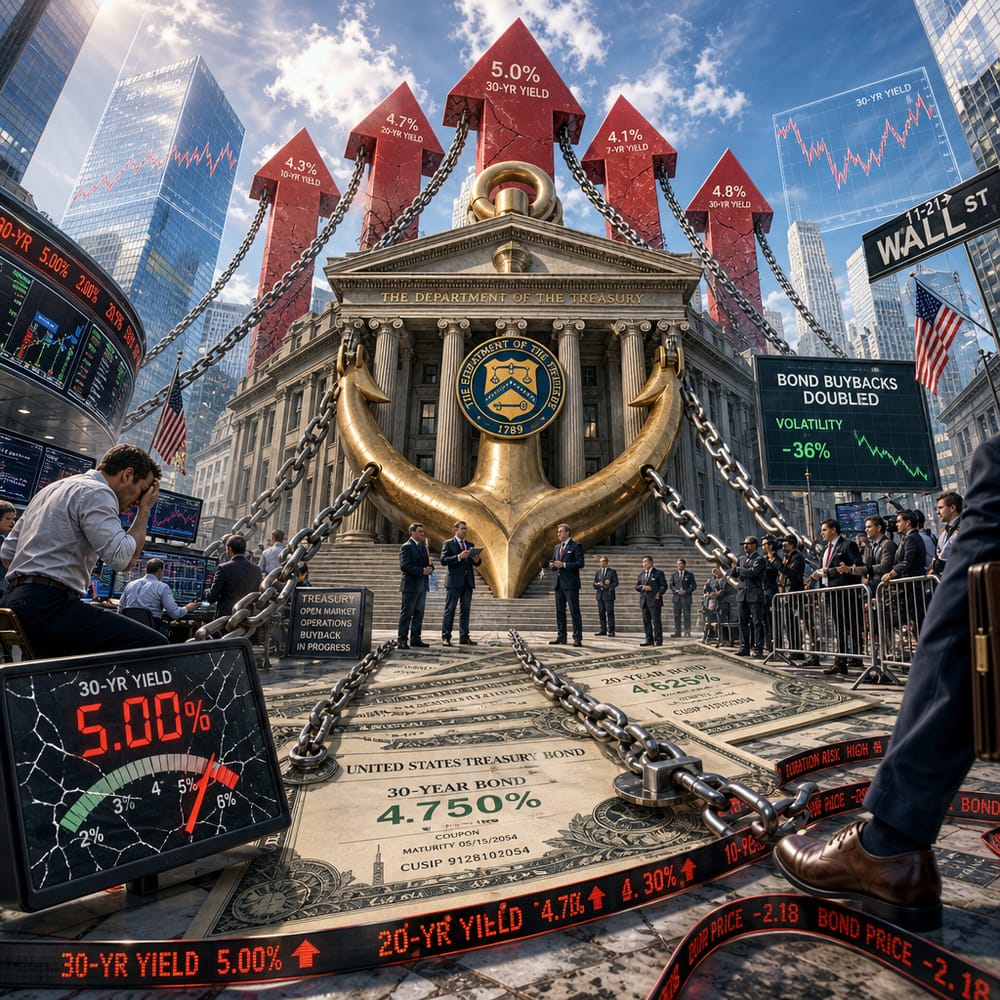
U.S. TREASURY'S BOLD BOND BUYBACK BET
The U.S. Treasury, that trusty old financial janitor of ours, is rolling up its sleeves and doubling down on long-term bond buybacks. But why should you care about Uncle Sam's shopping spree in the bond aisle? Because it’s not just an exercise in fiscal housekeeping—it's a high-stakes game of economic chess with rippling effects on markets and your wallet.
First things first, what exactly are we talking about here? When the Treasury buys back its own bonds, it's like a company buying back its stock, reducing the supply available on the market. Fewer bonds floating around means higher prices for the ones that remain, which inversely lowers their yields. Simply put, the yield is the interest rate paid by the borrower to the lender; when bond prices go up, yields go down, and vice-versa.
Right now, yields are partying like it's 1999, and nobody's happy about the hangover. High yields mean higher borrowing costs for Uncle Sam and just about everyone else, which is why Treasury Secretary Janet Yellen and her team are pulling out the buyback card to cool things down.
Here's a spicy thought: these buybacks might just be a clever way for the government to keep borrowing costs from spiraling out of control without directly cutting interest rates. And why can’t they just slash those rates? Enter the Federal Reserve, the other economic heavy hitter in town, which has been hiking rates to fight inflation. So, you've got the Treasury trying to ease the bond market while the Fed keeps its foot on the brake. It's like watching two people playing tug-of-war with the same rope.
For everyday investors—yes, you with the index fund—these moves are more than just Wall Street theatrics. As bond yields stabilize, you might notice your mortgage rates calming down a bit, and those planning on taking out loans could find some relief coming their way. It also means that the stock market, which often behaves like a jittery cat when interest rates climb, might regain some composure. After all, lower yields on bonds make stocks look more attractive by comparison since they promise better returns.
But here's the juicy part: the long-term effects of these buybacks are a riddle wrapped in a mystery. Are we looking at a short-lived sugar rush for the market or something with staying power? That’s the $64,000 question. On one hand, stabilizing yields could soothe financial markets and keep the economic engine humming. On the other, there's a risk that this intervention might lead to more borrowing by the government, adding to the already staggering $40 trillion national debt—a ticking time bomb in its own right.
The Treasury's maneuvering is a bit like walking a tightrope over a pit of fiscal alligators. While they aim to stabilize the bond market and prevent rate spikes, they must also be wary of sending the wrong signals. Too much tinkering might suggest panic, and no one wants investors to lose their cool and dump their bonds.
And while we're on the topic of investor confidence, remember that these buybacks are not happening in isolation. They're a piece of the broader policy puzzle, aligning with the Fed's monetary stance and the country's debt strategy. It's like a dance where every step influences the other dancers—one misstep and the whole show could come crashing down.
So, whether you’re an active trader or someone who prefers the "set it and forget it" approach to investing, it's wise to keep an ear to the ground. How the Treasury manages its bond buybacks could ripple through everything from interest rates to stock market volatility. The next time you hear about the Treasury stepping into the bond market, remember: they're not just keeping the books. They're playing a crucial role in the global economic orchestra, and every note matters.
This article is for informational purposes only and is not investment advice. Always do your own research or consult a licensed financial professional before making investment decisions.
© Copyright 2024. All Rights Reserved.
© Copyright 2024. All Rights Reserved.