

U.S. Treasury Buybacks Trigger Temporary FX Moves in EM Currencies
Thursday, August 27, 2026
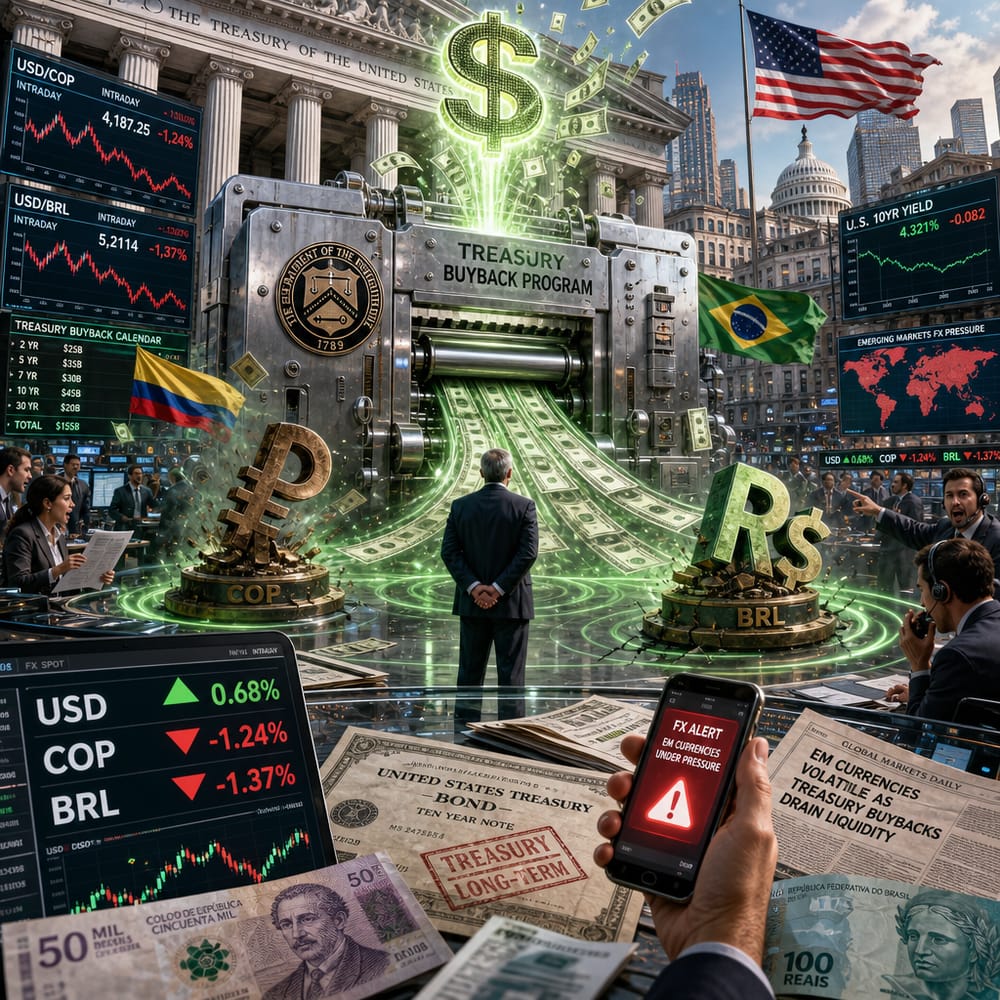
DOLLAR DRAMA: U.S. TREASURY BUYBACKS SHAKE EMERGING-MARKET CURRENCIES
Buckle up, currency traders and armchair economists. The U.S. Treasury's latest move is turning the dollar into the financial world's hot potato, and there's a flurry of exotic currencies in the line of fire. If you thought currency markets were a snooze fest of exchange rate fluctuations, think again. The U.S. Treasury's decision to turbocharge its long-term bond buybacks is causing some serious volatility, especially for emerging-market currencies like the Colombian peso and Brazilian real.
The Treasury's trailblazing step to double its buybacks might sound like a snooze-inducing policy decision. But in the world of global finance, it's akin to shaking a snow globe, with emerging-market currencies caught in the flurry. The dollar had a brief moment of glory, getting a temporary lift as a result. But for currencies like the peso and the real, it wasn't exactly a fun ride.
Why does a U.S. Treasury decision send shockwaves across Colombia and Brazil, you ask? It all boils down to the interconnected web of global finance. When Uncle Sam buys back its long-term bonds, it effectively reduces the supply of greenbacks sloshing around the world. Think of it as tightening the purse strings on the world's favorite currency. When the dollar gets stronger, other currencies may feel weaker in comparison.
For the Colombian peso and Brazilian real, the Treasury's move didn't just rustle feathers—it sent entire flocks flying. Investors tend to bolt towards stability, and nothing spells “safety” like the good ol' U.S. dollar. Emerging-market currencies, which are often seen as riskier bets, can quickly become the unwanted hot potato, leading to short-term volatility as their values wobble.
Now, let's get to the million-peso question: What does this mean for the long game? Emerging-market currencies are essentially the canaries in the coal mine. Their sensitivity to U.S. fiscal policies highlights how susceptible they are to external shocks. While dollar jolts are nothing new, the frequency and magnitude of these shakes beg the question: How should investors protect themselves from the wild ride of currency markets?
First off, let's not forget the age-old wisdom of diversification. If you're an investor with a penchant for emerging markets, spreading your bets across different countries and asset classes can be your financial seatbelt. Having an assortment of investments means you're less likely to get burned if one currency takes a nosedive.
On the flip side, if you're not one to shy away from risk, you could ride the wave of volatility by investing in currency forwards or options. These financial instruments are akin to placing a bet on where a currency will head next. But beware: they're not for the faint-hearted, and if you're not careful, you could find yourself on the losing side of the gamble.
With all this currency chaos, it's tempting to think the U.S. Treasury's decision is purely a matter of domestic housekeeping. But as we've seen, the ripples extend far beyond American shores. As Fed Chairman Kevin Warsh gears up to speak at Jackson Hole, there are whispers of whether he’ll address these fiscal strategies and their impact on global markets. Spoiler alert: don't hold your breath. The odds of him dropping such knowledge gems are slim, according to the prediction gossip mill.
So, as you scroll through the latest updates on your phone, remember this: the world of emerging-market currencies is a wild frontier influenced by the whims of U.S. policies. Keep your eyes peeled for more Treasury maneuvers, and stay nimble in the face of the dollar's dazzling dance. In the world of finance, fortune often favors the informed—and those who are ready to roll with the punches.
This article is for informational purposes only and is not investment advice. Always do your own research or consult a licensed financial professional before making investment decisions.
© Copyright 2024. All Rights Reserved.
© Copyright 2024. All Rights Reserved.