

U.S. Treasury Buyback Impact on Forex Markets
Saturday, August 22, 2026
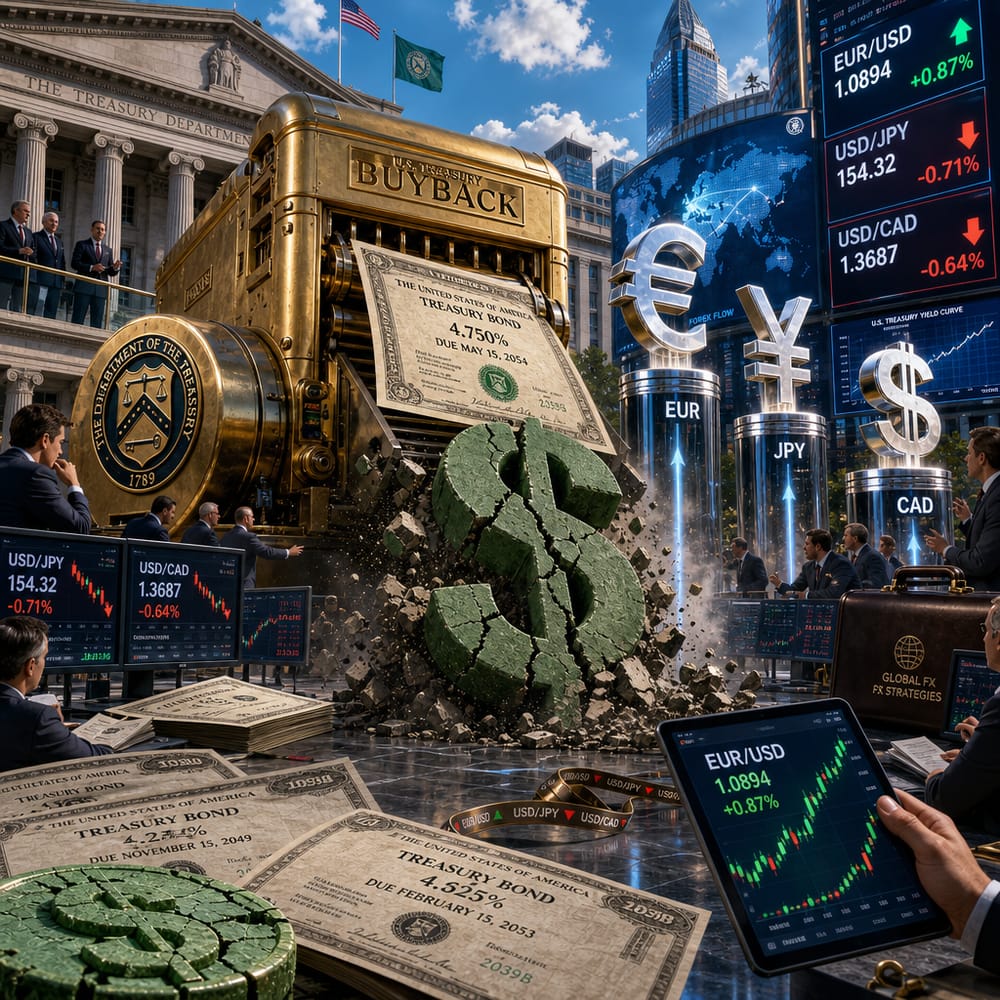
HOW THE U.S. TREASURY’S BUYBACK BONANZA IS RUFFLING CURRENCY FEATHERS
Attention, currency aficionados and economic thrill-seekers! The U.S. Treasury has decided to shake things up, doubling down on its buybacks of long-dated coupon debt. And just like that, the U.S. dollar has taken a nosedive faster than a skydiving squirrel, throwing a curveball to forex markets and causing some serious side-eye from nations around the globe.
Now, before you dismiss this as just another day in the financial rollercoaster, let’s break it down. The Treasury’s move isn’t just a fiscal policy tweak; it’s more like a seismic shift. It’s the economic equivalent of deciding to switch from decaf to triple espresso—you’re going to feel it.
WHY THIS MATTERS FOR THE DOLLAR
First off, let’s chat about what this means for the greenback. The U.S. dollar, long the heavyweight champion of currencies, has tripped over its strong-man reputation. The Treasury’s buyback program has led to a supply increase in the market, which, in layman's terms, means there's more money floating around. And when supply goes up, value tends to go the other way—down.
This drop is music to the ears of the euro (EUR), Japanese yen (JPY), and Canadian dollar (CAD)—they’re all enjoying their time in the spotlight. But, for the dollar, it raises a million-dollar question: could this be a sign of weakening long-term strength for the currency? Investors are now biting their nails, wondering if Uncle Sam’s wallet is going to get a little lighter.
IMPLICATIONS FOR U.S. TRADE PARTNERS
While the U.S. is busy executing its fiscal fandango, trade partners are watching closely. A weaker dollar makes U.S. goods cheaper abroad, which might sound like a grand time for exporters. But there's a catch—importing goods becomes pricier, potentially sowing the seeds of inflation. And for the U.S., already grappling with trade tensions, particularly with neighbors like Canada, this could be the straw that breaks the trade camel’s back.
Just to spice things up, the recent U.S.-Canada trade tiff has escalated with tariffs rearing their ugly heads once more. With a weaker dollar, the U.S. might find it harder to absorb such shocks, and trade partners may need to brace themselves for a more volatile trading environment—a sort of economic whack-a-mole where no one knows which tariff will pop up next.
WILL CENTRAL BANKS JOIN THE DANCE?
Now, don’t be surprised if central banks around the world start making moves of their own. They’re like DJs at a financial rave, ready to spin the turntables in response to any beat the U.S. Treasury lays down. The Federal Reserve, the European Central Bank, and the Bank of Japan are all likely keeping a hawk’s eye on these developments. If the dollar continues to slide, they might intervene to stabilize their own currencies, ensuring their economies don’t receive a nasty shock.
Could we see a coordinated effort by these central banks to mitigate the impact? It’s possible. And if they join forces, it could be the kind of event that gets economists buzzing like kids at a candy store.
THE BIGGER PICTURE
Let’s take a step back and look at the big picture. This isn’t just about currency exchange rates or trade balances. It’s about a shift in the global economic tide. The Treasury’s decision reflects a broader strategy, possibly a response to the ever-growing national debt, which has hit a jaw-dropping $40 trillion. It's a maneuver that says: “We’re committed to tackling this issue, even if it means ruffling a few feathers along the way.”
For investors, this is a wake-up call to keep their eyes peeled. Market conditions are changing, and those who can adapt will find opportunities amongst the chaos. For those who aren’t paying attention? Well, let’s just say it’ll be like showing up to a costume party when everyone else is in formal wear—awkward and potentially costly.
In conclusion, the U.S. Treasury’s buyback move might seem like a subtle shift, but its ripple effects are anything but. It’s a dynamic play that’s shaking up currency markets, trade relationships, and potentially leading to new central bank strategies. So, if you’re investing, trading, or just watching from the sidelines, strap in. This ride is just getting started.
This article is for informational purposes only and is not investment advice. Always do your own research or consult a licensed financial professional before making investment decisions.
© Copyright 2024. All Rights Reserved.
© Copyright 2024. All Rights Reserved.