

U.S. Treasury Bond Buybacks Pressure Dollar, Boost Euro & Sterling
Sunday, August 30, 2026
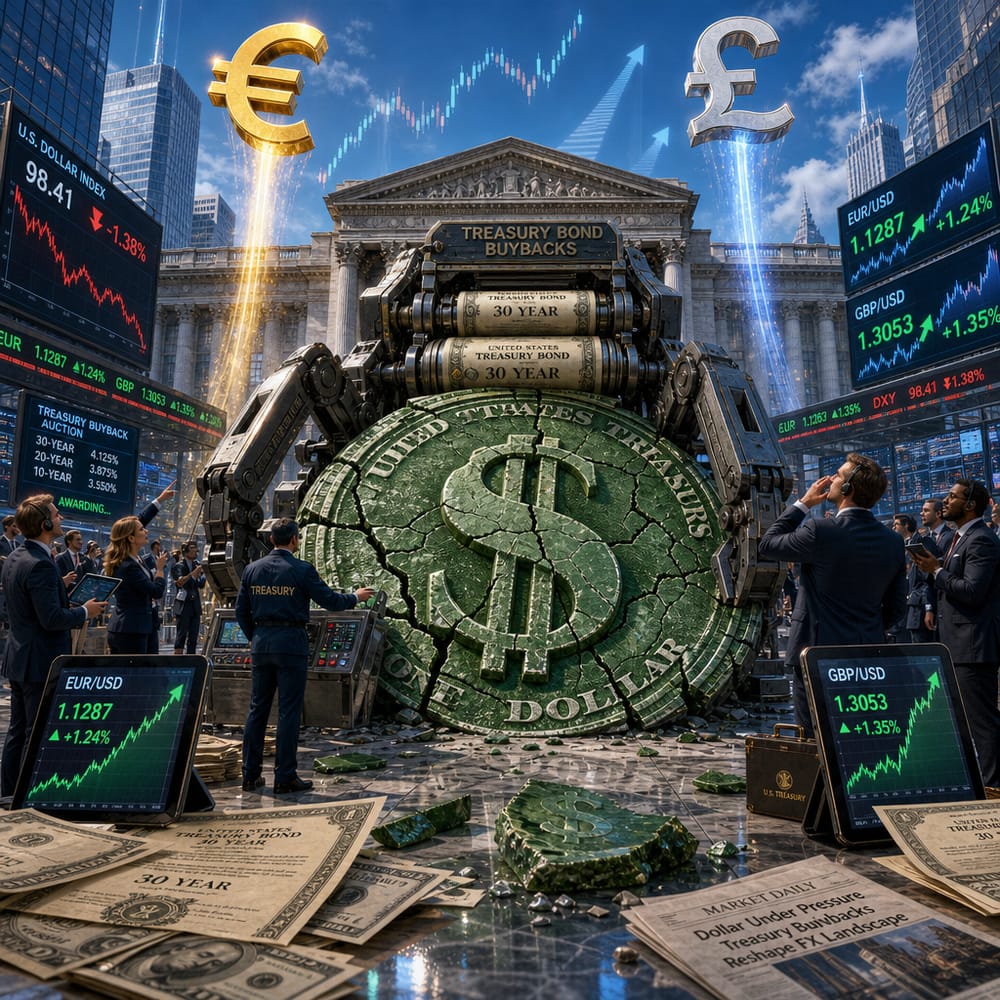
Ding, ding, ding! The U.S. dollar might need a cold compress because it's been taking a beating lately. The culprit? A bold move by the U.S. Treasury that's got the forex market buzzing like a Wall Street broker on their fourth espresso. Let's dive into why your Euros and British Pounds are looking mightier against the greenback.
THE US TREASURY'S BIG MOVE
So, here's the scoop: The U.S. Treasury has decided to flex some fiscal muscle by expanding its long-dated bond buybacks. What’s a bond buyback, you ask? Think of it as the government saying, "Hey, we'll buy back those IOUs we promised you, and by the way, we're paying in full." This maneuver has ripple effects, not just on bond yields but also on the dollar's reputation in the forex market.
HOW BOND BUYBACKS SHAKE UP CURRENCY VALUES
When Uncle Sam buys back bonds, it’s injecting liquidity into the market, making dollars more plentiful. It’s basic supply and demand, folks: more dollars swimming around means each one is worth a smidge less. It’s like having too many avocado toasts at brunch; suddenly, they’re not so exclusive, and your Instagram followers are yawning.
Now, why do we care about liquidity? Because it weakens the dollar, pushing the EUR/USD and GBP/USD currency pairs to fresh highs. Think of it like a seesaw: as dollar value dips, those currencies on the other end — like the Euro and Pound — get a boost. European summer vacation, anyone?
WHAT DOES THIS MEAN FOR YOUR WALLET?
If you’ve got dreams of sipping espresso in a Parisian café or savoring fish ‘n’ chips by the Thames, this is your moment. A stronger Euro and Pound against the dollar means your U.S. cash stretches further in these countries. It’s as if your wallet is doing its own little happy dance.
But let’s not pop the champagne too soon. The real question is whether this is a fleeting moment of currency drama, or part of a grander, long-term trend. If the Treasury keeps up its buyback plans, we might be in for more sustained dollar weakness. Countries love it when Uncle Sam's dollar is less mighty — it makes their exports cheaper for U.S. consumers. But it’s a careful juggle: too much dollar weakness, and you might see higher prices at home for imports.
MONETARY VS FISCAL POLICY: A DANCE OF DIVERGENCE
Here’s where the plot thickens. While the Treasury is busy stirring the fiscal pot, the Federal Reserve seems to be having a different kind of party. Fed Chairman Kevin Warsh has been tight-lipped about interest rates, only hinting that inflation is a “concern.” Translation: the Fed isn't keen on making hasty moves, preferring the "wait and see" approach. This divergence in monetary (that's the Fed) and fiscal (that's the Treasury) policy sets up a fascinating tug-of-war that has traders scratching their heads and checking their charts.
To put it simply, while the Treasury is playing fast and loose with the dollar, the Fed is holding back on interest rate hikes that might have otherwise strengthened it. It’s like they’re both trying to drive the economic bus, but one’s got the pedal to the metal while the other is softly tapping the brakes.
IS THIS THE NEW NORMAL?
As retail investors, we’re always on the lookout for the next big trend. So, is this dollar dip the start of something long-term or just a hiccup? Well, smart money would keep an eye on how these U.S. policy moves play out globally. If the Treasury sticks to its guns, you might want to think about how your portfolio is hedged against currency movements. Diversification isn’t just a buzzword — it’s your lifeline in these turbulent times.
So, there you have it. The U.S. Treasury’s bond buyback strategy is stirring the pot, nudging the dollar down while giving the Euro and Sterling a boost. Whether you’re a dollar bull or bear, it’s a game of high-stakes forex chess you’ll want to watch closely. Just remember, in the wild world of currency markets, today’s trend can be tomorrow’s ancient history. But for now, the Euro and Pound are strutting their stuff — and that’s something to toast to.
This article is for informational purposes only and is not investment advice. Always do your own research or consult a licensed financial professional before making investment decisions.
© Copyright 2024. All Rights Reserved.
© Copyright 2024. All Rights Reserved.