

U.S. Tightens Export Controls: BIS Restricts Remote Access to AI Chips
Wednesday, November 25, 2026
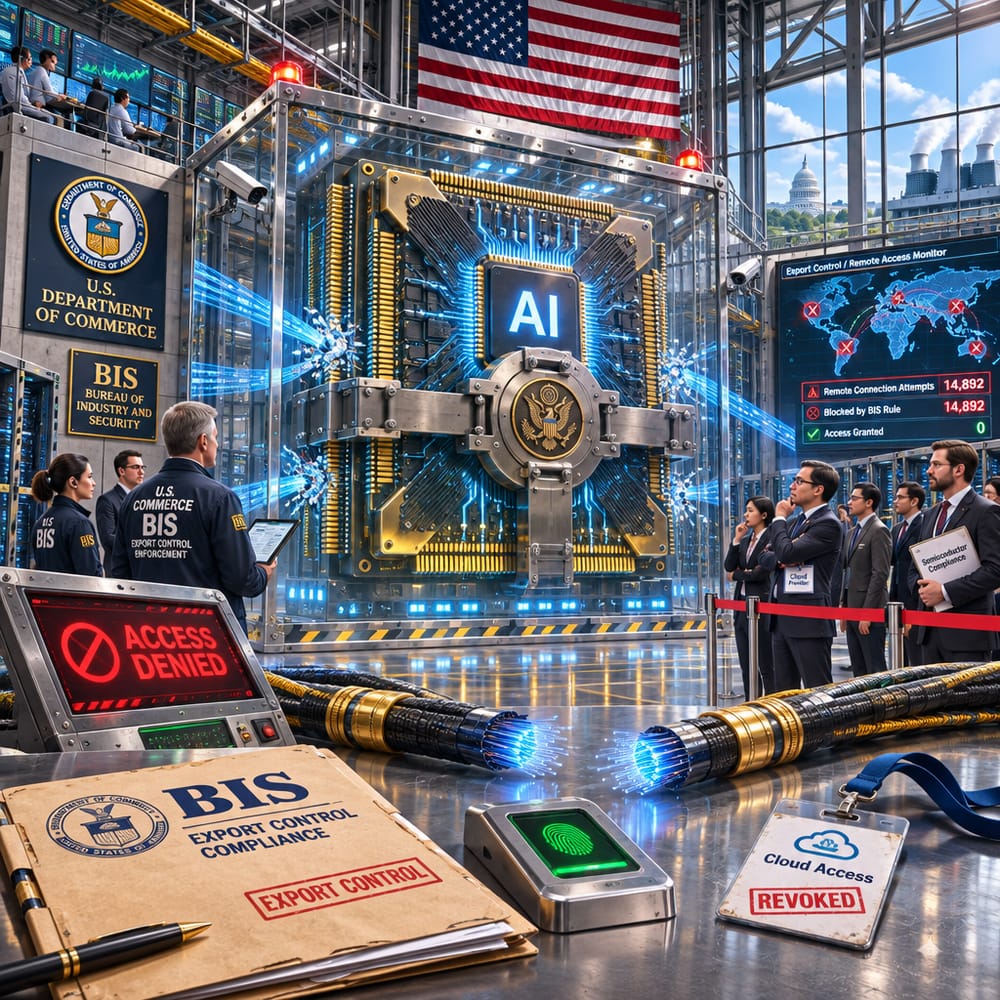
NEW RULES, NEW GAME: U.S. SHUTS THE DOOR ON REMOTE AI CHIP ACCESS
Move over, spy thrillers; we’ve got an international tech drama unfolding in real-time. The U.S. Commerce Department’s Bureau of Industry and Security (BIS) is tightening the reins on AI chips like a cowboy lassoing a wild stallion. They're making sure no one’s sneaking access to our cutting-edge semiconductors remotely, and that's setting the stage for a high-stakes showdown in the tech industry.
Let’s break it down: The new rule curbs remote access to advanced semiconductors, which are the secret sauce for AI. This regulation aims to close any loopholes that might allow foreign actors to tap into American technology from afar, as if they're borrowing sugar from a neighbor, without the polite knock.
So, who’s getting caught in this dragnet? Picture a spotlight on big names like Nvidia, the glitzy prom king of the AI chip world. Their investors might be clutching their pearls as Nvidia and other chipmakers could face hurdles in selling to global tech players. But it’s not just the chipmakers—cloud service providers, who provide the digital real estate for AI operations, also have to rethink their strategies.
THE IMPACT ON U.S. CHIPMAKERS AND CLOUD PROVIDERS
Nvidia and its pals have been on a rollercoaster lately, with stock values taking a nosedive. Just this week, Nvidia's shares tumbled like a Jenga tower in an AI sell-off spree, pulling the Nasdaq down 3.1%. This fresh regulation isn’t just another dip; it's a whole new track on the market rollercoaster.
For U.S. cloud providers, this isn’t just a storm on the horizon—it’s a full-blown category five. These companies, think Amazon Web Services and Microsoft Azure, host AI operations for international clients. If clients can’t remotely access the AI chips they need, they might start shopping elsewhere. This could be a golden opportunity for non-U.S. cloud providers ready to swoop in and snatch those clients like a seagull with a sandwich on the boardwalk.
THE GEOPOLITICAL RIPPLE EFFECT
Move over, Hollywood; geopolitics is the new soap opera. The U.S. tightening its grip on AI technology access might not sit well with other nations, particularly those eyeing advanced tech as a ticket to global economic power. This move could ignite tensions akin to an international poker game where Uncle Sam just raised the stakes.
China, the obvious heavyweight in this arena, won’t be thrilled to find its potential access to American AI tech blocked. This could provoke countermeasures or accelerate China's push to develop its own AI tech further, intensifying the tech cold war.
IMPLICATIONS FOR THE GLOBAL SUPPLY CHAIN
But let's zoom out—this isn’t just an America-first scenario. The global supply chain for AI chips could feel the squeeze like a boa constrictor around its prey. Countries relying on U.S. tech will need to adapt, potentially inciting a scramble akin to musical chairs, with nations jostling to secure their tech futures.
Major chip manufacturers outside of the U.S. might see a surge in demand as they become the next best option for countries cut off from American chips. This reshuffle could lead to price volatility, supply shortages, or a boost for companies that manage to meet international demand.
WHAT TO WATCH FOR
Now, what does this mean for you, the savvy investor sipping your morning coffee? Keep your binoculars trained on AI stocks and tech industry developments. Watch Nvidia and other U.S. chipmakers like hawks, but don’t forget to glance at non-U.S. competitors who might emerge as winners in this regulatory race.
Also, consider the broader market implications. As geopolitical tensions rise and supply chains recalibrate, affected sectors might experience turbulence akin to a plane ride through a thunderstorm.
In the end, this regulatory move is more than just bureaucratic red tape—it’s a seismic shift in the tech landscape. So stay alert, keep your investment strategies flexible, and, as always, enjoy the thrilling ride that is the world of finance.
This article is for informational purposes only and is not investment advice. Always do your own research or consult a licensed financial professional before making investment decisions.
© Copyright 2024. All Rights Reserved.
© Copyright 2024. All Rights Reserved.