

U.S. Tightens Chip Export Controls Impacting TSMC and Chinese AI Ambitions
Saturday, November 21, 2026
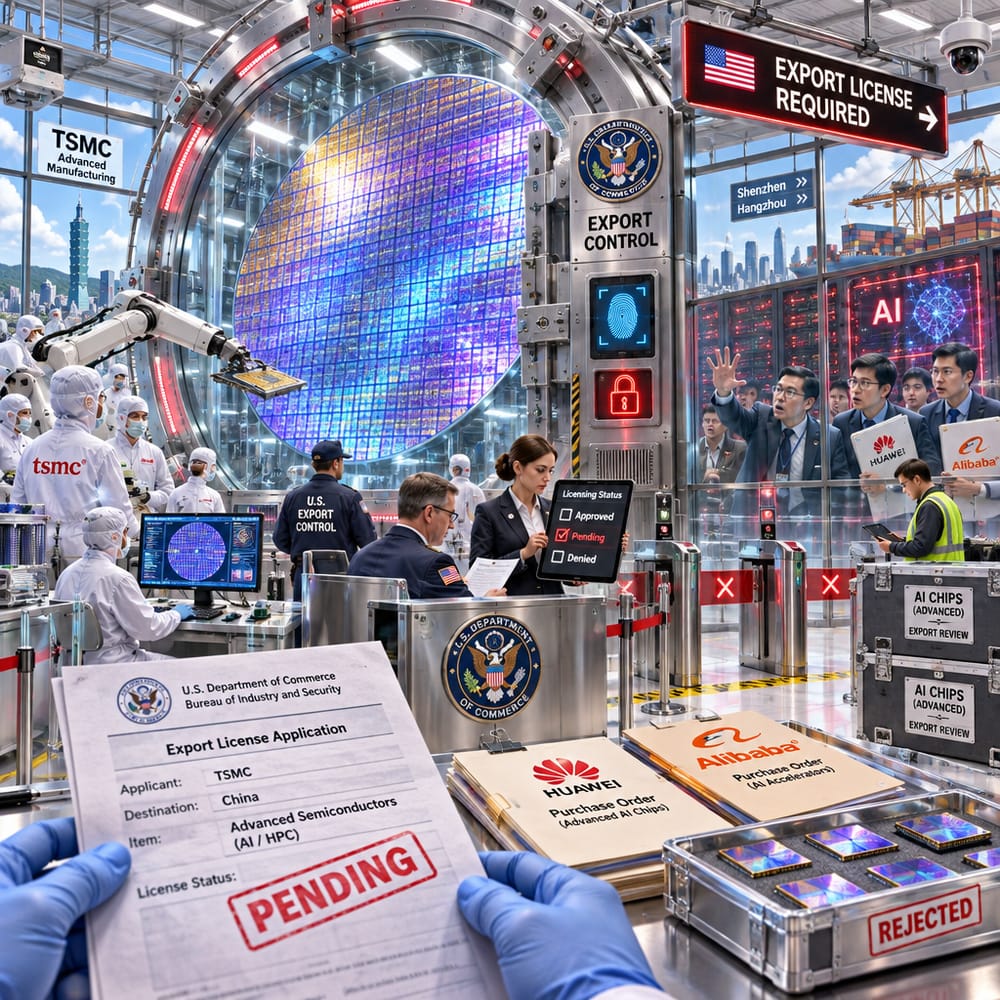
In the high-stakes world of global tech, every chip counts—especially when those chips are the brainpower behind tomorrow's artificial intelligence. But now, the U.S. has thrown a wrench in China's tech ambitions with a bold new move: tightening the chokehold on advanced chip exports. And who’s caught in this geopolitical crossfire? None other than Taiwan's semiconductor giant, TSMC, and big Chinese players like Huawei and Alibaba. Buckle up, because this tech tangle is more than just circuit boards and silicon—it's a chess match on the world stage.
Taiwan Semiconductor Manufacturing Company Limited, or TSMC if you're in a hurry, is a heavyweight in the chipmaking arena. When it sneezes, the global tech world grabs a tissue. Recently, TSMC hit pause on orders for advanced chips destined for Chinese tech titans. Why? Because Uncle Sam is tightening up his export licenses, and nobody wants to mess with that. These aren't just any chips—they’re the kind that make AI systems smart enough to do everything from suggesting your next Netflix binge to driving cars without a human at the wheel.
For Chinese firms like Huawei and Alibaba, this is a curveball they didn't see coming—at least not this hard. These companies are not just dabbling in AI; they are racing to dominate it. Huawei has been making headlines with its ambitious forays into AI-powered devices, while Alibaba is busy trying to make its own cloud smart enough to forecast your shopping habits before you do. But without those cutting-edge chips, they might as well be trying to run a Formula 1 car on a lawnmower engine.
The impact on China’s AI goals could be substantial. Imagine trying to bake a cake without flour—it’s kind of like that. China’s plan to become a world leader in AI by 2030 may now face unexpected headwinds. These tech restrictions could slow down developments in AI research and limit the capabilities of future tech products, leaving China’s cutting-edge ambitions with a potential blunt edge.
But China isn’t known for sitting quietly in the corner when slapped with sanctions and restrictions. The real question is: What will China do next? Retaliation could take many forms, from tightening rare earth mineral exports (essential for tech production) to revving up its own domestic chip production. And let’s not forget about geopolitics—China could seek deeper tech alliances with non-U.S. companies to bypass these roadblocks. In this game, every move counts.
For the markets, this isn’t just a tech story; it’s an economic thriller. TSMC’s stock might feel the heat as investors ponder the implications of being too cozy with American policies. On the flip side, companies involved in domestic semiconductor projects in China could see a surge in interest. It’s a high-stakes tango that could shake up tech stocks and leave investors jittery.
And let's not forget the tech sector mood swings—like the ones we’ve been seeing with the recent tech sell-off on Wall Street. The Nasdaq’s rollercoaster ride is proof that the AI hype, while sky-high, also comes with a healthy dose of vertigo. Investors are watching these chip wars like it’s the latest season of their favorite drama, waiting to see who will outmaneuver whom.
This chip control saga is far from over. For now, TSMC is in a holding pattern, Chinese tech giants are re-strategizing, and the U.S. is sending a clear message: Advanced technology isn't just about innovation—it's also about leverage. As the chips fall where they may, one thing’s clear: In the world of tech, the only constant is change—and maybe a little bit of drama.
So, the next time you tap your phone to scroll through an app, remember there's a whole world of tech warfare happening behind that screen. Keep your eyes on the prize, and maybe invest in some popcorn—this is one show that's just getting started.
This article is for informational purposes only and is not investment advice. Always do your own research or consult a licensed financial professional before making investment decisions.
© Copyright 2024. All Rights Reserved.
© Copyright 2024. All Rights Reserved.