

U.S. Stocks Slip Again as Bond Yields Soar
Wednesday, September 30, 2026
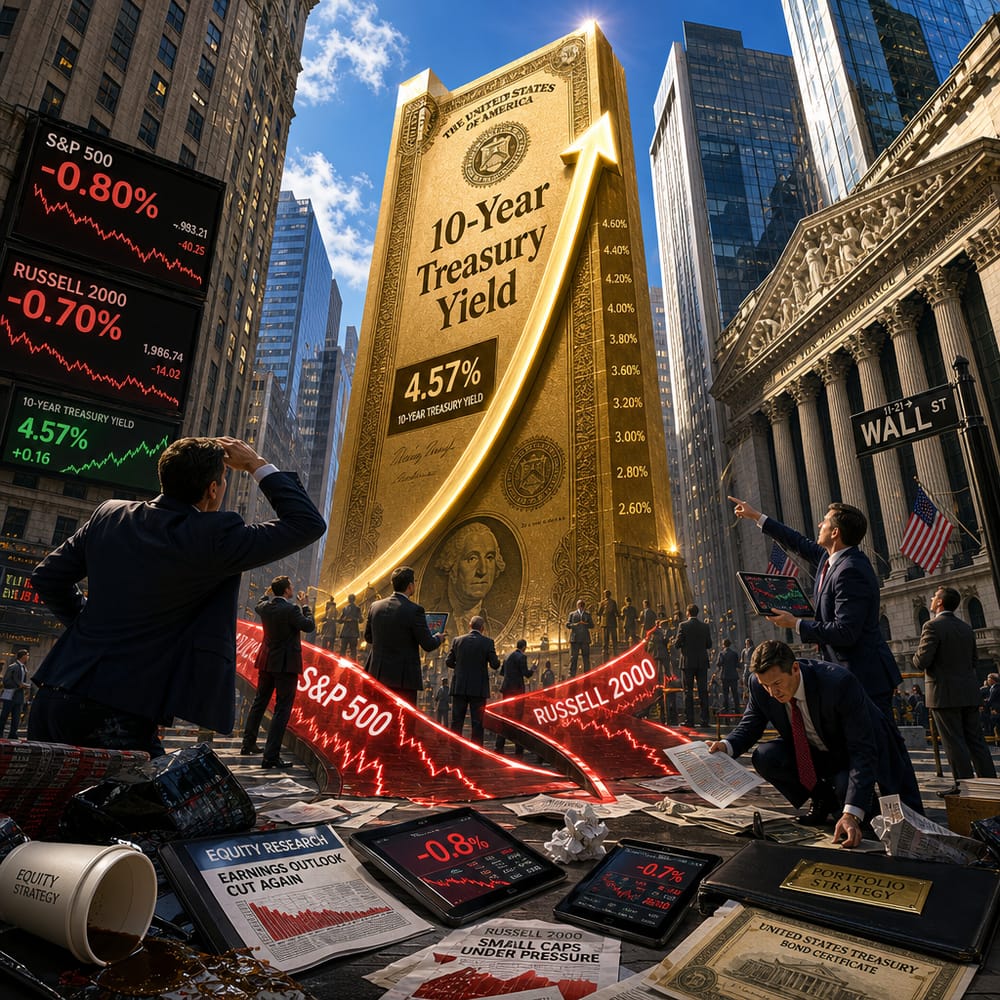
When you wake up, you expect your coffee to be hot, your phone to be fully charged, and your stocks to be, well, not crashing. But if you’re watching the U.S. equity market these days, that last one seems more like wishful thinking than a reality. On September 28, the S&P 500 took a dive, sliding 0.8%, while the Russell 2000 tripped over itself, sinking 0.7%. So, what's got these indexes slipping like a banana peel on a cartoon sidewalk? Say hello to the villain of this story: skyrocketing bond yields.
Soaring bond yields might sound like a yawn-inducing plot point, but don't let the snooze-factor fool you. They're a big deal, and here’s why. Higher bond yields can hike up borrowing costs for just about everyone and everything — from Uncle Sam to your mortgage. When the 10-year Treasury yield starts shooting up like SpaceX on a good day, it becomes more attractive compared to the roller coaster that is the stock market. This isn't just a Wall Street cocktail party topic; it’s the backbone of investment decisions affecting everyone from a first-time Robinhood trader to seasoned hedge fund managers.
As the bond yields climbed to heights not seen since the mid-2000s, sectors across the S&P 500 felt the burn. Tech stocks, which often rely on borrowing to finance their growth, winced at the thought of pricier loans. Imagine trying to buy a fancy new car only to find out that the interest rate is giving you sticker shock all over again. That’s what tech companies are facing.
Meanwhile, the financial sector chuckled from the sidelines. Banks love rising yields because they can charge you more for a loan than they pay out on your savings account. But don’t feel too bad for the banks; they’re more than happy to make money from being in the lending game.
But what does this mean for future interest rates? Are we all going to have to start looking at our wallets with suspicion every time we think about a big purchase? It might seem like the Federal Reserve is armed with a rate hike bazooka, ready to fire off more interest rate increases. However, betting on the Fed can be like guessing the weather — unpredictable at best.
Investor sentiment is shifting, and not just a little. Think about it: when bonds become more appealing, stocks start to look like they're wearing last season’s fashion. Investors are weighing their options, questioning if they want to stay in a market where yields are rising faster than a hot air balloon on a bright summer day.
The backdrop to this market seesaw is the hedge fund world, which seems to be holding a record chunk of the U.S. Treasury market. It’s like hedge funds have become that one friend who’s suddenly into collecting obscure vinyl records — except these records are $2 trillion worth of Treasuries. The implications of this move are complex, adding another layer to the already intricate world of the bond market.
With all this action, it’s no surprise that some folks are getting a bit skittish. Rising bond yields have a way of making stocks appear less attractive, much like the allure of free pizza fades once you realize it’s been sitting out all day. And as investors recalibrate their portfolios, it’s crucial to keep an eye on how these dynamics play out across different sectors.
So, as you scroll through your feeds and try to make sense of the market’s wild ride, remember that rising bond yields and their ripple effects are central to the story. Whether you’re an avid investor or just someone trying to stay informed, understanding these shifts is key to keeping your investments from slipping on those proverbial banana peels. Keep your eyes on the bond market, folks — it’s not just for nerds in suits anymore.
This article is for informational purposes only and is not investment advice. Always do your own research or consult a licensed financial professional before making investment decisions.
© Copyright 2024. All Rights Reserved.
© Copyright 2024. All Rights Reserved.