

U.S. Stocks Slip After Record Highs Amid Weak Consumer Spending
Monday, August 17, 2026
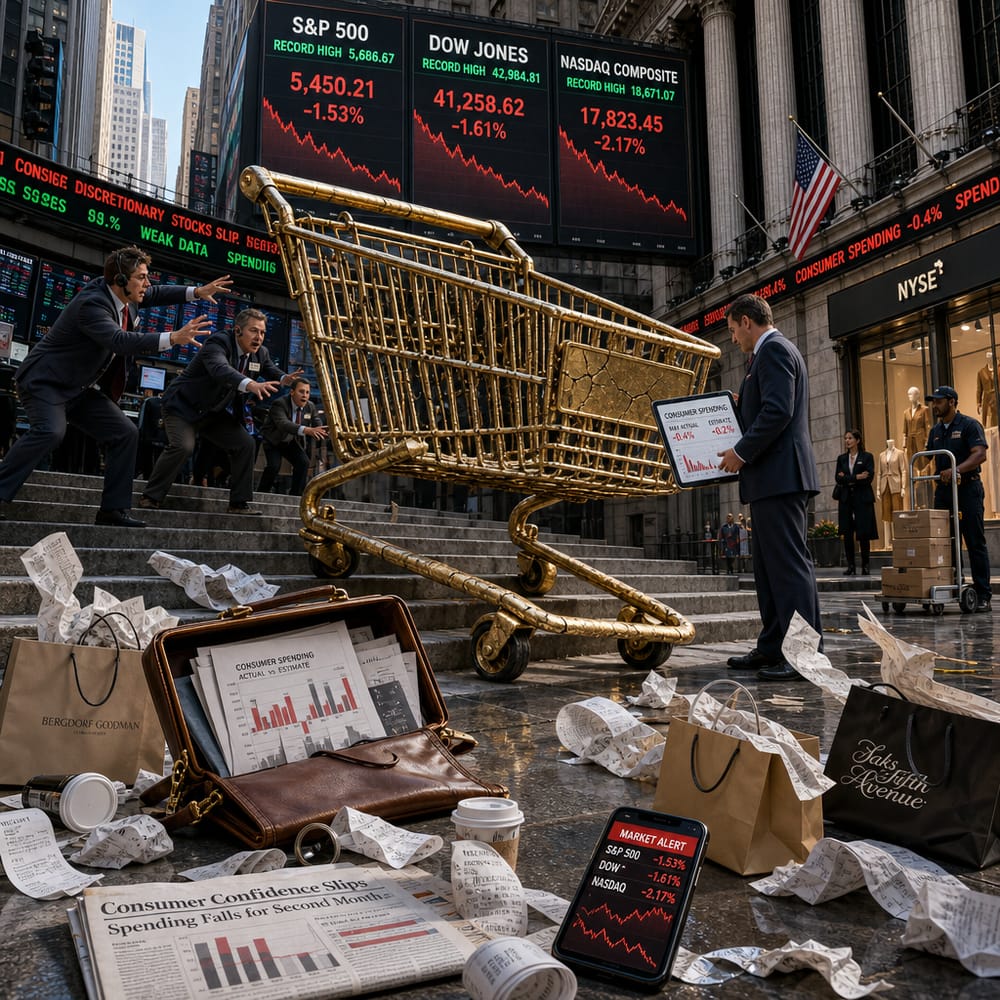
WALL STREET WOBBLES: CONSUMER SPENDING TRIPS UP STOCK MARKET JOY
Buckle up, folks. Last week, we were popping the virtual champagne as the stock market hit record highs. Now, it's time to sober up. The Dow, S&P 500, and Nasdaq have all taken a nosedive after some gloomy consumer spending data crashed the party. Turns out, the consumer may not be as happy about a shopping spree as we'd hoped. So, what's the deal? Why does your wallet determine Wall Street's mood, and should we all be bracing for impact?
First, let’s get something straight: the U.S. consumer is like the engine of a flashy sports car — when it roars, the economy races forward. Consumer spending accounts for about 70% of our GDP, which is essentially the economic report card of the country. If we're not shelling out on everything from groceries to gadgets, the economy could stall, leaving companies with fewer profits and investors with fewer reasons to smile.
But let’s talk turkey. Recent data showed a surprise drop in retail sales, leaving market watchers scratching their heads and starting to sweat. When consumers clutch their wallets tighter, it raises a red flag about economic growth, and Wall Street doesn’t like red unless it’s Valentine’s Day.
So, what's causing this belt-tightening? Rising interest rates play a big role. When borrowing money becomes pricier, we tend to shy away from big purchases. Add in inflation, that sneaky thief making everything more expensive, and it's no wonder consumers are keeping a closer eye on their bank accounts.
And while we're on the subject of money, let's talk about the Federal Reserve. Could these consumer data jitters prompt the Fed to take a U-turn from its interest rate hiking spree? It’s possible. If the Fed thinks the economy is cooling faster than they'd like, they might ease off the gas and slow down the rate hikes. But don’t bet your bottom dollar just yet — the Fed is notoriously tight-lipped and enjoys keeping us guessing.
Now, let's dig into what sectors might feel the pinch of reduced consumer spending. Retail stocks are the obvious first to tremble. If people aren't buying, stores aren't selling. Next up, think of the big-ticket items — autos and housing. With mortgage and loan rates rising, these might start gathering dust. And let’s not forget travel and leisure, which could also hit turbulence as consumers cut back on the fun extras.
But, like any good drama, there's a subplot. We’ve got tech playing it cool on the sidelines. Nvidia recently announced a jaw-dropping $105 billion financing deal for a new AI data center in Ohio. Long-term projects like this might weather short-term consumer spending squalls, especially as AI continues its campaign to conquer the universe. So, tech stocks might just keep their sparkle, even if the rest of the market is looking a bit tarnished.
Still, as all eyes turn to upcoming Federal Reserve meetings and the next batch of spending reports, investors may find themselves pacing the room. In the meantime, maybe it's time to channel your inner squirrel and stash away a few more acorns, just in case. After all, in the world of investing, it’s always smart to keep your umbrella handy. The forecast may call for sunshine now, but clouds can roll in quicker than you can say "sell-off."
So, folks, stay alert and keep an eye on those consumer trends. Wall Street might be stumbling today, but remember — it’s a marathon, not a sprint. Markets rise, markets fall, but those who stay informed and adaptable are the ones who keep crossing the finish line with a smile.
This article is for informational purposes only and is not investment advice. Always do your own research or consult a licensed financial professional before making investment decisions.
© Copyright 2024. All Rights Reserved.
© Copyright 2024. All Rights Reserved.