

U.S. Stocks Retreat from Record Highs Amid Rising Treasury Yields
Wednesday, October 07, 2026
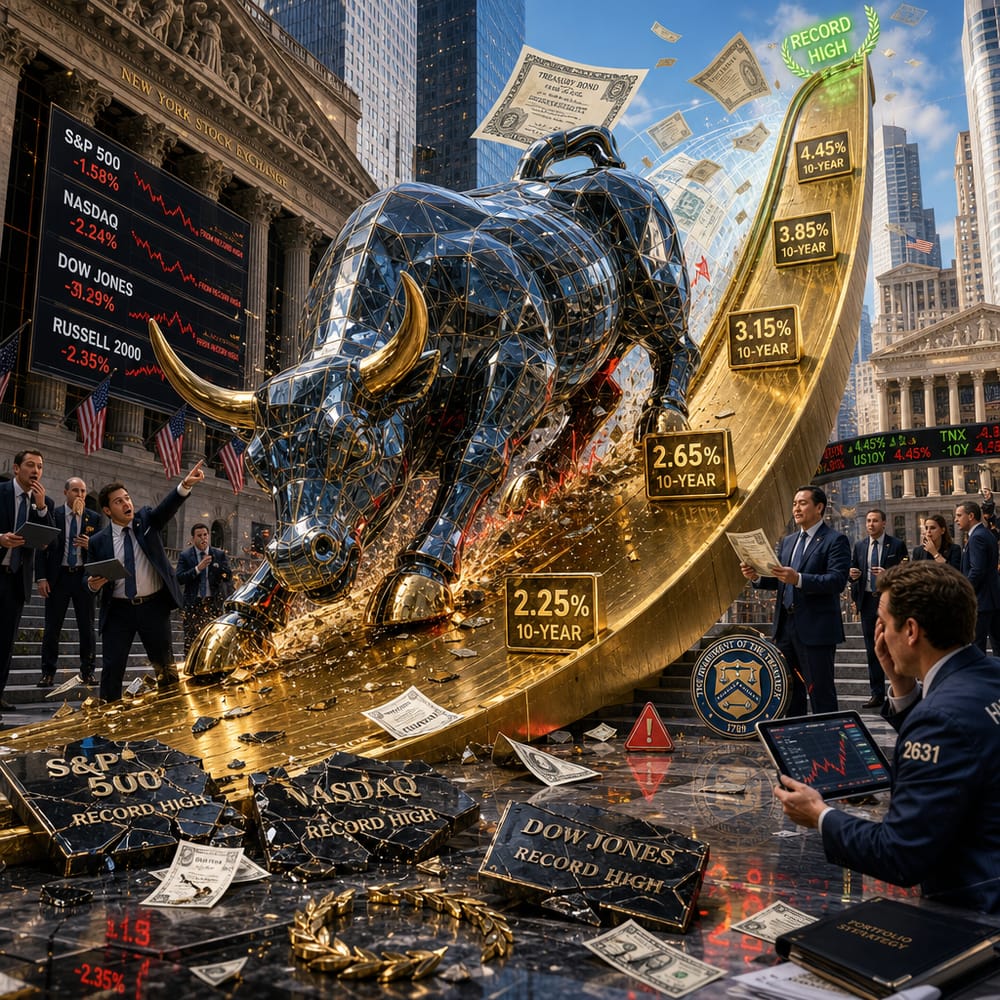
WALL STREET'S NEW TANGO: RECORD HIGHS, MEET RISING YIELDS
So, you like roller coasters? Wall Street’s got you covered. After hitting record highs that made investors feel like the market couldn't be stopped, U.S. stock indices are now stepping back as if they've spotted something unsightly ahead—hello, rising Treasury yields. It’s the financial markets’ version of watching a squirrel dart in front of your car; you’re not quite sure if you're going to swerve or speed ahead.
Treasury yields, particularly on the 10-year note, are like the market’s canary in the coal mine, warning us when danger might be lurking. This time, they’ve climbed enough to raise eyebrows on Wall Street, hinting that the cozy, feel-good market vibes might be in for a reality check. So, what’s giving these yields the helium lift?
THE YIELD SURGE: WHAT'S THE DEAL?
Simply put, when investors get jittery about inflation and future interest rate hikes, they demand higher yields to compensate for what they call “risk.” Inflation fears have been simmering quietly, like a pot about to boil over, fed by a mix of robust economic data and, let's face it, a government fond of printing money faster than any printing press used for actual newspapers. And while solid economic growth is great on paper, it can also mean that higher prices and interest rates might just be around the corner, making those yields move upwards.
In recent days, the 10-year Treasury yield even flirted with its highest levels in over two decades. Why? Well, a strong auction of 10-year notes saw global central banks snapping up U.S. debt like it was a Black Friday TV deal, pushing yields up as they vied for a piece of the action.
YOUR STOCK PORTFOLIO: TIME TO PANIC?
Now, before you swan dive into your stock portfolio, consider this: higher yields don’t necessarily spell doom for stocks, but they do change the dance moves. Rising yields can make bonds more attractive compared to stocks. It’s like a new donut shop opening next to your favorite coffee spot; suddenly, your old favorite isn’t the only option.
Sectors like utilities and real estate, often heavy with debt and hungry for financing, can feel the heat first. Those dividend-heavy stocks might suddenly find themselves less tempting when investors can get nearly as much by parking their cash in risk-free government debt.
On the tech frontier—think the Apples, Microsofts, and Nvidias of the world—higher yields can squeeze valuations. These companies rely heavily on future growth expectations, and when borrowing becomes costlier, those future profits look a tad less shiny. And after all, who doesn’t like a shiny object?
WHAT’S NEXT FOR INVESTOR SENTIMENT?
If you’re sensing déjà vu, it’s because we’ve danced this dance before. Higher yields historically hint at potential shifts in the Federal Reserve’s interest rate policies. If yields continue on their upward trend, expect a spirited discussion on the Fed’s next moves. And, as history shows, investors hate uncertainty more than cats hate getting wet.
In the short term, your watchlist might look like a rainbow of red and green as investors recalibrate their strategies. But it’s important to recall that markets are all about the long game. The swings, while dramatic, are part of the ebb and flow of investing.
THE TAKEAWAY
Yes, the market is showing some fragility, but it doesn’t mean you should desert your ship like a pirate spotting the Royal Navy. Instead, consider this an opportunity to review your positions. Are you too heavy on high-yield sectors? Is your portfolio diversified enough to weather the storm? Maybe it’s time to reassess and, perhaps, rebalance.
Wall Street’s recent moves are a reminder that the only constant in the market is change. So, buckle up, maintain a level head, and keep a sharp eye on those yields. They may be the market’s way of telling us a new chapter is about to unfold. And who doesn’t love a good plot twist?
This article is for informational purposes only and is not investment advice. Always do your own research or consult a licensed financial professional before making investment decisions.
© Copyright 2024. All Rights Reserved.
© Copyright 2024. All Rights Reserved.