

U.S. Stocks Rally on Softer PCE Data—S&P 500, Nasdaq Pop; Treasury Yields Pull Back
Wednesday, September 30, 2026
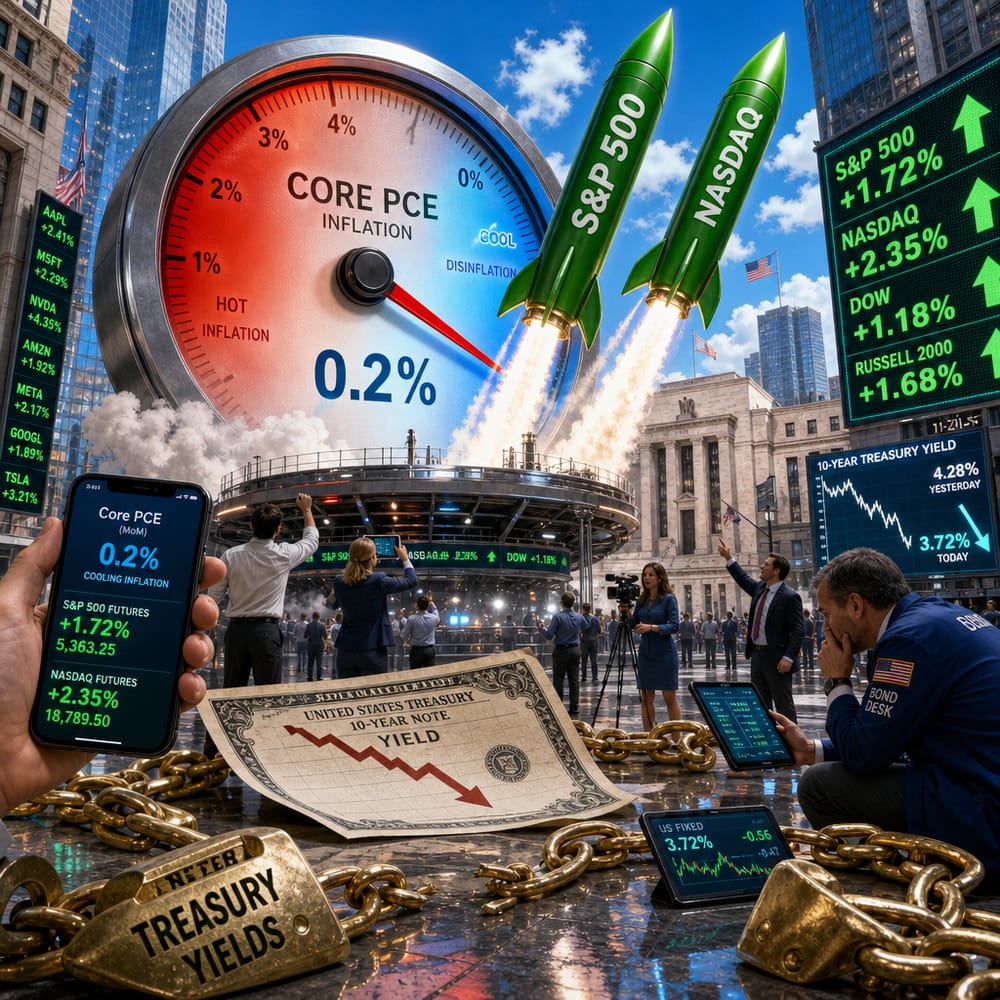
The stock market just pulled a Houdini, and it's all thanks to an unexpected twist in the inflation tale. The Federal Reserve's favorite yardstick for inflation, the Core Personal Consumption Expenditures (PCE) index, rose a mere 0.2% in August. That's like expecting a spicy jalapeño and getting a mild bell pepper instead. The inflation surprise sent a ripple of excitement through Wall Street, with the S&P 500 and Nasdaq popping like a shaken can of soda, while Treasury yields took a breather.
So, why is this inflation data such a big deal? Well, it gives investors a glimmer of hope that the Fed might hit the pause button on its rate-hiking extravaganza. For those uninitiated in Fed-speak, higher interest rates usually act like a wet blanket on the economy, making borrowing more expensive and slowing down growth. But if inflation is cooling, the Fed could take a step back, giving the bulls a reason to charge.
From the Wall Street jungle to Main Street's coffee shops, everyone's buzzing about how this could influence the Fed’s game plan. Picture the Fed as a nervous driver on an icy road, constantly adjusting the rates to keep the economy from skidding out of control. If inflation starts behaving, they might just ease off the brake, much to the delight of equity markets.
Now, let's talk sectors. If the Fed decides to take it easy on the rate hikes, certain areas could really shine. Think tech stocks on the Nasdaq – they're like kids on a sugar rush when borrowing costs are low. That's because tech companies often rely on cheap capital to fuel their growth engines. Also, the real estate sector could perk up, as mortgage rates might stabilize or even drop, making those dream homes (or investment properties) a tad more affordable.
But it's not just the stock market that's reacting. Treasury yields, which had been doing their best impression of a mountain climber, are inching back down. When yields fall, bond prices rise – a welcome development for bond investors who have been feeling the heat from the recent yield ascent. This could also ease some pressure on heavily indebted companies and governments, making the cost of borrowing a bit less painful.
Still, the Fed's next moves aren't set in stone. They're like a weather vane in a tornado, constantly shifting with the economic winds. A few other economic indicators could throw a monkey wrench into the works. Take the job market, for instance, which is showing signs of life with private sector jobs on the rise. If employment keeps gaining traction, the Fed might still see a case for a rate hike to keep the economy from overheating.
Investors are also keeping an eye on the global stage. With AI companies battling it out and geopolitical tensions simmering, there are plenty of external factors that could impact the Fed's decisions. It's like playing three-dimensional chess – one wrong move, and it could all fall apart.
For now, though, the market mood is buoyant. The idea that the Fed might cool its rate hiking jets has brought a sense of relief, and the stock market is basking in the glow. It's a reminder of how the intricate dance between the economic data and Fed policy can send ripples across the financial landscape, affecting everything from the stock markets to your 401(k) plan.
In the end, this rally and retreat combo is a testament to the ever-changing narrative of the financial markets. As any seasoned investor will tell you, the only constant is change. So, whether you're a tech stock enthusiast or a bond market aficionado, keep your eyes peeled and your portfolio diversified. After all, the road ahead is as unpredictable as ever, but that's what makes it an exciting ride.
This article is for informational purposes only and is not investment advice. Always do your own research or consult a licensed financial professional before making investment decisions.
© Copyright 2024. All Rights Reserved.
© Copyright 2024. All Rights Reserved.