

U.S. Stocks Post Best Week Since Spring 2025—but Credit Spreads Hint at Underlying Stress
Sunday, November 29, 2026
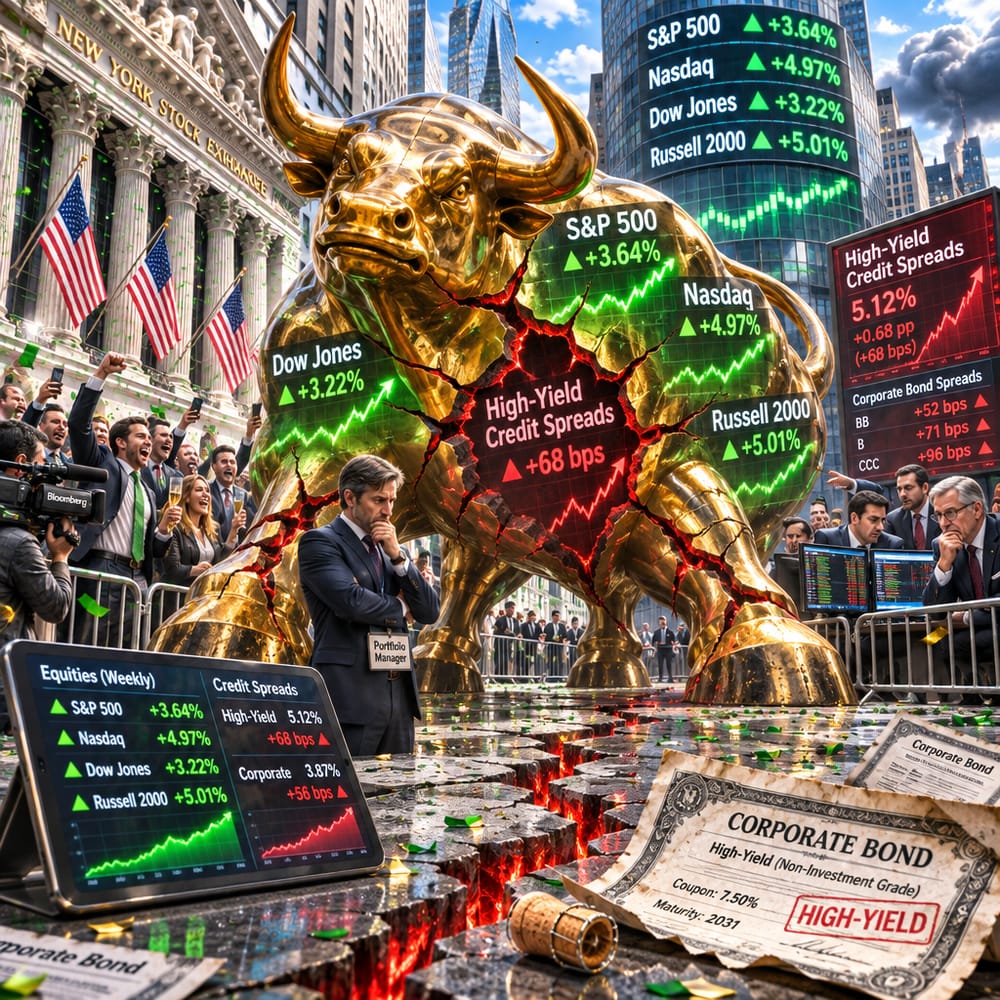
U.S. STOCKS POST BEST WEEK SINCE SPRING 2025—BUT CREDIT SPREADS HINT AT UNDERLYING STRESS
Picture this: while U.S. stocks are doing the mambo, shaking off their autumn blues and posting their best weekly gains since spring 2025, something sinister is creeping in the background. Yes, folks, it’s those pesky credit spreads — the canary in the financial coal mine, whispering ominously about potential market stress.
So, what on earth happened to gift-wrap such a stellar week for the stock market? The S&P 500, Nasdaq, and their buddies in the Dow Jones and Russell 2000 had a ball, basking in a much-needed rally after the S&P 500 dropped into its first correction since 2025. For the uninitiated, a correction is just a fancy way of saying the market took a slight detour, sliding more than 10% from its recent highs. Ironically, history tells us these corrections are often like launching pads: the S&P 500 tends to springboard back up, gaining an average 14.7% over the following year.
While the equity party was in full swing, credit spreads — the difference in yield between corporate bonds and government debt — were doing another kind of dance. They widened, hinting at jitters over the market's underlying health. This divergence between stocks and credit can be a harbinger of trouble, suggesting that while equity investors are popping the champagne, bond markets are cautiously eyeing the exits.
But let's rewind a bit. Why were stocks so chipper this past week? A cocktail of factors stirred the bulls into action. Positive retail reports, particularly Black Friday sales rising 5.8% despite affordability concerns, injected some holiday cheer into the markets. Plus, corporate drama made headlines, with Jensen Huang's reinstatement as Nvidia's CEO after a scandalous interlude, which restored confidence in Nvidia stocks and the broader AI sector.
Amazon also threw its hat in the ring, wowing investors with its AI and cloud computing revenues, proving that it deserves a spot among the so-called "Magnificent Seven" tech titans. When big players like Amazon and Nvidia are flexing their muscles, they often drag the indices up with them.
Now, back to those ominous credit spreads. When they widen, it’s like the bond market is putting on a high-vis jacket, waving its arms and shouting, "Hey, something's not right!" This usually happens when investors perceive higher risks of defaults, leading them to demand more return for lending their money. In essence, it’s a red flag that the economy could be under pressure, despite stocks riding high.
So, what’s the buzz among the market sages? Analysts have their eyebrows raised over the sustainability of this rally. While the stock market is buoyed by seasonal consumer spending and tech sector optimism, the underlying economic fundamentals — like rising borrowing costs reflected in those widening credit spreads — might bring water to the equity party. This divergence often acts as a sobering reminder that even when stocks are up, the broader economic landscape might not be as rosy.
Long-term investors, however, are reminded not to panic. Historical data has a calming whisper: trust the process. Even when the market takes a tumble, those who hang in for the five-year stretch typically see the storm pass. Yet, keeping an eye on credit markets is crucial — they’re like the wise old owls of finance, often seeing trouble before it hits the headlines.
In the end, it’s a classic tale of two markets. Equities are fueled by optimism, buoyed by a mix of strong retail performance and tech sector confidence. Yet, credit spreads are sending a cautionary note, a reminder that all that glitters in the stock market isn’t always gold.
So, dear retail investor, as you sip your morning brew and scroll through market headlines, remember: it’s a dance floor out there. Stocks might be leading the conga line, but the credit markets are always worth a glance. After all, it’s the interplay of these elements that keeps the financial world spinning, sometimes to a salsa beat, other times with the slow rhythm of a blues number. Stay tuned and keep those eyes peeled.
This article is for informational purposes only and is not investment advice. Always do your own research or consult a licensed financial professional before making investment decisions.
© Copyright 2024. All Rights Reserved.
© Copyright 2024. All Rights Reserved.