

U.S. Stocks Edge Lower Amid Rising Oil Prices and Inflation Concerns
Tuesday, August 18, 2026
U.S. STOCKS EDGE LOWER AMID RISING OIL PRICES AND INFLATION CONCERNS
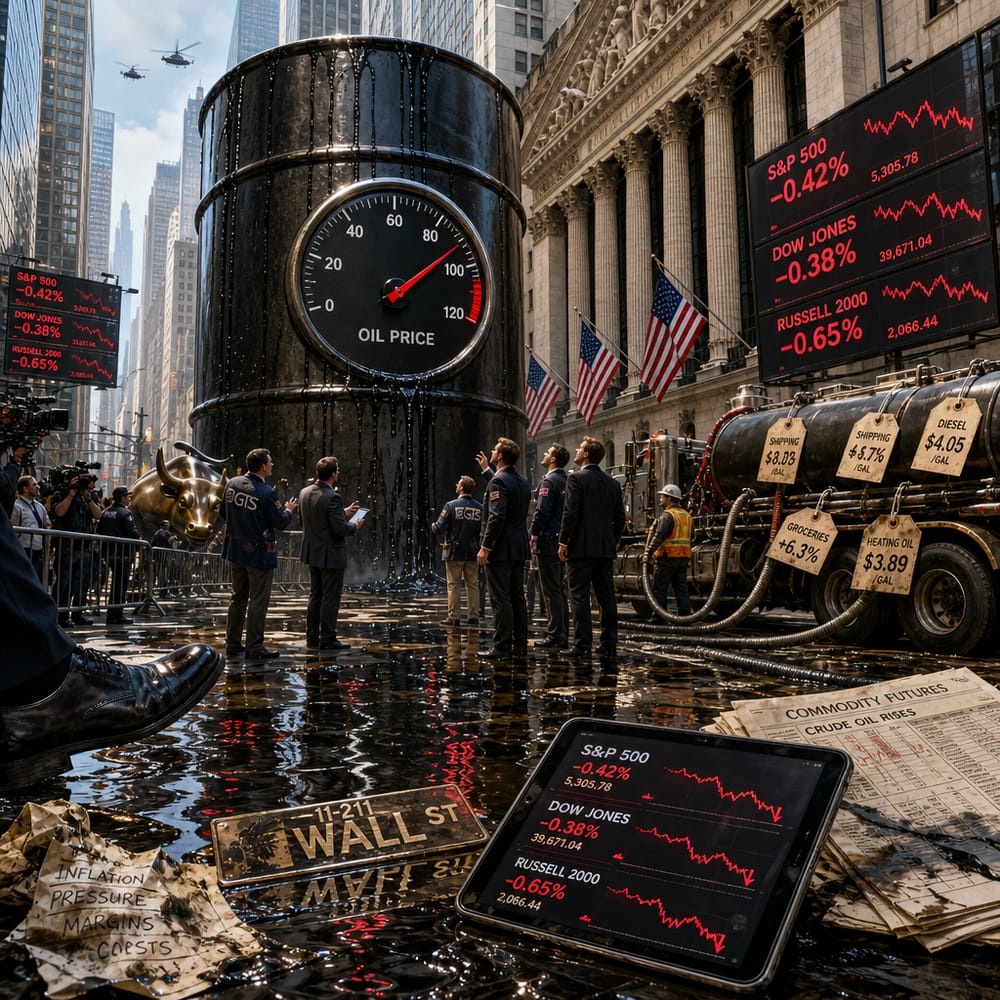
If you think the only thing popping faster than balloons at a kid's birthday party are oil prices, you're not alone. Wall Street's starting to sweat, and not just because it's summer. The stock market is having a bit of a rough patch, as higher oil prices stoke the flames of inflation fears, causing major indices like the S&P 500, Dow, and Russell 2000 to edge lower. And all this turmoil is as gripping as a dicey reality show, except the stakes are your investment portfolio.
Let's break it down. Oil prices have been on a tear recently, thanks to geopolitical tensions and a stubbornly tepid peace process in the Middle East. The Strait of Hormuz, an essential artery for global oil trade, has turned into a maritime version of a parking lot, thanks to ongoing U.S.-Iran tensions. This has essentially slammed the gas pedal on oil prices, which are rising like they're trying to escape gravity.
Higher oil prices have a sneaky way of spreading their tentacles into the economy. They can lead to higher costs for transportation and production, which can snowball into more expensive groceries, pricier plane tickets, and generally higher costs of living. Hello, inflation—or what we all affectionately call that sneaky, lurking eroder of your purchasing power.
Now, what's inflation got to do with stocks, you ask? Quite a lot, actually. Inflation can crimp consumer wallets, and when people tighten their belts, the dominoes start to fall. Consumer spending, which drives a significant portion of the U.S. economy, can shrink. Companies might sell less, profits can fall, and stock prices may follow suit. It's a bit like trying to balance on a unicycle during an earthquake.
Some sectors feel the pinch more than others. Energy companies might be high-fiving over their skyrocketing revenues, but businesses in sectors relying heavily on fuel, like transportation, are gritting their teeth. Retail and consumer goods companies, often sensitive to changes in consumer spending due to inflation, aren't having a blast either. The tech sector, with its love affair with growth and sometimes inflated valuations, also feels the pressure as inflation fears can lead to higher interest rates.
Speaking of interest rates, Treasury yields have been climbing too. The yield on the 30-year Treasury bond hit its highest level in nearly two decades. For those unfamiliar, rising yields usually mean falling bond prices, which can be a signal that investors expect Federal Reserve interest rate hikes to combat inflation. Those higher rates can dampen borrowing and spending, which isn't exactly the recipe for a booming stock market.
So, what’s an investor to do? Well, in times like these, many savvy investors start re-evaluating their portfolios. Some may decide to brush up on their defensive strategies, like shifting more into sectors that traditionally fare better in inflationary times, such as healthcare or utilities. Others might be looking at inflation-protected securities or even gold, the classic hedge against inflation.
Then there's the contrarian approach. For every investor running for safer hills, there's another looking for bargains amidst the chaos. The energy sector, with oil prices on the rise, might be ripe for picking if you're a fan of the "buy low, sell high" mantra, but remember, it's not a one-size-fits-all game.
As always, the stock market is a rollercoaster of emotion and strategy, the thrills and chills of which can resemble a high-stakes poker game. The key is not to panic and to keep an eye on the bigger picture. Economic cycles come and go, and today's inflation worries might just be tomorrow's opportunity, depending on your investment horizon and risk tolerance.
While today's market may feel like trying to read tea leaves during a hurricane, the savvy investor knows that every storm eventually passes. So, tighten your seatbelt and keep your eyes on the horizon—it's sure to be a fascinating ride.
This article is for informational purposes only and is not investment advice. Always do your own research or consult a licensed financial professional before making investment decisions.
© Copyright 2024. All Rights Reserved.
© Copyright 2024. All Rights Reserved.