

U.S. Stock Futures Surge on Unexpected 23K Job Loss
Friday, August 07, 2026
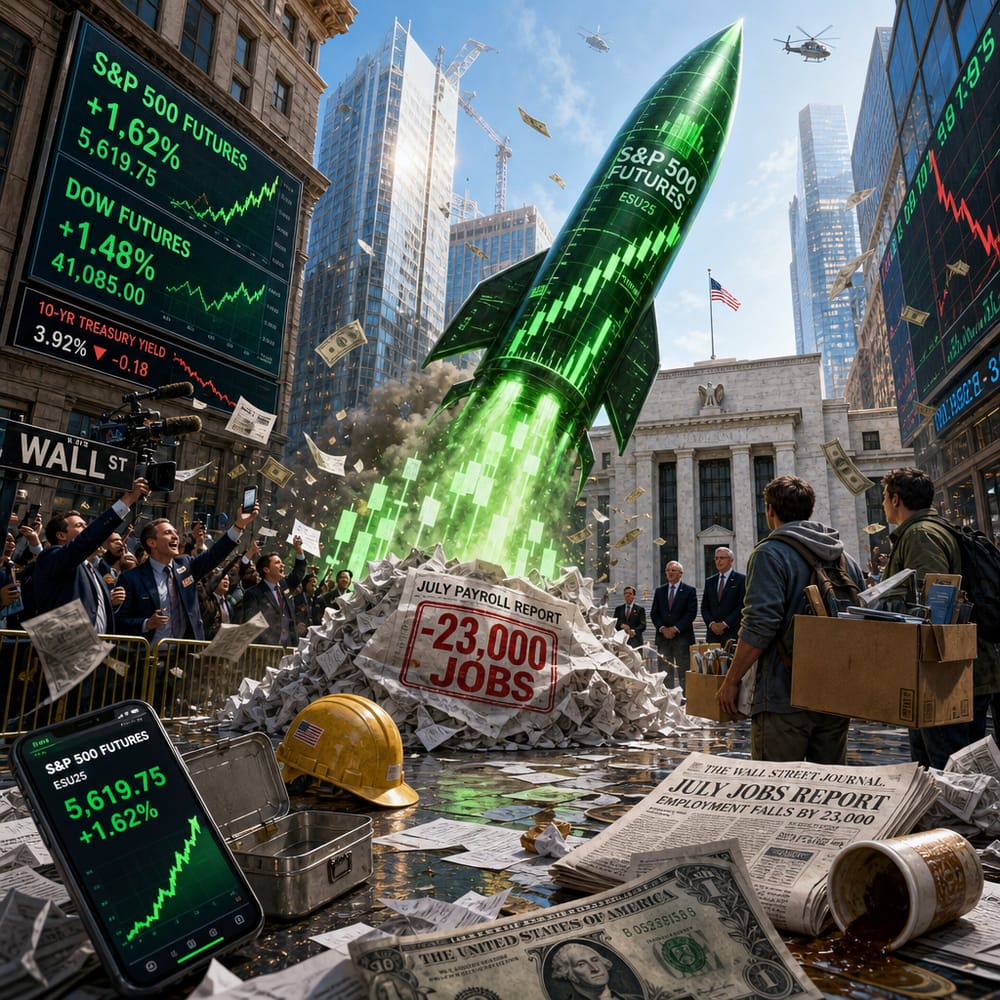
STOCK FUTURES SOAR AS JOBS REPORT STAYS IN THE NO-GAIN ZONE
Every so often, a headline rolls in that makes Wall Street do a double-take and laces the market with adrenaline. Today’s shocker: The U.S. economy shed 23,000 jobs in July, catching just about everyone off guard and sending stock futures into a rally. Investors, like caffeine-fueled kids at a candy store, are now pumped up over what this could mean for interest rates.
When most folks hear "job losses," the immediate thought isn't usually "Hey, let's celebrate!" But in the zany logic of the stock market, fewer jobs might mean a break from the Federal Reserve's interest rate hikes, which have been about as welcome as a mosquito at a barbecue. So, this surprising dip in the job market has flipped investor expectations on their head, feeding into hopes that the Fed might take a break from its aggressive rate-raising campaign.
S&P 500 and Dow futures leapt at the news, driven by the dream of a more dovish Fed. For the uninitiated, "dovish" is just a fancy financial way of saying the Fed might chill out a bit on its trigger-happy interest rate hikes. Lower rates make borrowing easier and can give the stock market a shot in the arm. And with the jobs report painting a less-than-rosy picture, investors are betting on the Fed sitting back and relaxing instead of tightening the screws.
SECTORS IN MOTION
Let's break it down by sector, because not every corner of the market is reacting the same way. Tech stocks, for instance, are doing their best impression of a hot air balloon, rising with the anticipation of cheaper borrowing costs. Financials, on the other hand, are less than thrilled. Banks love higher interest rates because they can charge more for loans. So those guys are pouting in the corner while techies are dancing on the table.
Meanwhile, Treasury yields are slipping like a bar of soap in the shower. The 10-year Treasury yield, a key indicator for everything from mortgage rates to car loans, dropped by 4 basis points. If you’re scratching your head over “basis points,” just know that it’s financial speak for tiny percentage changes. A drop in yields often signals that investors are shifting their cash from the stock market into bonds, anticipating lower interest rates ahead.
READING THE FED'S TEA LEAVES
So what's next from the Federal Reserve? Well, that’s the trillion-dollar question. This jobs report, weaker than a decaf latte, might just convince the Fed to ease off the brake pedal. Investors are buzzing about the possibility of the Fed pivoting or at least pausing further rate hikes in September. It’s like waiting to see if your soccer team will finally bench the goalie that’s been letting in too many goals.
In the short term, this jobs report is a big, blinking “pause” sign for potential rate hikes, and investors are loving it. Long-term, though, the picture is murkier. A consistently weak job market could mean trouble for consumer spending, and we all know the economy needs consumer spending like a car needs gas. But for now, the market is riding the wave of optimism.
ROOM FOR DOVISHNESS?
Given the lackluster job numbers, the Fed might find itself on a tighter leash. A weak labor market could prompt the Fed to lean into more dovish commentary, signaling rate relief sooner rather than later. And while we don’t have any crystal balls, the idea of more rate cuts or even a September pivot isn’t off the table.
But here’s the kicker: This dance between jobs, the Fed, and the market is as unpredictable as a cat on a hot tin roof. Just because investors are hoping for a softer stance doesn’t mean it’s a done deal. If inflation changes direction or if new data emerges, the Fed could decide to surprise us all once again.
THE BOTTOM LINE
In this topsy-turvy financial world, bad news for jobs is good news for stock futures. It’s a classic case of one man's trash being another man's treasure, amplified by the market’s thirst for a Fed that takes its foot off the gas. Whether this jobs report will lead to a summer of love from the Fed remains to be seen. In the meantime, investors are basking in this unexpected boost, keeping fingers crossed for a dovish shift that could spell better news for their portfolios. Keep your eyes peeled, folks—this roller coaster is just starting to roll.
This article is for informational purposes only and is not investment advice. Always do your own research or consult a licensed financial professional before making investment decisions.
© Copyright 2024. All Rights Reserved.
© Copyright 2024. All Rights Reserved.