

U.S. Steak Prices Hit Record High, But Demand Holds
Friday, July 03, 2026
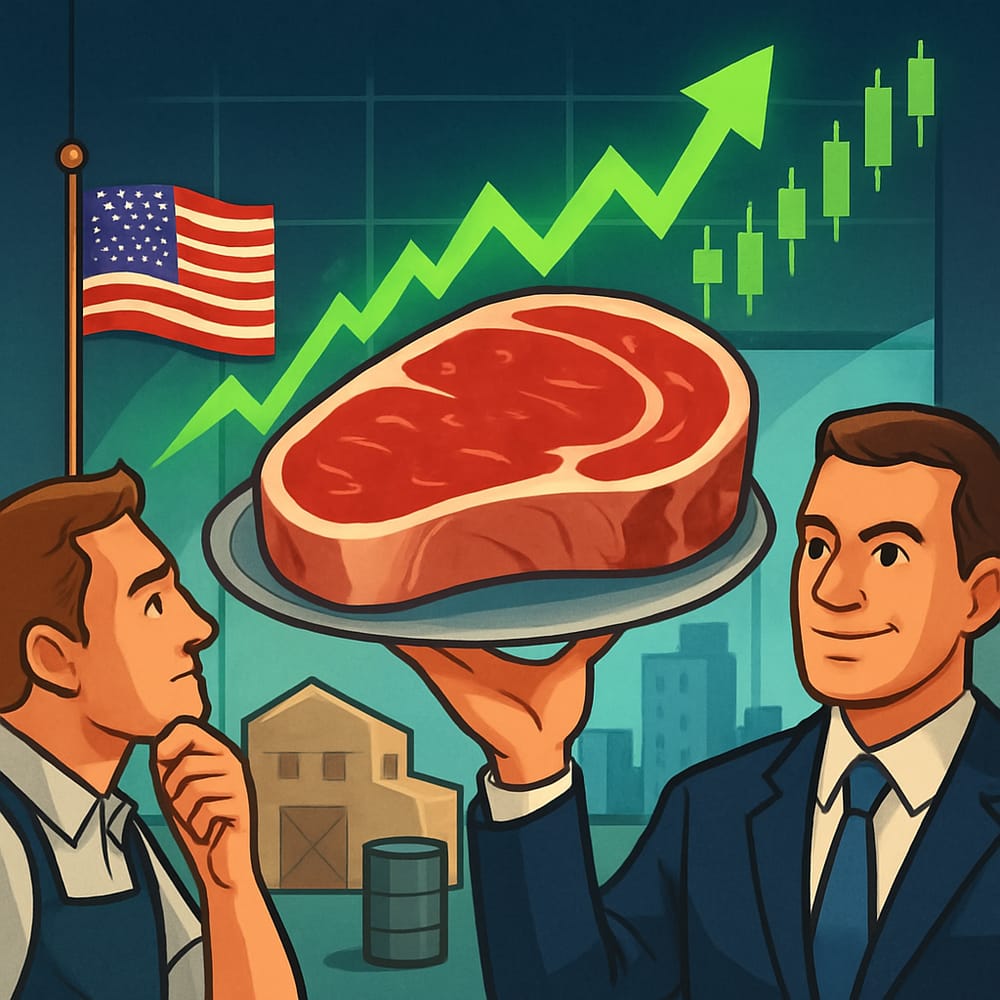
GRILLING ON A BUDGET: WHY AMERICANS ARE STILL SHELLING OUT FOR STEAK
The Fourth of July is upon us, and Americans are firing up their grills like it's nobody's business. Despite the fact that steak prices are climbing faster than a squirrel up a tree, folks are still ponying up the cash for that juicy cut of beef. What's going on here? Are we all collectively ignoring our wallets in favor of a good barbecue, or is something bigger at play?
Prices have hit sizzling new heights, with steak now averaging $12.80 per pound, up a staggering 16% from last year. Yet, somehow demand remains hotter than a July afternoon. It's an odd juxtaposition that has economists raising their eyebrows and consumers tightening their belts — but not enough to forgo their beloved beef.
So what's fueling this steak addiction? It seems like there's a perfect storm of factors at play. The U.S. cattle herd is at its lowest point in decades, thanks to years of drought, expensive feed, and herd liquidation. Add that up, and you get a supply crunch that's launching cattle prices into the stratosphere, taking your steak dinner right along with it.
But despite the sticker shock, Americans are sticking to their guns — or rather, their grills. This might suggest that the average Joe and Jane have a bit more financial wiggle room than we might think. The resistance to switch to alternatives, like chicken or tofu, implies that a good number of us are willing to bite the bullet for our beef. Thanks, apparently, to a mix of economic resilience and the sheer joy of grilling.
Is this a sign that consumers are turning a blind eye to rising costs, or do they simply have more money to burn? With labor participation hitting a half-century low — excluding the oddity of the COVID era — and job creation slowing down, it seems counterintuitive that people would just shrug off these price hikes. Yet, when it comes to steak, elasticity might as well be nonexistent — consumer demand stays put, prices be darned.
Retailers and meat producers are riding this wave with mixed emotions. Sure, they're thrilled to see demand hold strong, but with prices rising, there's a sense of tightrope walking when it comes to maintaining margins. Passing costs on to consumers only works as long as those consumers stay willing to pay. When does the budgetary belt finally cinch tight enough to strangle that willingness?
For food retailers, the current state of affairs is a bit of a high-wire act. On the one hand, they're benefiting from robust sales, but keeping those shelves stocked isn't getting any cheaper. As for the meat producers, they're watching their margins shrink faster than a cheap T-shirt in a hot wash. The tight supply and rising costs are turning what should be a profitable business into a scramble.
And what about alternatives? In theory, you'd expect consumers to flock to cheaper options amid such price hikes. Yet, the pull towards steak remains fierce. Chicken, while cheaper, doesn't quite carry the same celebratory flair for many. Plus, with inflation touching almost every aisle in the supermarket, switching might not feel like much of a relief. After all, even the humble potato chip has seen better pricing days.
So, as we toss another T-bone on the grill, let's take a moment to consider the bigger picture. The persistent demand for steak amid soaring prices paints a portrait of a market both resilient and perplexing. It's a testament to consumer spending power, or maybe just a stubborn refusal to let go of that quintessential American summer experience.
In the end, it looks like steak's reign is far from over. As long as consumers continue to prioritize flavor and tradition over savings, those sizzling steaks are here to stay. The question is, how long can this beefed-up demand hold out against the ever-tightening financial noose? Time, and perhaps a few more July Fourths, will tell.
This article is for informational purposes only and is not investment advice. Always do your own research or consult a licensed financial professional before making investment decisions.
© Copyright 2024. All Rights Reserved.
© Copyright 2024. All Rights Reserved.