

U.S. Signals Willingness to Repeat FX Coordination
Sunday, August 16, 2026
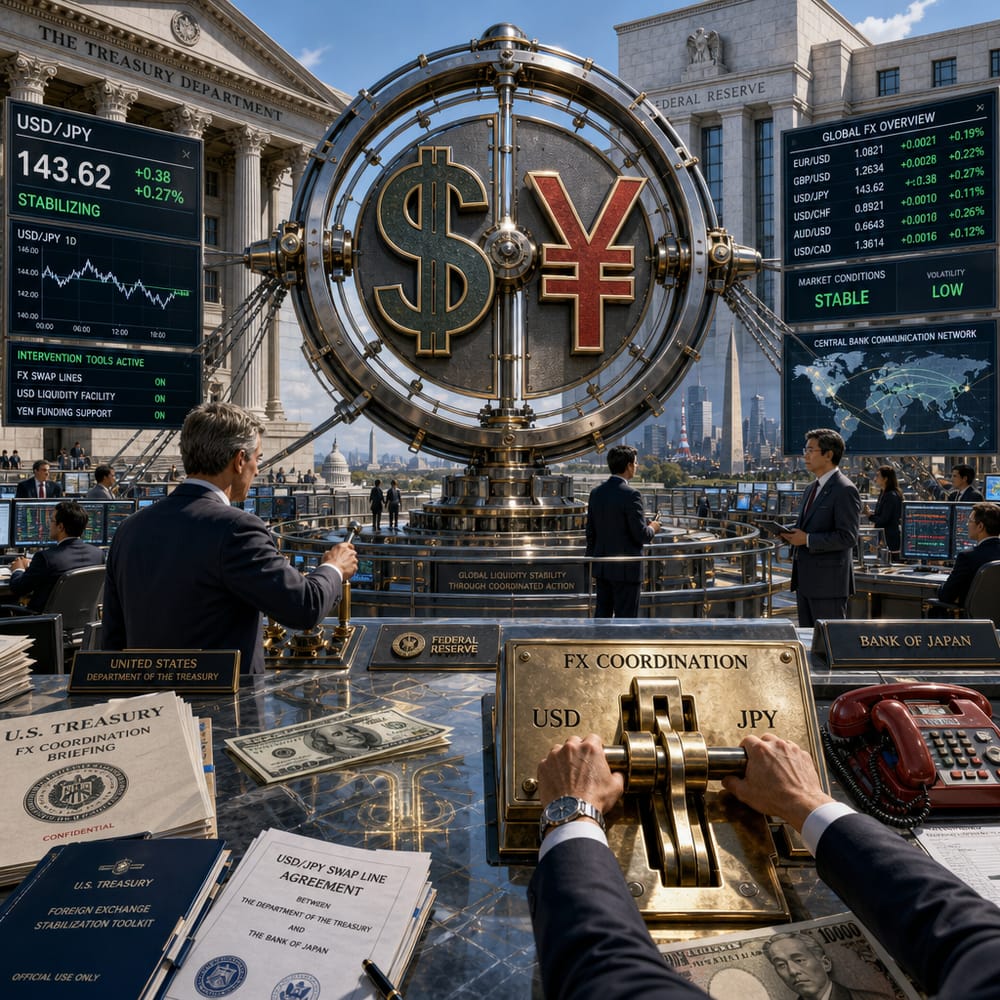
THE DOLLAR DANCE: U.S. READY TO GROOVE WITH FOREX MARKETS
Hold onto your wallets, folks. The U.S. Treasury just signaled it's ready to tango with foreign exchange markets, and it might be more than just a simple two-step. This isn’t your average Wall Street waltz — it’s the kind of global financial choreography that could have big impacts on those greenbacks in your pocket and far beyond.
WHAT’S THE DEAL WITH THE DOLLAR?
The U.S. Treasury is raising its hand to say it's ready to get involved in the world of forex — that’s the foreign exchange markets where currencies are traded. Imagine your dollars, euros, yen, and yuan all out on the dance floor. When one stumbles, the rest can trip too. And let’s face it, nobody wants a market face-plant.
By pledging potential currency interventions and boosting tools for foreign central banks, the Treasury aims to keep things grooving smoothly. Why? It’s all about stability. A stable global currency market means fewer wild swings in currency pairs, which is crucial for businesses and investors who dislike surprises like you hate finding a parking ticket on your windshield.
BUT WHAT DOES THIS MEAN FOR THE USD?
If Uncle Sam steps onto the stage, it could mean the U.S. dollar may strut with a renewed sense of confidence — at least for a while. Currency interventions often involve buying or selling dollars to influence exchange rates. Picture it like adjusting the volume on your favorite track: sometimes you need things louder, sometimes softer.
The potential upside? A little less drama in currency markets could make the dollar more predictable. Great news for those sipping piña coladas on holiday as they check exchange rates. On the flip side, interventions can be a bit like guacamole at a party — great when fresh, but tricky if overdone.
WILL THE GLOBAL CURRENCY MARKETS SWAY IN TIME?
This U.S. move could ripple across the globe faster than a TikTok dance challenge. Key currency pairs like USD/JPY — that’s the U.S. dollar and Japanese yen for the uninitiated — could see shifts. If the dollar strengthens, it might mean cheaper imports for the U.S., but exports might become pricier abroad — something to ponder the next time you eye that "Made in the USA" label in Tokyo.
However, the real intrigue lies in how central banks react. If the U.S. kicks off interventions, other nations might feel the itch to tweak their own monetary strategies. It’s a financial game of chess where a pawn move can echo across the board.
THE RISKS AND PERKS OF INTERVENTION
Let’s not sugarcoat it: messing with currency markets is like walking a tightrope. It demands precision, timing, and nerves of steel. Intervene too heavily, and there’s a risk of distorting markets, creating a sense of uncertainty that investors loathe. It also begs the question: can Uncle Sam keep up if the tempo quickens?
The upside? Reduced volatility is like a cool breeze on a hot day. It can help stabilize economies, especially those heavily reliant on exports. For the U.S., a steady dollar might promote confidence in global traders and investors, potentially attracting more foreign investment.
However, critics warn that frequent interventions can lead to dependency, where markets expect Uncle Sam to always catch them when they fall. Not exactly the pep talk you want in a self-reliant financial world.
WRAPPING IT UP: A DANCE WITH OPPORTUNITY
The U.S. Treasury’s willingness to jump back into currency coordination might be a bold step towards global financial stability. But whether this latest move will bring harmony to the forex dance floor or cause a misstep remains to be seen.
So, the next time you check your phone for the latest exchange rates or ponder why that sushi platter in Paris just got pricier, consider the bigger picture. The world of currency is a complex, ever-evolving dance, and the U.S. is back in the game. Just make sure you’ve got your dancing shoes on, because when it comes to forex, anything can happen.
This article is for informational purposes only and is not investment advice. Always do your own research or consult a licensed financial professional before making investment decisions.
© Copyright 2024. All Rights Reserved.
© Copyright 2024. All Rights Reserved.