

U.S. Sanctions Dubai Crypto Exchange for Aiding Iran's IRGC
Tuesday, August 11, 2026
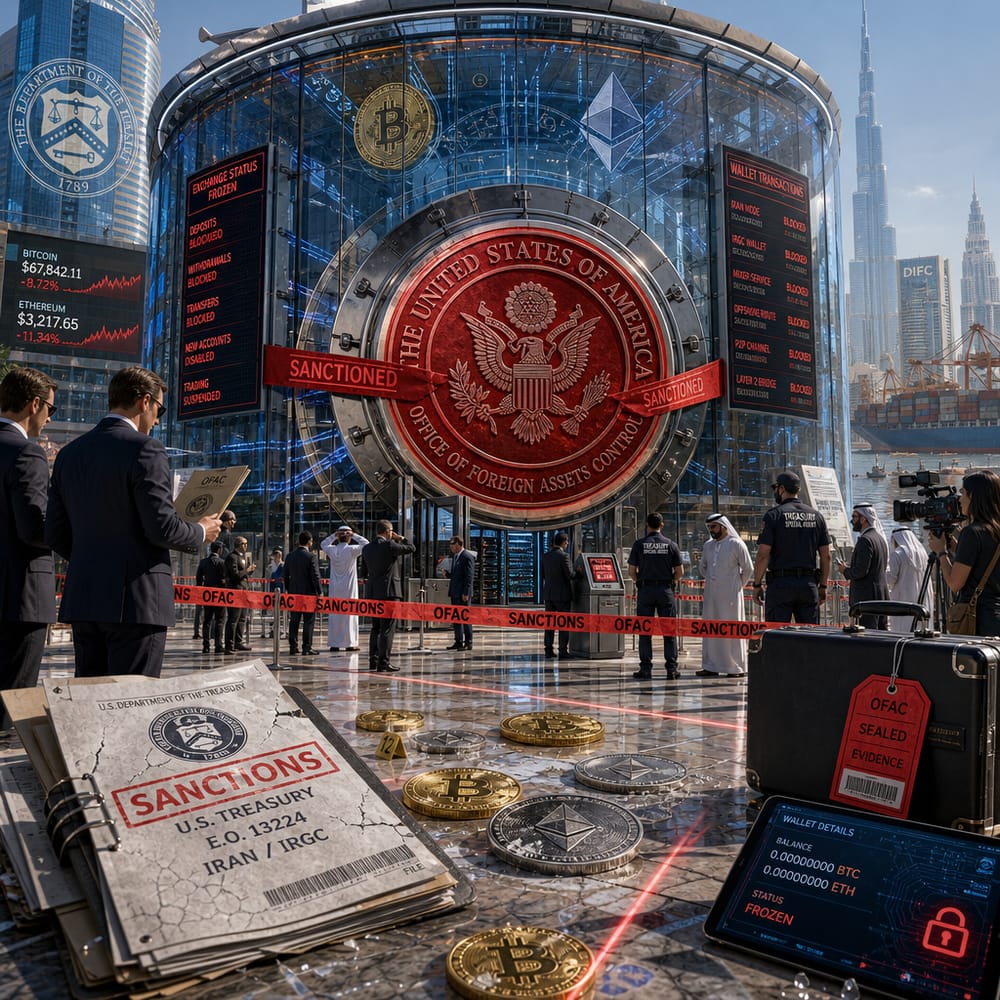
CRYPTO SHAKE-UP: U.S. SANCTIONS HIT DUBAI EXCHANGE FOR IRAN TIES
Cryptocurrency is fast becoming the wild west of finance, and Uncle Sam just whipped out his badge. Recently, the U.S. government slapped sanctions on a Dubai-based crypto exchange for reportedly playing footsie with Iran’s Islamic Revolutionary Guard Corps (IRGC). Now, this isn’t just some slap on the wrist—this is the financial equivalent of locking the saloon doors and throwing away the key. But what does it mean for Joe and Jane Investor back in the States who fancy dabbling in digital gold?
First, let’s talk details. The sanctioned exchange allegedly facilitated transactions for the IRGC, a group the U.S. doesn't take lightly. Think of the IRGC as Iran’s military with a side hustle in economic ventures, and you’ll get the picture. The U.S. Treasury Department, spotting potentially suspicious activity, decided this crypto exchange was due for a timeout, essentially cutting it off from any business involving American entities.
For U.S. investors with a toe in the crypto waters, this move might feel like a chilly splash. You see, while digital currencies like Bitcoin and Ethereum promise decentralized freewheeling, they’re not immune to the geopolitical tug-of-war. Investors using offshore exchanges could find themselves caught in the crosshairs, facing increased scrutiny or the hassle of having their cross-border transactions scrutinized more closely than ever.
But zoom out, and this isn’t just a local dust-up. It signals a broader narrative shift—crypto exchanges worldwide, regardless of their base of operations, are under the microscope like never before. The days of regulatory blind spots might be ending, as global powers start playing sheriff in the high-stakes crypto world. Essentially, the question isn’t "if" regulation is coming, but "how intense" it will be.
So why should you, dear crypto enthusiast, care about a dust-up in Dubai? Well, this crackdown could be the canary in the coal mine for other overseas exchanges that U.S. investors love for their lower fees, wider coin selections, or, let's be real, their lax verification processes. If these platforms begin tightening their belts to avoid falling foul of Uncle Sam, expect the Wild West to start looking a little more like Wall Street.
As the regulatory noose tightens, don’t be surprised if the cost of doing crypto business rises. Compliance isn’t cheap, folks, and those costs tend to trickle down to the user, and yes, that means you. Plus, this could lead to changes in how exchanges handle your assets—more checks, more balances, and possibly more headaches for the individual investor.
For regulators worldwide, the message is clear: play time might be over. The crypto space, once a playground for the tech-savvy and risk-tolerant, is evolving into legitimate financial territory, complete with rules and repercussions. This shake-up could lead to a domino effect, prompting stricter rules from other countries eager to ensure their financial systems aren’t inadvertently funding sanctioned entities.
This regulatory scrutiny may also drive innovation—think decentralized exchanges and privacy coins—as the crypto world pivots to adapt. It’s an arms race between the speed of technological innovation and the slow grind of regulatory frameworks catching up.
For now, if you're a U.S. investor in crypto, it might be time to tighten your chinstrap and do a little extra homework. Know where your crypto exchange's heart lies and whether it plays nice with Uncle Sam's rulebook. Because in this new digital frontier, navigating the financial landscape will take more than just wild ambition and a knack for numbers—it’ll demand a keen eye on the evolving rulebook and the global chessboard.
Cryptocurrency may have started as a rogue financial experiment, but today, it's squarely in the crosshairs of global power games. As the dust settles on this latest sanction smackdown, remember one thing: in the world of crypto, the only constant is change. And sometimes, that change comes not in the form of a new coin, but a new rule.
This article is for informational purposes only and is not investment advice. Always do your own research or consult a licensed financial professional before making investment decisions.
© Copyright 2024. All Rights Reserved.
© Copyright 2024. All Rights Reserved.