

U.S. Regulatory Proposal for Stablecoins
Tuesday, August 04, 2026
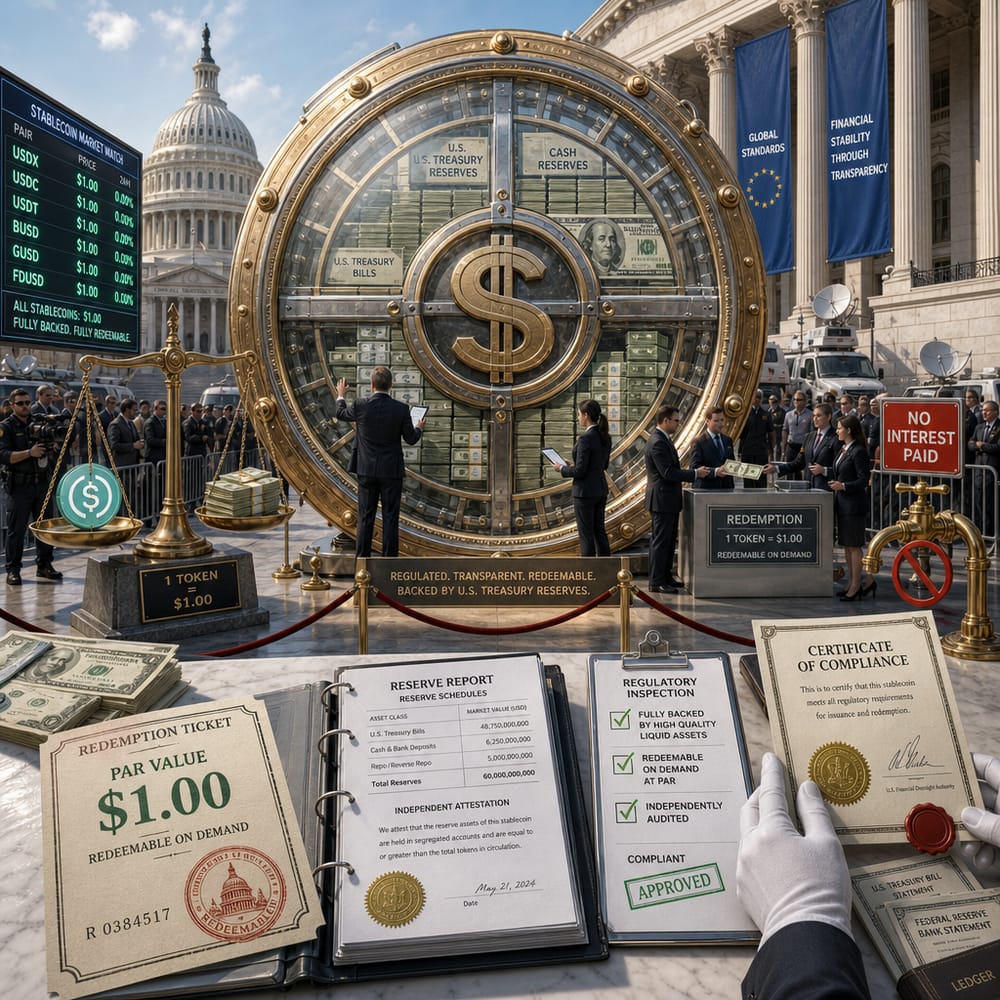
STABLECOINS IN THE HOT SEAT: U.S. REGULATORY SPOTLIGHT
Picture this: you're holding a shiny new dollar bill, but it's actually digital, backed by more cash than you can count, and something the government is eyeing closely. Enter stablecoins, the crypto world's most conservative cousins, poised to face a regulatory makeover in the U.S. that could change the game for issuers and users alike.
The U.S. government has rolled out a freshly minted proposal that could nudge stablecoins closer to their European counterparts under the MiCA standards. And if you're in the crypto crowd or just a casual observer, this is one plot twist you won't want to miss.
FULLY BACKED AND AT PAR VALUE
First up in the proposed regulations, stablecoins would need to be fully backed. Imagine a safety net of real-world dollars sitting idly in a vault somewhere, equal to every digital coin circulating in the market. This is like having an unbreakable piggy bank for every coin—comforting, right?
Moreover, these coins must be redeemable at par. In plain English, that means your stablecoin should be exchangeable for a physical dollar on demand, without any loss in value. It sounds like a no-brainer, but in the wild west of crypto, this assurance is as rare as a unicorn.
THE NO-INTEREST ZONE
Here's where it gets spicy: the proposal recommends banning interest on stablecoins. Forget about earning a little extra on your crypto savings and think more along the lines of a traditional wallet—your money sits, securely and silently, earning zilch. This move could be a buzzkill for those hoping to make their stablecoin holdings work for them, but hey, safety first, right?
AUDITS GALORE
And the cherry on top? Regular audits to ensure everything checks out. Think of it like a financial health check-up, but for stablecoins. This transparency could restore a bit of trust among wary users and investors, but it might also mean more red tape for issuers.
THE RIPPLE EFFECT
So, what do these changes mean for issuers and users? For companies behind stablecoins, this could be both a blessing and a curse. On one hand, regulations might weed out fly-by-night operators, paving the way for more reputable companies to shine. On the flip side, the cost of compliance could skyrocket, potentially squeezing out smaller players.
For users, the perks are a mixed bag. Greater stability and transparency could provide peace of mind, but the ban on interest might push some to explore riskier avenues for higher returns. After all, in the world of finance, where there's risk, there's potential reward—or catastrophe.
A GLOBAL ALIGNMENT
By aligning with MiCA, the U.S. aims to harmonize its crypto market regulations with Europe’s. This could be an attempt to corral the chaotic crypto cattle into a cohesive global framework. But whether this regulatory handshake will actually spur innovation or stifle it is up for debate.
ARE WE READY?
Now, the big question: can the crypto community, known for its DIY ethos, handle a dose of regulatory reality? It's a tricky balance. Innovators fear too much regulation could dull the cutting edge of technology, while skeptics argue that rules are necessary to prevent another crypto catastrophe.
As stablecoin issuers prepare to navigate this regulatory river, they're left wondering if the current will carry them to new heights of legitimacy or sweep them away in a flood of compliance costs.
In the meantime, keep your eyes peeled. Whether you're a crypto enthusiast or just someone with a curiosity for financial innovation, the stablecoin saga is just heating up. Grab your popcorn and stay tuned.
This article is for informational purposes only and is not investment advice. Always do your own research or consult a licensed financial professional before making investment decisions.
© Copyright 2024. All Rights Reserved.
© Copyright 2024. All Rights Reserved.