

U.S. Nonfarm Payrolls Surprise: July Jobs -23,000 as Unemployment Edges Down
Saturday, August 08, 2026
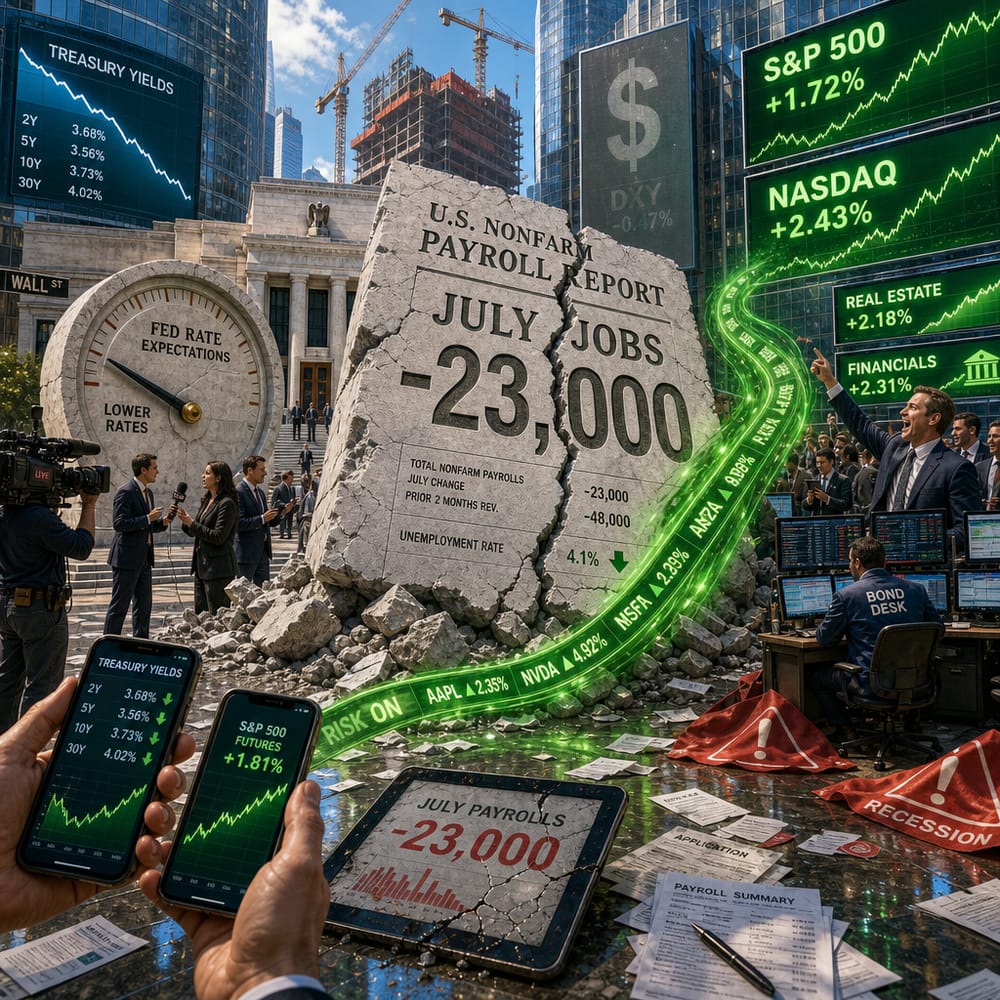
A sudden twist in the world of jobs: July’s nonfarm payrolls took a nosedive by 23,000, leaving market pundits scratching their heads and scrambling to recalibrate their rate-hike bets. In a classic move of “I didn’t see that coming,” the data released sent a ripple through Wall Street, shaking up everything from the S&P 500 to Treasury yields, all while leaving the U.S. dollar a little dazed.
Let’s break it down: the unemployment rate slid ever so gently down to 3.5%. That’s right, even with fewer new jobs popping up, the jobless rate somehow slimmed down. And while wages grew, they didn’t quite break speed records, inching up by 0.3% month over month. The scene now set, let’s dive into the market’s knee-jerk reaction.
Picture this: as soon as the news hit, major indices went into a euphoric spin. The S&P 500 felt like a kid on a sugar high, and the Nasdaq wasn’t far behind, with both indices basking in the glow of what traders call a “risk-on” environment. What’s that? Simply put, when risk is in style, investors ditch the safe havens for a taste of the action, snapping up stocks and other assets perceived to have higher returns.
Now, let’s talk Treasury yields. Typically, they act inversely to stock indices, and today was no exception. Yields on long-term Treasuries tumbled as investors bet their bottom dollar that the Federal Reserve might just ease off the interest rate pedal. Lower yields generally mean bonds become less attractive relative to stocks, which is just what unfolded.
Ah, the Federal Reserve — the ringmaster of our financial circus. With the latest curveball thrown by the labor market, Fed futures — what traders use to place bets on the central bank's next move — have made it clear: expectations for further rate cuts are heating up. As the Fed mulls over the numbers, the market is whispering, “No more hikes, please.” It makes sense, given that a softer labor market means less wage-driven inflation pressure.
But who are the winners and losers in this grand game of economic musical chairs? Interest-rate-sensitive sectors like real estate and financials are relishing the prospect of friendlier rates. Lower rates make borrowing cheaper, and companies in these sectors can thrive without the strain of high interest costs. Conversely, sectors typically seen as safe havens, like utilities and consumer staples, might find themselves left out of the party — that’s the nature of the beast when risk appetite surges.
And our trusty greenback, the U.S. dollar? It’s feeling the heat. In a world where rate hikes are cooling, so is the dollar’s appeal. A weaker dollar often equals cheaper exports, a potential boon for U.S. manufacturers, but for global investors, it makes American assets a tad less shiny.
So why does all this matter? Besides making for a rollercoaster of a market day, the implications are vast. If the Fed pivots from its hawkish stance toward a more dovish approach, we could see a sustained rally in equities. Investors need to stay nimble, watching sectors likely to benefit from lower rates and keeping an eye on inflation, which, despite recent calm, could spring back into action.
In the end, July’s jobs report wasn’t just a statistic; it was a plot twist in the economic script that could steer policy and portfolios alike. So, whether you’re a stock market maven or just someone trying to make sense of the headlines, strap in — it looks like the markets are gearing up for another wild ride.
This article is for informational purposes only and is not investment advice. Always do your own research or consult a licensed financial professional before making investment decisions.
© Copyright 2024. All Rights Reserved.
© Copyright 2024. All Rights Reserved.