

U.S. Memory Model Under Fire
Thursday, August 20, 2026
U.S. MEMORY MODEL UNDER FIRE
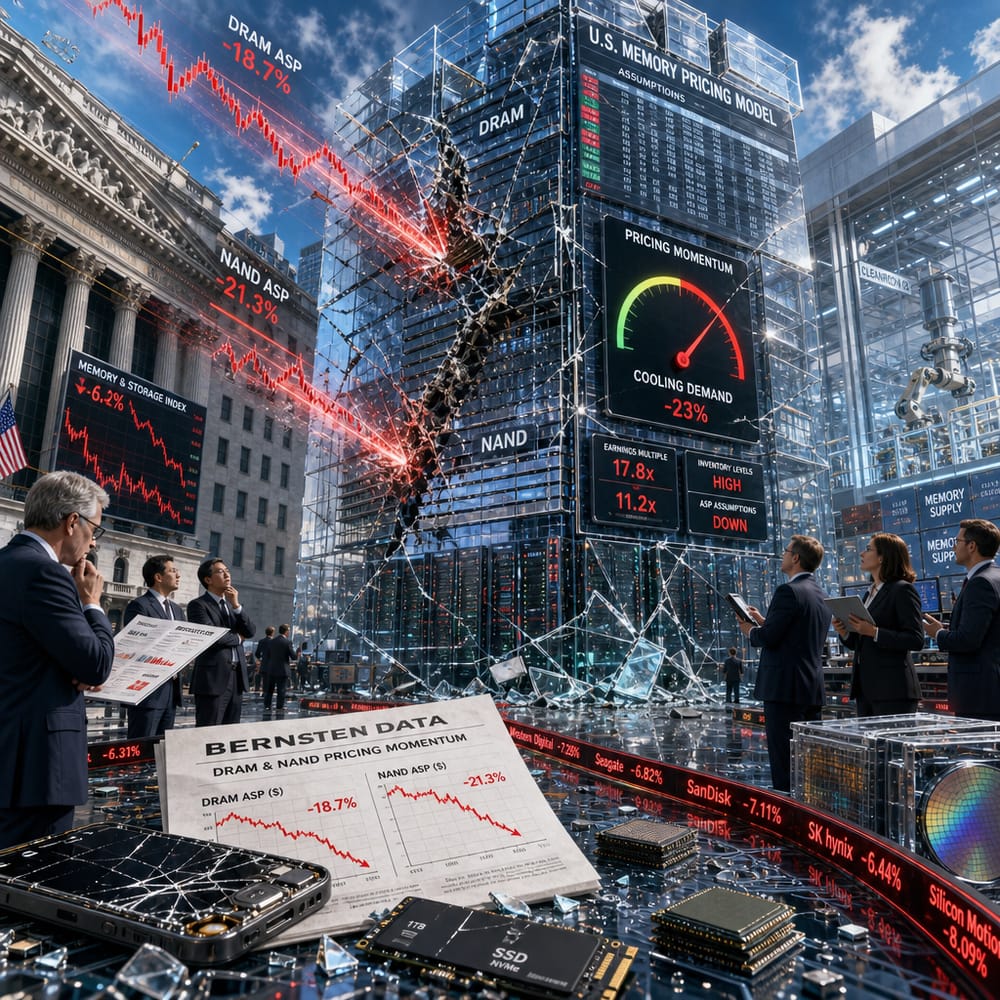
Picture this: You open your laptop, ready to stream your latest binge sensation, only to find it crawling slower than a sloth on a Sunday. Frustrating, right? Well, it might be time to blame it on something other than your overworked Wi-Fi—like the memory chips powering our beloved gadgets. The bells of Wall Street are tolling, and they're sounding an alarm over the memory chip sector, where stock prices are taking a chilly dip due to stalling momentum in DRAM and NAND pricing. Hold onto your wallets, folks—this roller coaster is just gathering speed.
THE PRICE ISN'T ALWAYS RIGHT
So, what's the deal with DRAM and NAND, you ask? Think of them as the unsung heroes of your tech world. DRAM (Dynamic Random-Access Memory) and NAND are types of memory used in everything from smartphones to servers. But Bernstein, the market analysis heavyweight, just waved a red flag—pricing momentum for these chips is showing signs of exhaustion. Imagine a sprinter suddenly hitting quicksand; that's the state of DRAM and NAND right now.
What's causing this slowdown? In the grand scheme of things, it's a perfect storm of factors. Global demand for electronic devices isn't exactly reaching for the stars like it used to. Think fewer people upgrading their smartphones every year or businesses delaying their tech refresh cycles. Add to that a steady rise in manufacturing costs and you have a cocktail that's more bitter than sweet for chipmakers.
STOCKS ARE FEELING THE HEAT
With pricing losing its mojo, memory chip stocks are getting their own taste of market backlash. The usual suspects—Silicon Motion, SanDisk, Western Digital, SK Hynix, Seagate, and Micron—are seeing their stock prices take a hit. It's like watching a game of musical chairs where investors are rushing to find a more stable seat, and right now, memory stocks seem like the ones left standing when the music stops.
The consequences are palpable. Silicon Motion and the like are scrambling to keep investors happy against a backdrop of disappointment and recalibration. If you've got a stake in these companies, you might want to keep the Pepto Bismol handy, because volatility is the name of the game.
LOOKING AHEAD: MEMORY’S UNCERTAIN FUTURE
So, what does the future hold for the memory hardware market? Buckle up, because it could go either way. On one hand, innovation might save the day. We're talking about breakthroughs in technology that could drive down production costs or open up new market avenues—like the meteoric rise of artificial intelligence and machine learning which demand faster, more efficient memory.
On the other hand, if demand doesn't pick up or manufacturing continues to cost a pretty penny, we could see prolonged distress in this sector. It's a tough pill to swallow, especially for those companies heavily reliant on favorable DRAM and NAND prices to pad their earnings.
THE BIGGER PICTURE: WHAT’S AT STAKE
Beyond individual companies, this pricing slump has larger implications. Memory chips are lifelines for tech giants and tech startups alike. Without them, your next-gen gaming consoles and groundbreaking medical devices don't stand a chance. A prolonged downturn could stymie innovation, leading to a slower pace of technological advancement. It's like watching your favorite team play with a sprained ankle—there's progress, but it's painful to watch and slower than it should be.
In summary, memory chip stocks are feeling the heat as pricing momentum cools. The market is ripe for volatility as companies navigate this rough patch, trying to find their footing in a tumultuous landscape. Whether innovation or adversity will win out remains to be seen, but one thing's for sure: the tech world is watching, and it won’t be a quiet show. So keep your eyes peeled and your investment strategies nimble—because the memory market has a long road ahead, and it promises to be a bumpy ride.
This article is for informational purposes only and is not investment advice. Always do your own research or consult a licensed financial professional before making investment decisions.
© Copyright 2024. All Rights Reserved.
© Copyright 2024. All Rights Reserved.