

U.S. Market Regime Shifts from Mild Risk-On to Neutral
Friday, October 09, 2026
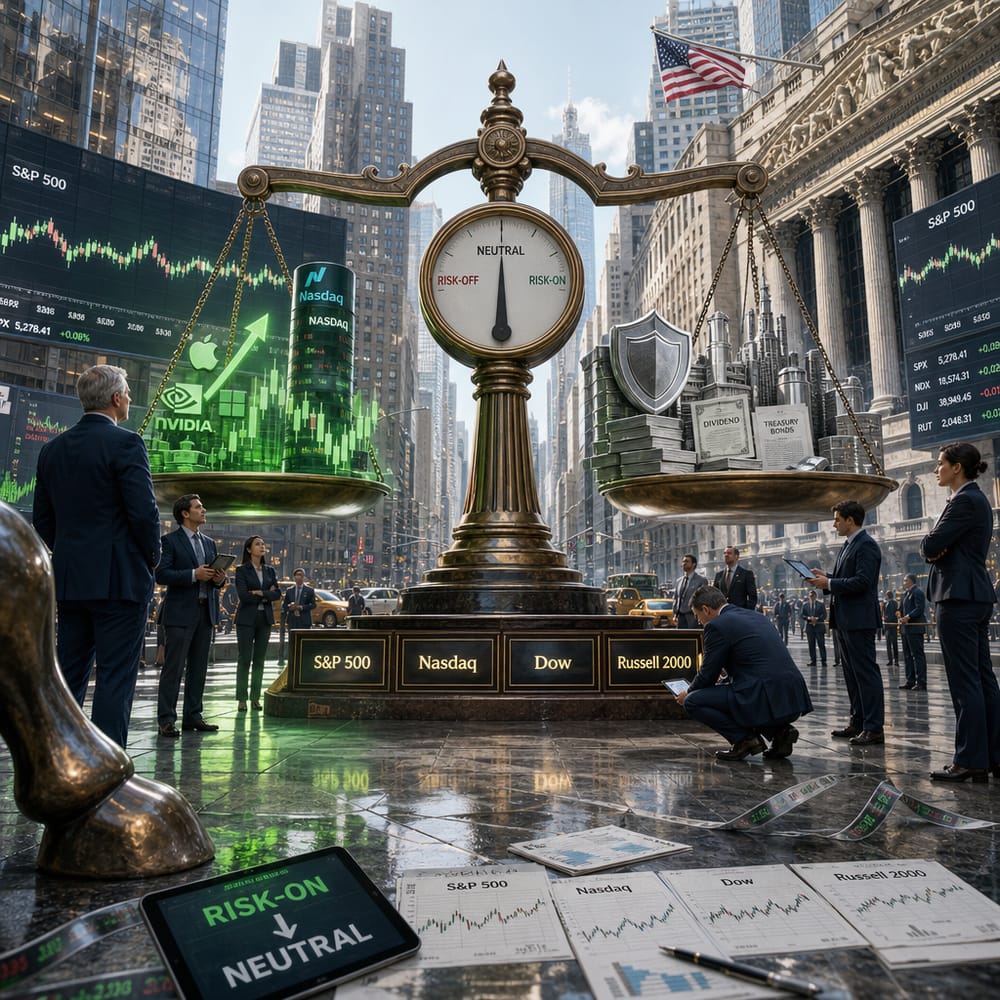
THE SHIFTING SANDS OF SENTIMENT: FROM RISK-ON TO NEUTRAL
Hold on to your portfolios, folks, because the wind has changed direction on Wall Street. After flirting with optimism, the U.S. market has dialed it down a notch, slipping from a "mild risk-on" stance to a more cautious "neutral" vibe. It's like moving from a green light to a blinking yellow—still moving, but with a bit more hesitation. So, what's going on, and why should you care? Let's dive into the current market mood music and figure out what this means for your hard-earned bucks.
THE DRIVERS OF CHANGE
First off, let's decode the jargon. A "risk-on" environment is when investors are feeling gutsy, betting on higher-risk assets like stocks in the hopes of reaping big rewards. "Neutral," on the other hand, is like sitting on the fence—not too hot, not too cold. It's the Goldilocks of market sentiment, if you will.
This shift isn't happening in a vacuum. We've got a cocktail of influences swirling around. High-profile corporate earnings misses, like Delta Air Lines cutting its profit forecasts due to soaring fuel costs, have added a sour note. While Delta's CEO insists travelers are still flying high, the profit trims remind investors that rising costs can clip even the most reliable wings.
Meanwhile, geopolitical tensions, like the recent Houthi attacks in Saudi Arabia, aren't exactly soothing the nerves. Add to this the dance of the dollar and treasury yields—the dollar holding steady while yields climb—and you've got a recipe ripe for investor caution.
THE HISTORICAL PLAYBOOK
If you're feeling déjà vu, you're not alone. The market has seen similar sentiment shifts before, often triggered by a combination of macroeconomic pressures and geopolitical jitters. Remember the early 2000s post-dot-com bubble? Investors went from euphoric to wary as tech stocks turned from rocket ships to sinking stones.
And let's not forget the 2010 European debt crisis, which turned investors into cautious observers almost overnight. In each case, markets eventually stabilized, but not without a few bumps along the way.
IMPLICATIONS FOR EQUITY MARKETS
So, what does this mean for the S&P 500, Nasdaq, Dow, and Russell 2000? In the short term, expect a bit of a dance—sideways, maybe even a shuffle backwards, as investors try to find their footing amidst the noise. The S&P 500, a barometer for the broader U.S. market, may see its recent gains tested as investors assess the risk-reward balance.
Tech stocks, which have been on a rollercoaster thanks to the AI gold rush and subsequent sell-offs, might see more volatility. Just look at the Nasdaq's recent hiccup after OpenAI's underwhelming revenue report. It's like the market took a bite of a shiny apple, only to find it not as juicy as expected.
Meanwhile, small caps in the Russell 2000 could face pressure. These stocks are often seen as more sensitive to economic shifts, and with borrowing costs on the rise, their potential for growth might be reined in.
PLAYING THE LONG GAME
Now, before you start drafting your doomsday tweets, remember that markets are like the tide—they ebb and flow. This neutral stance may present opportunities for those with a keen eye and steady hand. Diversification remains your best friend, helping to balance risk and reward across sectors and asset classes. Consider keeping an eye on defensive sectors like utilities or consumer staples, which tend to hold up better during uncertain times.
For those with a penchant for treasure hunting, this could be a time to look for undervalued gems amid the noise. Patience, as always, is key. After all, investment greats like Warren Buffett didn't build their empires overnight.
THE TAKEAWAY
In this shifting landscape, staying informed is your best strategy. Understand the market's mood swings, but don't be a slave to them. Whether you're adjusting your portfolio or simply keeping an eye on the horizon, remember that today's neutrality is tomorrow's opportunity. So, stay sharp, stay curious, and let the markets dance their dance—because in the end, it's all part of the same fascinating game.
This article is for informational purposes only and is not investment advice. Always do your own research or consult a licensed financial professional before making investment decisions.
© Copyright 2024. All Rights Reserved.
© Copyright 2024. All Rights Reserved.