

U.S. Maintains Nvidia Chip Export Policy to China
Saturday, November 21, 2026
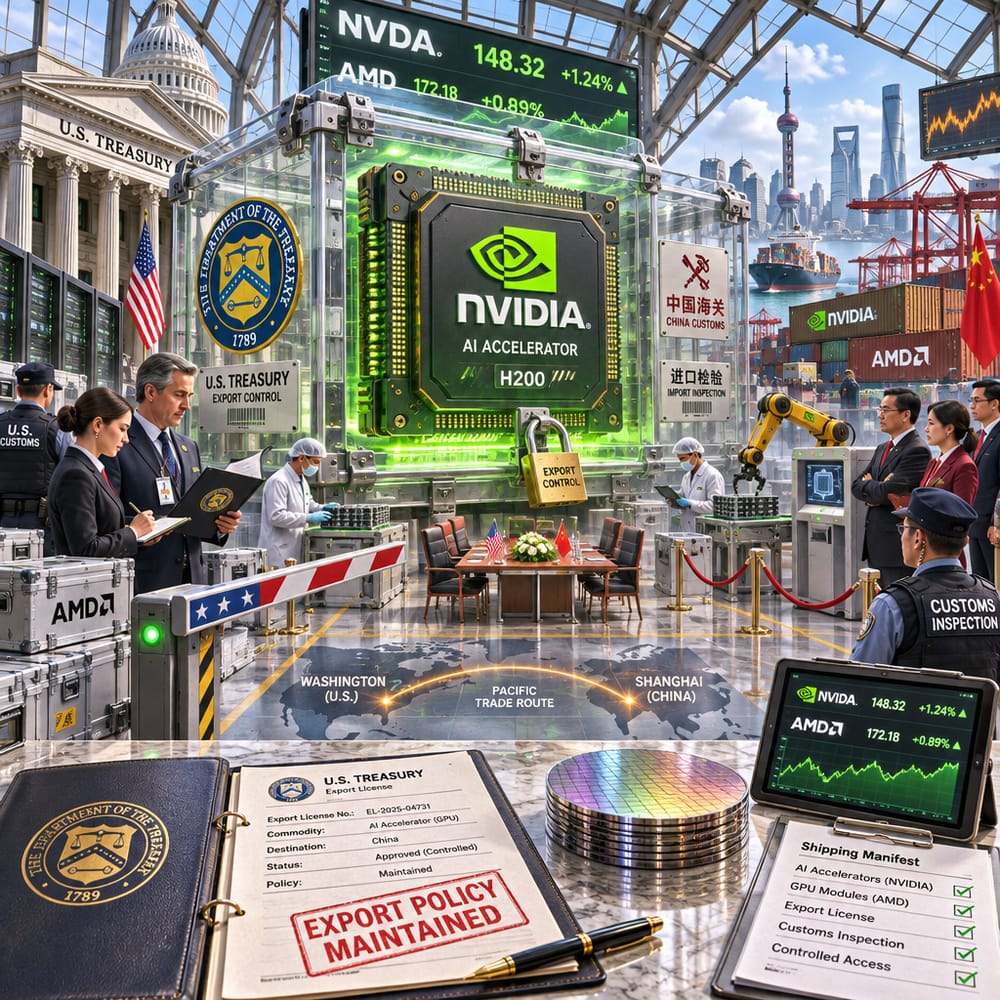
WHEN THE CHIPS ARE DOWN: WHY THE U.S. IS KEEPING ITS NVIDIA EXPORT POLICY TO CHINA COOL AS A CUCUMBER
In the cutthroat game of global poker, the U.S. is keeping a straight face and sticking with its current card on the table—Nvidia chip exports to China. As far as geopolitical moves go, this one might seem like a shrug of the shoulders on the surface. But make no mistake, it’s a move that could echo through the canyons of Silicon Valley and the bustling streets of Shanghai alike.
So, why does this matter to you, savvy investor scrolling through your phone on the subway? Let's dive into the reverberations of this decision like a stone skipping across the pond of global trade.
THE SILICON SYMPHONY: NVIDIA AND AMD
First up, let's talk about Nvidia. The U.S. government's decision to keep the current export policies in place means that Nvidia can continue shipping its precious silicon treasures to China. That's big news because China is a major player in the tech world and a massive market for semiconductor sales. Nvidia must be breathing a sigh of relief because a halt on exports could have thrown a wrench in its revenue machine.
Now, let’s not forget about AMD. While Nvidia often steals the spotlight, AMD is dancing in the shadows, ready to pounce. With the U.S. maintaining the status quo, AMD doesn’t face immediate changes that could have thrown it into a scramble to catch up. But don’t sleep on AMD—they’ve been known to surge when the competition least expects it. Both companies can now continue to focus on innovation, rather than building a new map to navigate trade restrictions.
U.S.-CHINA: MORE ROMANCE OR A TENSE STANDOFF?
Now, the grander stage of U.S.-China relations. With tensions hotter than a mid-summer sidewalk, a sudden clampdown on chip exports could have spiced things up in all the wrong ways. By keeping the status quo, the U.S. avoids pouring gasoline on an already simmering fire. In the short term, this decision might act as a peace offering, ensuring the two economic giants can continue their intricate dance without stepping on each other's toes just yet.
But, don’t get too comfortable. This is international relations we’re talking about—where calm seas often hide the murkiest depths. This policy might just be a band-aid on a relationship that’s far from healed.
SEMICONDUCTORS: THE HEARTBEAT OF THE TECH INDUSTRY
Let's zoom out a bit. Semiconductors are the lifeblood of modern technology. From the phone in your pocket to the car you commute in, chips power our digital lives. This decision impacts more than just Nvidia and AMD; it sends ripples throughout the entire semiconductor industry.
By keeping the export policy steady, the U.S. effectively maintains a crucial supply line to one of the world’s tech manufacturing hubs. This decision might just be the calm before the storm of innovation, where companies can breathe a little easier and plan their next big leap in tech breakthroughs.
LONG-TERM IMPLICATIONS: THE BIGGER PICTURE
Peering into the crystal ball, the long-term implications are where things get interesting. While today’s decision might ease immediate tensions, the semiconductor industry is a fast-paced race, and the finish line is constantly shifting. As China continues to bolster its own semiconductor capabilities, U.S. companies will need to stay sharp, lest they find themselves outcompeted in the market they once dominated.
So, as we sip our coffee and ponder these developments, the real question is how long this delicate balance will hold. Will the U.S. continue to play nice, or is this merely a lull in the stormy seas of international trade?
In the meantime, keep your eyes peeled on tech stocks like Nvidia and AMD. Their future might just hold the secrets to navigating the unpredictable world of global trade and tech innovation. Until then, let’s enjoy the spectacle of this high-stakes game of chess, where the players are powerful, and the stakes couldn’t be higher.
This article is for informational purposes only and is not investment advice. Always do your own research or consult a licensed financial professional before making investment decisions.
© Copyright 2024. All Rights Reserved.
© Copyright 2024. All Rights Reserved.