

U.S. Labor Market Shows Signs of Weakening
Wednesday, August 12, 2026
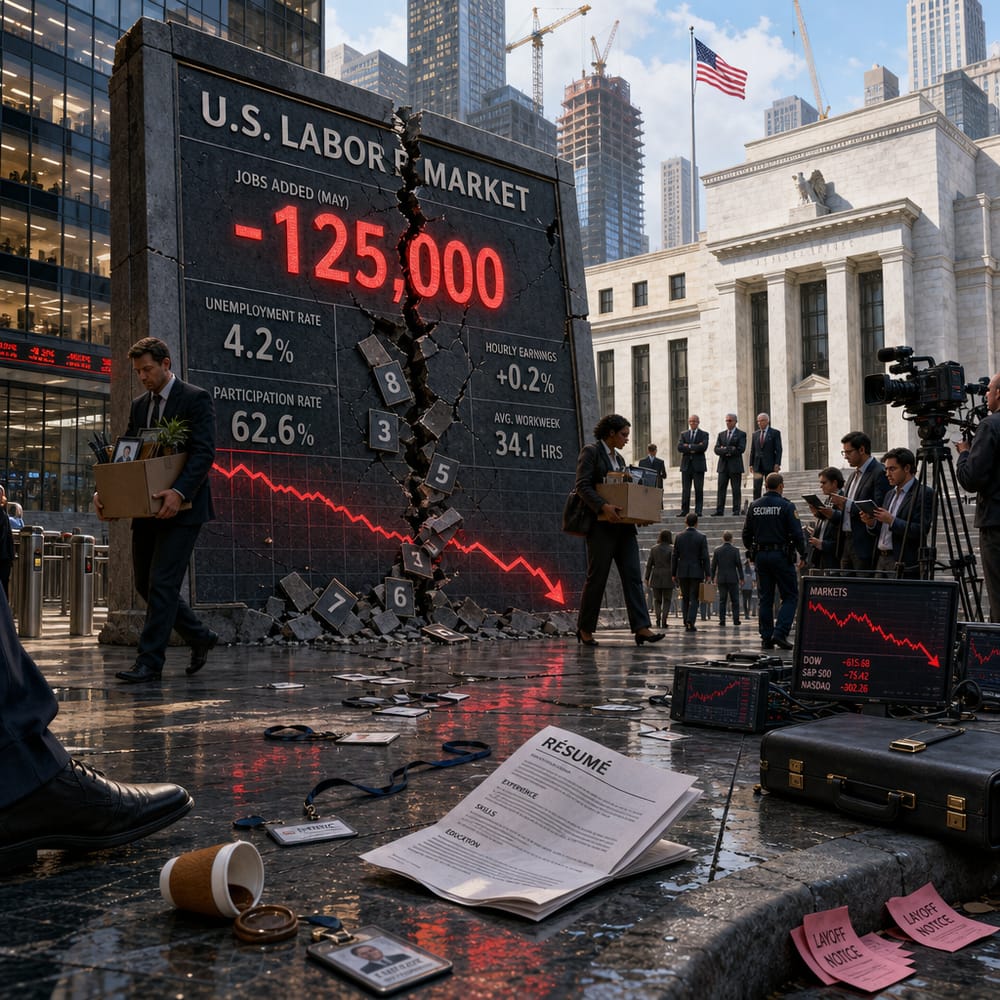
CALLING TIME ON THE PARTY: U.S. JOB LOSSES SIGNAL A SHIFT IN ECONOMY
Hold onto your hats, because the U.S. job market's been hit with a reality check. After months of seemingly unstoppable growth, the economy decided to do a U-turn in July, shedding 23,000 jobs — the first monthly drop since February. It’s like watching a high-speed race car suddenly coast to a stop. While the unemployment rate still took a bow by dipping down, the reason was less glamorous: folks are leaving the workforce altogether.
When the labor market throws a curveball like this, it's time to pay attention. We're talking a potential softening in labor demand that could make the Federal Reserve sit up straighter in its chair and rethink its game plan.
Sectors across the board are feeling the pinch, but it’s the tech and retail sectors that appear most bruised. As AI continues to gobble up tasks that once required human fingers on keyboards and retail faces the brutality of online shopping supplanting the in-store experience, it’s these sectors that are waving a white flag. This drop in jobs is like a crack in the foundation of what many saw as an unyielding labor market.
So, what does this mean for the Fed? Well, Jerome Powell and his band of monetary policy wizards might have to reconsider their current trajectory of interest rate hikes. If the labor market is indeed cooling off, aggressive rate hikes — the Fed’s go-to tool for curbing inflation — might no longer be the star of the show. Instead, they might opt for a more measured approach to avoid over-tightening and squashing the fragile growth we’ve been clinging to.
But here’s the kicker: it’s not just about slowing the rate hikes. If the job market continues to falter, the Fed could even pivot towards cutting rates sooner than anticipated. Picture this: the Fed as the parent easing up on the tough love because the economy’s spent too many nights in a timeout corner. Such a move could breathe some life back into borrowing and spending, hopefully sparking an economic revival.
Of course, while the Fed mulls over these shifts, the real-life impact is felt by everyday workers and the industries they power. When people exit the labor force, it’s often because they’re discouraged about job prospects or facing other barriers like health issues or care responsibilities. This shift can leave businesses scrambling to figure out how to operate with fewer hands on deck and possible gaps in their skill set.
And let's not ignore the elephant in the room — investors. They're a jumpy bunch, and changes in the labor market can quickly translate into market jitters. A slowing job market could mean shrinking stock values in impacted sectors, shaking confidence and prompting a wait-and-see attitude from investors who don’t like surprises, especially nasty ones.
Ultimately, while the July job losses might seem like just a blip on the radar, they could be the canary in the coal mine for deeper shifts in the economy. As the Federal Reserve examines these signals, retail investors should keep a close watch. This isn’t just about numbers on a page; it’s about understanding how shifts in employment data might ripple through interest rates, stock performances, and broader economic policy.
The takeaway here? Keep your ear to the ground and your portfolio ready for adjustments. The U.S. labor market is no longer the roaring juggernaut it once was, and as the dust settles, the Federal Reserve’s next moves could be pivotal for the economy. Stay sharp, stay informed, and remember: in the ever-changing landscape of finance, adaptability is your best friend.
This article is for informational purposes only and is not investment advice. Always do your own research or consult a licensed financial professional before making investment decisions.
© Copyright 2024. All Rights Reserved.
© Copyright 2024. All Rights Reserved.