

U.S. Labor Market Resilience vs. Cooling Job Openings (JOLTS, August)
Monday, October 05, 2026
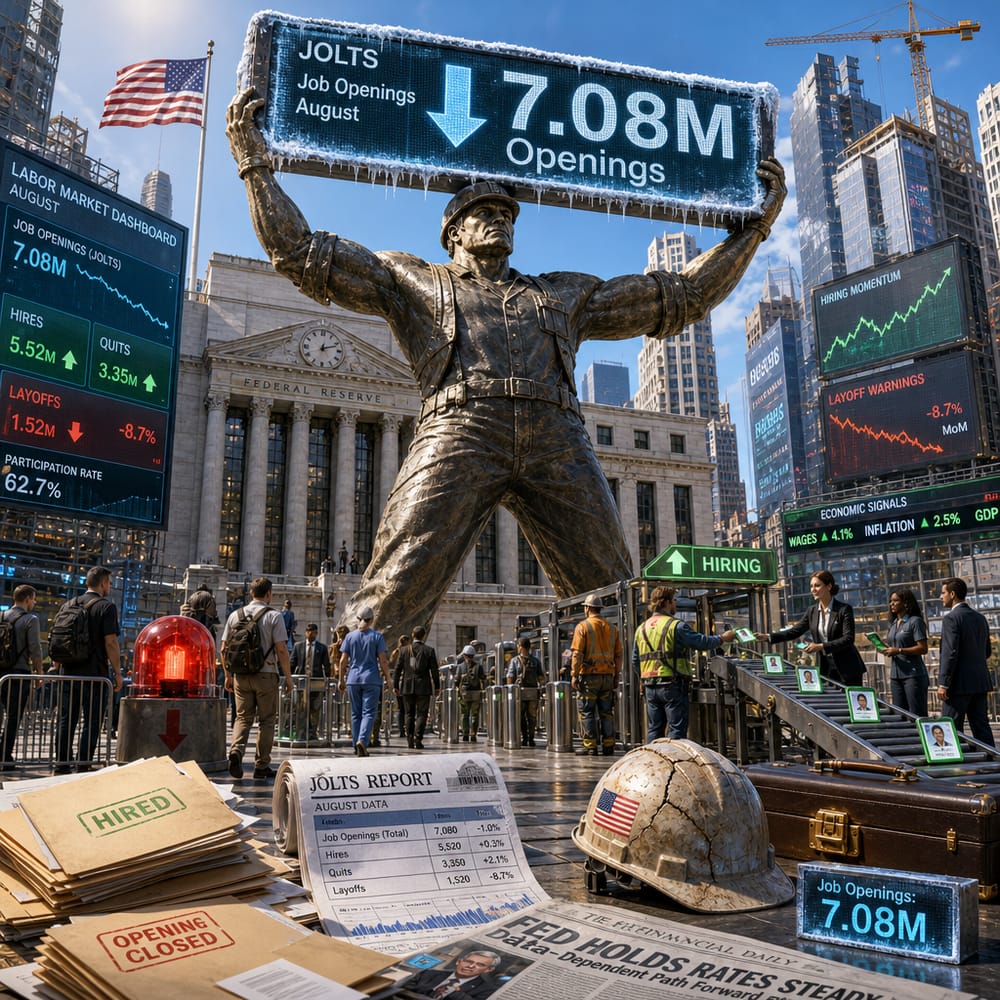
THE UNEXPECTED TWIST IN THE JOB MARKET: WHAT IT MEANS FOR YOUR PORTFOLIO
Forget the usual drama of Hollywood blockbusters. This fall, the real plot twist is unfolding in the U.S. labor market. The latest JOLTS data report — that’s the Job Openings and Labor Turnover Survey for those not fluent in economicese — sends a message loud and clear: job openings have taken a nosedive to 7.08 million in August, the lowest since 2026.
"Big deal," you might think. But hold onto your hats because this script isn’t as predictable as it seems. Here’s what’s brewing beneath the surface and why your portfolio might care more than you think.
RESILIENCE AMID ROLLERCOASTER
Picture this: Job openings are dwindling, yet layoffs are decreasing and hiring is on the up. If you were expecting the labor market to buckle under pressure, think again. It’s putting up a fight that Rocky Balboa would envy. This resilience is intriguing because it paints a picture of a market not easily swayed by declining openings.
So, what’s the takeaway? This labor market isn’t stepping off the ring anytime soon, and that’s a biggie for the Federal Reserve. Imagine the Fed as the director of this economic film, tasked with adjusting the interest rates as the plot thickens. A sturdy job market might just keep the Fed in its seat, reluctant to slash those rates anytime soon.
INTEREST RATES: TO CUT OR NOT TO CUT?
Now, here’s the million-dollar question: What’s a declining number of job openings got to do with interest rates? Well, think of it as a text message from the economy to the Fed. Fewer job openings might suggest a cooling economy, but our resilient labor market signals that there might be life in the old dog yet.
If the labor market keeps flexing its muscle, the Fed could decide to keep interest rates higher for longer to keep inflation in check. This means investors may have to brace for a longer period of higher borrowing costs, affecting everything from mortgages to corporate loans. It’s a delicate dance, and the market is watching every step.
ECONOMIC GROWTH: STILL IN THE GAME?
With job openings fizzling, is economic growth about to face its own chilly winter? Not necessarily. A strong labor market underpins consumer confidence, which keeps the economy’s wheels turning. People with jobs spend money, companies invest in growth, and the economy chugs along, albeit maybe not at breakneck speed.
Investors, however, will be on the lookout for signs of fatigue. Could the resilience crack? Will the Fed’s cautious stance sway towards relaxation? These are the plot twists that can shift market sentiment like a gust of wind.
INVESTOR LANDSCAPE: WHAT TO WATCH
For retail investors, this isn’t just economics mumbo jumbo. It’s about figuring out where to park your money wisely. With interest rates potentially staying elevated, look at sectors that historically perform well in such environments. Think financials, which tend to benefit from higher rates, or companies that can pass on costs to consumers without breaking a sweat.
Tech stocks, sparkling darlings of high-growth stories, suddenly look less shiny under the lens of higher interest costs. But don’t write them off just yet. The recent rally in the Nasdaq, led by AI-forward companies like Microsoft and Nvidia, proves there’s always room for innovation-driven optimism.
THE BOTTOM LINE
In the plot of economic resilience versus cooling job openings, the labor market is putting on a show. This isn’t just a tale for economists and policy wonks. It’s about understanding the ripples that affect your financial decisions.
So, as the Fed watches the labor market’s every move, stay nimble. Keep an eye on interest rates and economic indicators, and remember that even in a market of plot twists, there are always opportunities for those who are prepared. Just like any good movie, the key is to watch closely and be ready for the unexpected.
This article is for informational purposes only and is not investment advice. Always do your own research or consult a licensed financial professional before making investment decisions.
© Copyright 2024. All Rights Reserved.
© Copyright 2024. All Rights Reserved.