

U.S. July Jobs Market Surprises with 23,000 Job Losses
Wednesday, August 12, 2026
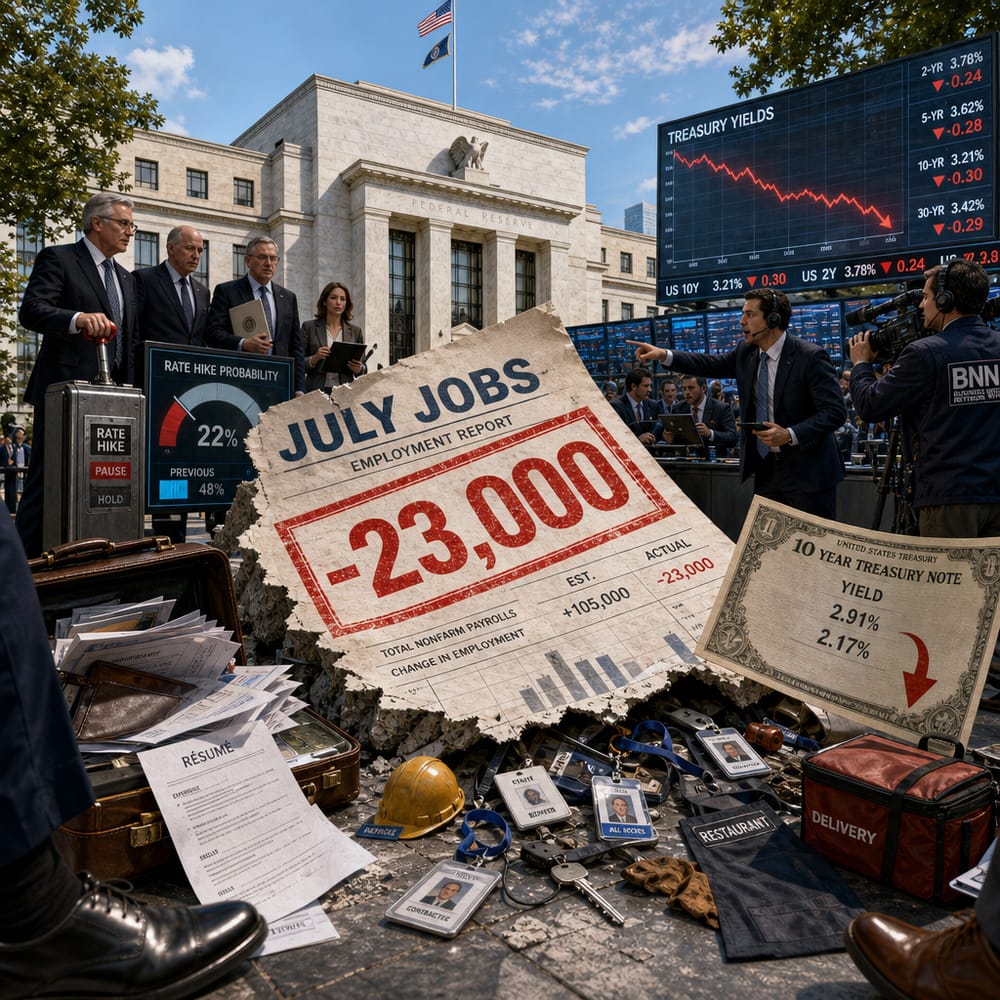
It’s not every day that the jobs report kicks you in the teeth, but here we are, staring at a July surprise that no one ordered. The U.S. economy decided to play a little magic trick — poof, 23,000 jobs gone. That’s right, folks. Instead of adding those shiny new jobs everyone was expecting, the market pulled the rug out from under us. And you’d better believe Wall Street and its trusty sidekick, the Federal Reserve, are paying attention.
Let's start unpacking this curious case of job vanishing. The sectors where jobs decided to check out include manufacturing and retail. Now, neither of these is a total shocker — manufacturing's been dealing with slowdowns due to global supply chain snarls, and retail, well, fewer people are buying when their wallets feel light. But the broader implications? They're as juicy as a ripe gossip column.
Here's why it matters: the Federal Reserve, our economy's vigilant babysitter, has been on a tear lately with interest rate hikes to calm inflation. But with jobs disappearing faster than the last slice of pizza at a party, the Fed might just be tempted to put a pin in that rate hiking strategy. Why? Because job losses can signal an economic slowdown, and throwing higher interest rates into that mix is like adding hot sauce to an already spicy chili — it might just make things worse.
The loss of 23,000 jobs in July wasn’t just a number; it was a siren blaring that maybe, just maybe, things aren’t going as rosy as the summer sun. Treasury yields, those trusty indicators of economic vibes, dropped as investors scampered for safer ground. This shift tells us that the markets think the Federal Reserve might take a step back from another rate hike, at least for now.
So, how does this twist impact Fed decisions down the line? Jerome Powell and his crew were already facing a tricky tightrope walk between taming inflation and not throwing the economy into a nosedive. Now, with fewer jobs and inflation showing signs of cooling — July’s consumer price index rose just 0.1% — the odds of the Fed leaving rates as-is just shot up like a firework.
Now, let's talk market sentiment. Like a herd of anxious sheep, investors are skittish. When jobs drop, confidence does too, and that makes for a volatile market cocktail. Stocks might experience some jitters, but here’s where things get interesting — different sectors react differently. Technology stocks, for one, tend to rally when interest rates stay low. So, keep an eye on those tech-heavy indices like the Nasdaq.
One last nugget on those Treasury bonds: they’re the canaries in the coal mine for interest rate expectations. When yields fall, it signals that investors expect lower rates ahead. This can make bonds a tad more attractive, but remember, they also suggest caution about future economic growth.
In a nutshell, the July jobs report has set the stage for a potentially pivotal moment in the U.S. economic storyline. Will the Fed pause its rate hikes, giving the economy a chance to catch its breath? And how will investors adjust their portfolios in this ever-shifting landscape?
Stay tuned, folks. As with any good thriller, the plot is thick, the stakes are high, and the next chapter is anyone’s guess. What you can count on, though, is that the Federal Reserve, market watchers, and your humble narrator will be watching every twist and turn, pen and calculator at the ready.
This article is for informational purposes only and is not investment advice. Always do your own research or consult a licensed financial professional before making investment decisions.
© Copyright 2024. All Rights Reserved.
© Copyright 2024. All Rights Reserved.