

U.S. Jobs Data: Weakness Curtails Hike Hopes
Tuesday, August 18, 2026
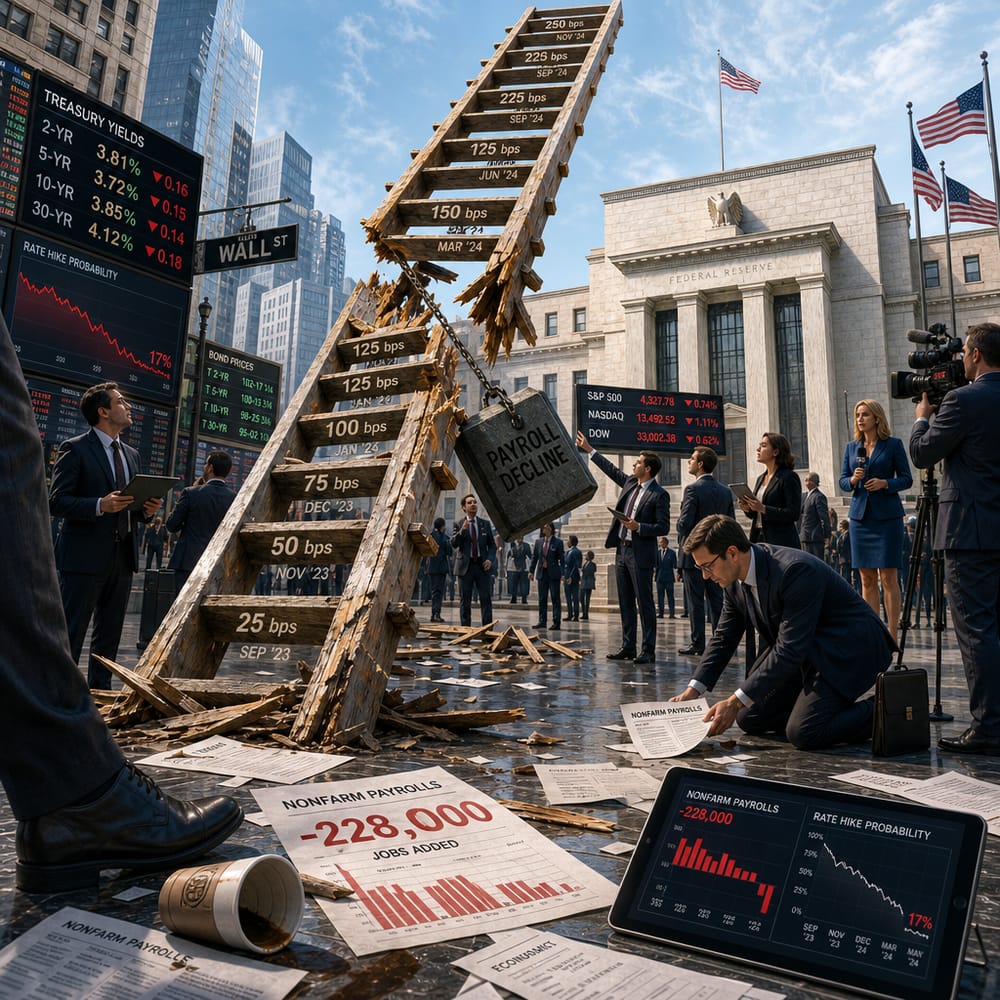
US JOBS DATA: WEAKNESS CURTAILS HIKE HOPES
The latest U.S. jobs report is as exciting as lukewarm tea, revealing a decline in nonfarm payrolls by 23,000 in early August. But don’t be fooled by the numbers; this isn’t just another dry economic stat to gloss over. This little dip has some big implications, especially if you’re concerned about those looming rate hikes by the Federal Reserve. So, grab your favorite caffeinated beverage and let's dive in.
A WEAK JOBS REPORT? WHY IT MATTERS
Sure, August's nonfarm payrolls didn’t set off fireworks, losing 23,000 jobs instead of adding them. But why should you care? Because the Federal Reserve, America’s mighty financial wizard, is watching it like a hawk—more like a dove this time. When the labor market shows signs of cooling down, the Fed tends to be less trigger-happy about raising interest rates.
Typically, a robust jobs market means more people have money to spend. More spending can stoke inflation, and the Fed’s favorite tool to combat inflation is raising interest rates. But when jobs decline, like a receding tide, the Fed might think twice before making borrowing costlier. This jobs report is like a persuasive whisper in the ears of the Fed, saying, “Ease up on those rate hikes.”
WHY A SOFT LABOR MARKET INFLUENCES THE FED
So, how exactly does labor market data influence the folks at the Fed? Think of it as a game of economic chess. Every job report is like a move on the board. A weakening job market suggests that the economy might not need the cool-down effect of higher interest rates. The Fed might decide to keep rates steady to avoid adding a chill to an already tepid economy.
In plain English, if people aren’t working, or are working less, they’re not spending money like they used to. Less spending means less demand, and with less demand, there’s less chance of prices spiraling out of control. The Fed's role then is to balance rate hikes like a tightrope walker, ensuring it doesn't tip the economy into recession while trying to tame inflation.
THE BIGGER ECONOMIC PICTURE
Beyond the Fed and its rate drama, a declining job market can ripple through the economy like a skipped stone. When fewer people are working, consumer confidence can wane, spending dips, and businesses hesitate to invest in growth. It's a domino effect that can stifle economic growth.
Moreover, the broader economic implications are enough to make any economist pop an antacid. A weaker labor market could mean slower growth in GDP, which is the big kahuna of economic indicators. Companies might tighten their belts, reducing expansion plans and possibly leading to more layoffs—a vicious cycle if there ever was one.
WHAT IT MEANS FOR YOUR WALLET (AND INVESTMENTS)
Interest rates are the lifeblood of economic activity, affecting everything from mortgage rates to credit card APRs. If the Fed hits pause on hiking rates, borrowing remains cheaper, which is good news for anyone looking to buy a home or finance a big purchase. Stock markets generally like lower interest rates too, as they make it cheaper for businesses to borrow and invest in growth. That can mean good things for your investment portfolio.
However, don’t celebrate too quickly. If the labor market continues to weaken, the Fed’s dovish stance might not be enough to fend off the storm clouds of an economic slowdown. In this high-stakes game, keeping a diversified portfolio and watching the economic indicators are key. Be the tortoise, not the hare, and stay the course.
THE ROAD AHEAD
So, what’s next? Keep an eye on those labor reports—they’re a window into the health of the economy, and they’ll give clues about what the Fed might do next. As for now, the decline in nonfarm payrolls has put rate hikes on the back burner, but the situation remains fluid. The Fed is in a tough spot, trying to balance inflation control with economic growth.
In the end, the economic landscape is a dynamic beast, constantly shifting with the winds of data. But one thing remains constant: the need for investors to stay informed, stay nimble, and always, always have a strong cup of coffee handy.
This article is for informational purposes only and is not investment advice. Always do your own research or consult a licensed financial professional before making investment decisions.
© Copyright 2024. All Rights Reserved.
© Copyright 2024. All Rights Reserved.