

U.S. Jobless Claims Slip as Layoffs Remain Unusually Low
Tuesday, October 13, 2026
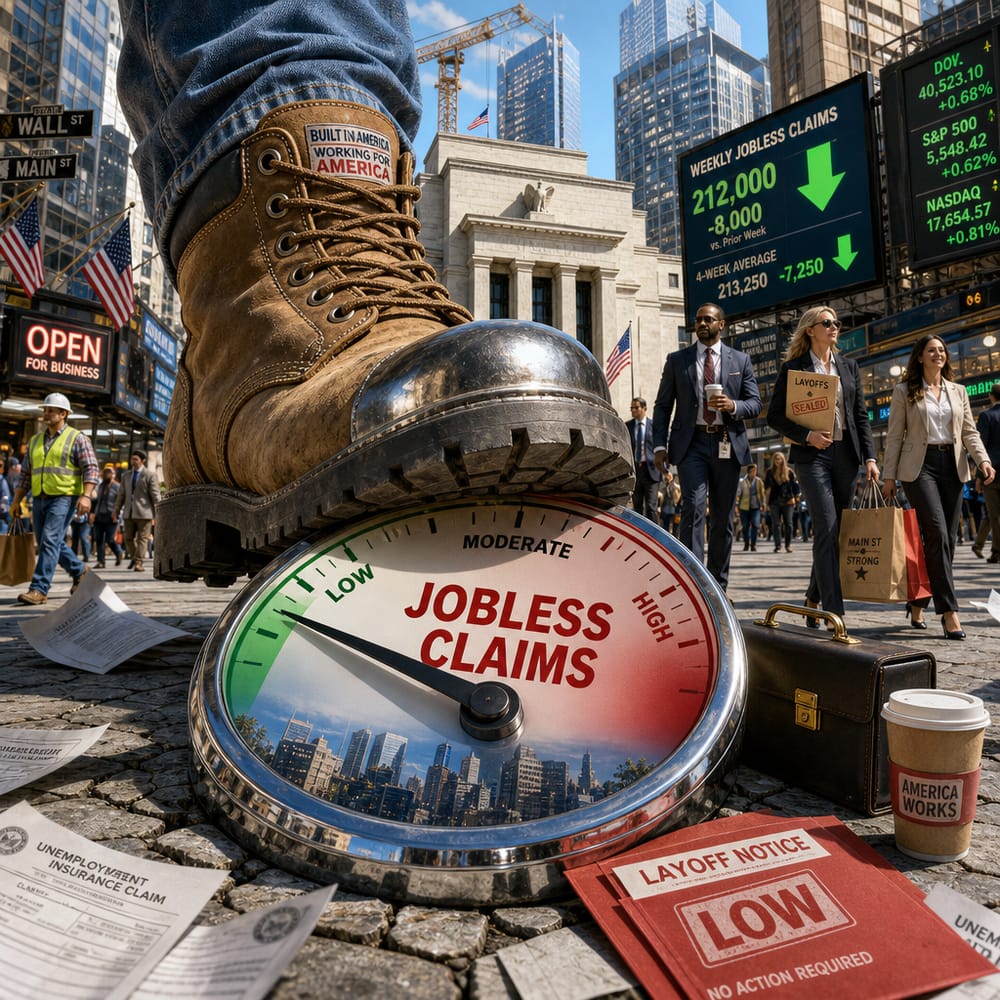
AMERICA'S JOB MARKET IS HOTTER THAN A SUMMER SIDEWALK: WHAT IT MEANS FOR YOUR WALLET
If you thought the U.S. labor market was going to cool down any time soon, think again. This week, the number of people filing for unemployment insurance — a statistic that often indicates how healthy the job market is — dropped like a teenager's enthusiasm for chores. But what does this mean for you, your dollars, and those mysterious folks at the Federal Reserve?
The latest dip in jobless claims reaffirms a labor market that's been as tight as a pair of skinny jeans after Thanksgiving dinner. Fewer folks looking for unemployment benefits suggests employers are hanging on to their workers like a kid clutching their Halloween candy. This kind of job market is great news if you're on the hunt for a gig or seeking a raise, but it also has ripple effects that could hit you at the checkout line.
INFLATION AND THE FED: A TANGO OF POLICY AND PAYCHECKS
The Federal Reserve, that institution that sounds intimidating but basically tries to keep our money's value stable, watches these labor numbers like a hawk. Why? Because when more people have jobs, they spend more. This boosts demand for goods and services, which can push prices higher — aka inflation's sneaky cousin — potentially putting pressure on your grocery bill and beyond.
The Fed's main weapon to combat inflation is raising interest rates, which makes borrowing more expensive. This can slow spending down, cooling the economy like a gentle fall breeze. But, there's a catch: the Fed doesn't want to trigger an economic freeze. The delicate dance here is figuring out just how much to raise rates without knocking over the whole punch bowl.
SHOPPING SPREES AND THE ECONOMIC SEESAW
With so many people gainfully employed, consumer spending could keep climbing higher than a mountain goat on a caffeine buzz. As wages rise and job security becomes less of a nail-biter, people are likely to loosen their purse strings. That means retailers aren't just whistling Dixie about potential sales increases as folks spring for the latest gadgets, fashion, and maybe that fancy cheese they once considered too extravagant.
But hold your horses before you run wild with that credit card. If the Fed decides to hike rates in response to this spending spree, it's not just mortgage seekers who'll feel the pinch. Higher rates can put the brakes on everything from car loans to business investments, eventually slowing down growth. And let's be honest, no one wants to see that.
ECONOMIC RISKS: THE PARTIES AND PITFALLS
While the job market is thriving, there are potential storm clouds on the horizon. A too-tight labor market might eventually push inflation so high that even the most budget-friendly shoppers start cringing at prices. If companies face ballooning costs for wages and materials, they might pass those increases to customers or, worse, tighten their belts by cutting jobs. And that could send us right back to square one.
There's also the looming risk that external factors — think global conflicts or political dramas that are juicier than a soap opera — could throw a wrench into economic growth. If businesses get jittery about such events, they might slash investments or hiring plans quicker than you can say "economic downturn."
KEEPING AN EYE ON THE ROAD AHEAD
So what's a savvy investor or concerned citizen to do? Keeping tabs on the Fed's next move is more crucial than ever. If you're in the market for a loan, locking in rates before another potential hike could save you some serious cash. And when it comes to investments, diversification remains the trusty steed to ride through uncertain times.
While a robust labor market is a good thing for now, staying nimble and informed will help you navigate the twists and turns that can come with a bustling economy. After all, just like a wild rollercoaster, the economic ride can be exciting — but it’s always best enjoyed with a seatbelt.
This article is for informational purposes only and is not investment advice. Always do your own research or consult a licensed financial professional before making investment decisions.
© Copyright 2024. All Rights Reserved.
© Copyright 2024. All Rights Reserved.