

U.S. Job Market Contracts in July with Downward Revisions
Friday, August 21, 2026
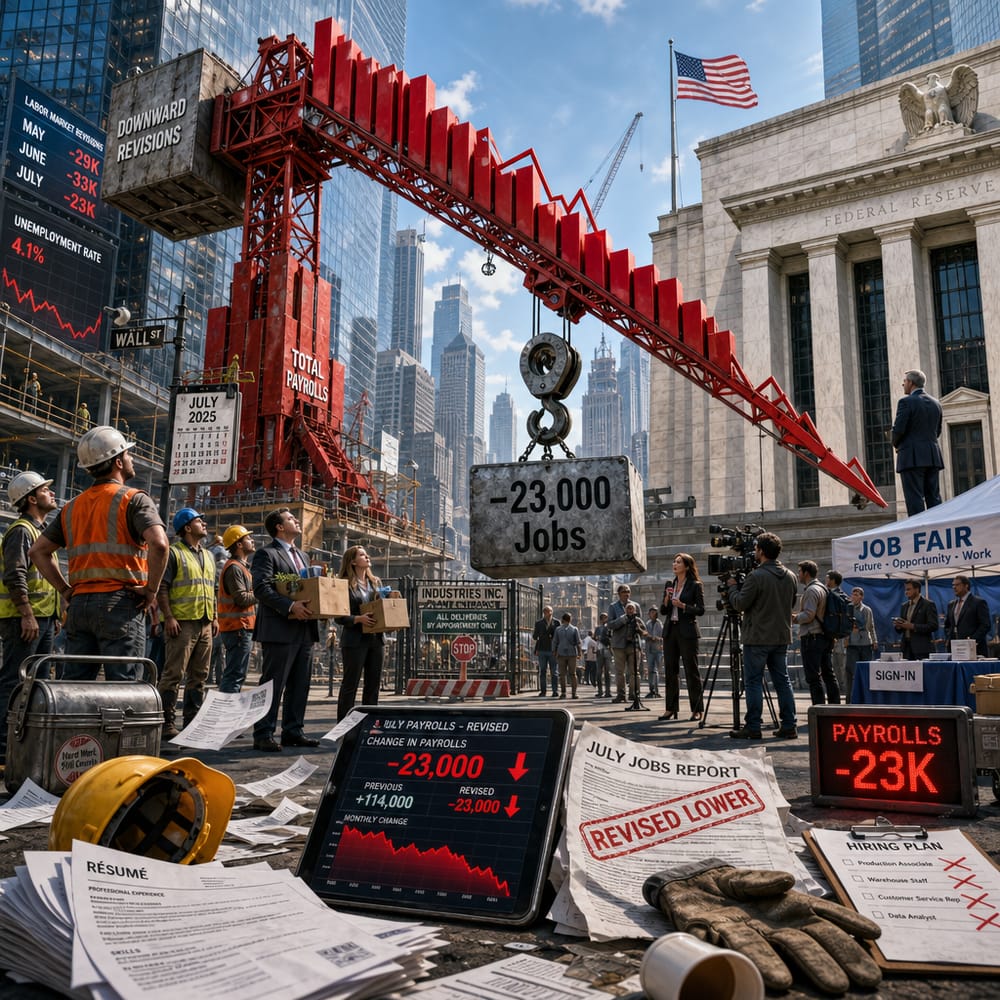
THE JOB MARKET TAKES A HIT: WHAT IT MEANS FOR YOUR WALLET
The U.S. job market just pulled a surprise move — and not the kind you like to see. July's jobs report revealed an unexpected dip, as Uncle Sam slashed 23,000 jobs. If that weren't enough to wipe the smug grin off Wall Street's face, previous months' job gains were also revised downward. Yeah, it's like re-gifting a used toaster. So, what gives, and why does this matter to you, our retail investor extraordinaire scrolling through the headlines in your pajama pants?
Before we dive into the juicy details, let’s set the stage: the job market has been the economy's trusty engine, humming along despite high inflation, rate hikes, and geopolitical drama that could rival an HBO series. But this hiccup has implications as far-reaching as a celebrity breakup. Let's dissect.
WHY THE JOBS VANISHED
First up, what caused this employment cold spell? A cocktail of factors, my friends. For one, the tech sector has been doing the cha-cha with layoffs, citing over-hiring from the pandemic boom years. Plus, we're seeing tighter monetary policies raining on the hiring parade — and companies are clutching those purse strings like a grandma with a coupon book. Temporary help services, often the canary in the coal mine for labor trends, also took a nosedive, which could spell more cuts on the horizon.
And let's not forget our old buddy, inflation. The rising cost of living is pressuring businesses to reevaluate worker costs. It's a bit like trying to balance a seesaw with a hippo on one side — not easy.
FED'S NEXT MOVE
Now, if you're thinking this job market stumble is just a blip, think again. The Federal Reserve, the puppeteer of interest rates, is taking notes. Fewer jobs mean less consumer spending, and less spending could mean cooler inflation. In response, the Fed might pause its rate hikes, a move that could keep borrowing costs from skyrocketing further. Your mortgage rate might not climb Mount Everest after all.
But here's the kicker: the Fed likes to play it cool. They’ll want to see more than one month's data before they start fiddling with their rate knobs. They’ll have to weigh whether low job numbers are a trend or a temporary blip before deciding to ease off the economic brakes.
THE RIPPLE EFFECT
This is where things get interesting. The job market's health is intertwined with economic growth like vines on a trellis. If job losses persist, we could see slower economic growth. Fewer jobs mean less spending, and, you guessed it, potentially lower corporate earnings. That's a tug on the stock market, which might already be sweatier than a sauna during these volatile times.
So what does this mean for you? If you're invested in companies heavily tied to consumer spending, brace yourself. And keep an eye on sectors with high labor costs — they might start trimming the fat. However, companies that benefit from low interest rates, like tech and real estate, could get a breather if the Fed pauses hikes.
LOOKING AHEAD
While this is all sounding a bit doomy and gloomy, the tide could still turn. If inflation eases and the Fed decides to hold or even lower rates, it could spark a hiring renaissance. And don’t forget the flip side: fewer workers could mean higher wages as companies compete for talent, putting more cash into workers’ pockets.
Essentially, the ball is in the Fed's court, and we're all waiting to see how they play the next set. Keep a keen eye on upcoming job reports and Fed meetings as your financial barometer.
Meanwhile, diversify your investments, keep a rainy day fund ready, and approach the market with the cautious optimism of a cat near a rocking chair.
In this unfolding economic drama, patience and preparation are your best co-stars. Stay informed, stay invested, and remember — every market dip brings opportunities. Keep scrolling, and keep savvy.
This article is for informational purposes only and is not investment advice. Always do your own research or consult a licensed financial professional before making investment decisions.
© Copyright 2024. All Rights Reserved.
© Copyright 2024. All Rights Reserved.