

U.S. Job Losses and Market Rally: An Unexpected Connection
Saturday, August 08, 2026
U.S. Job Losses and Market Rally: An Unexpected Connection
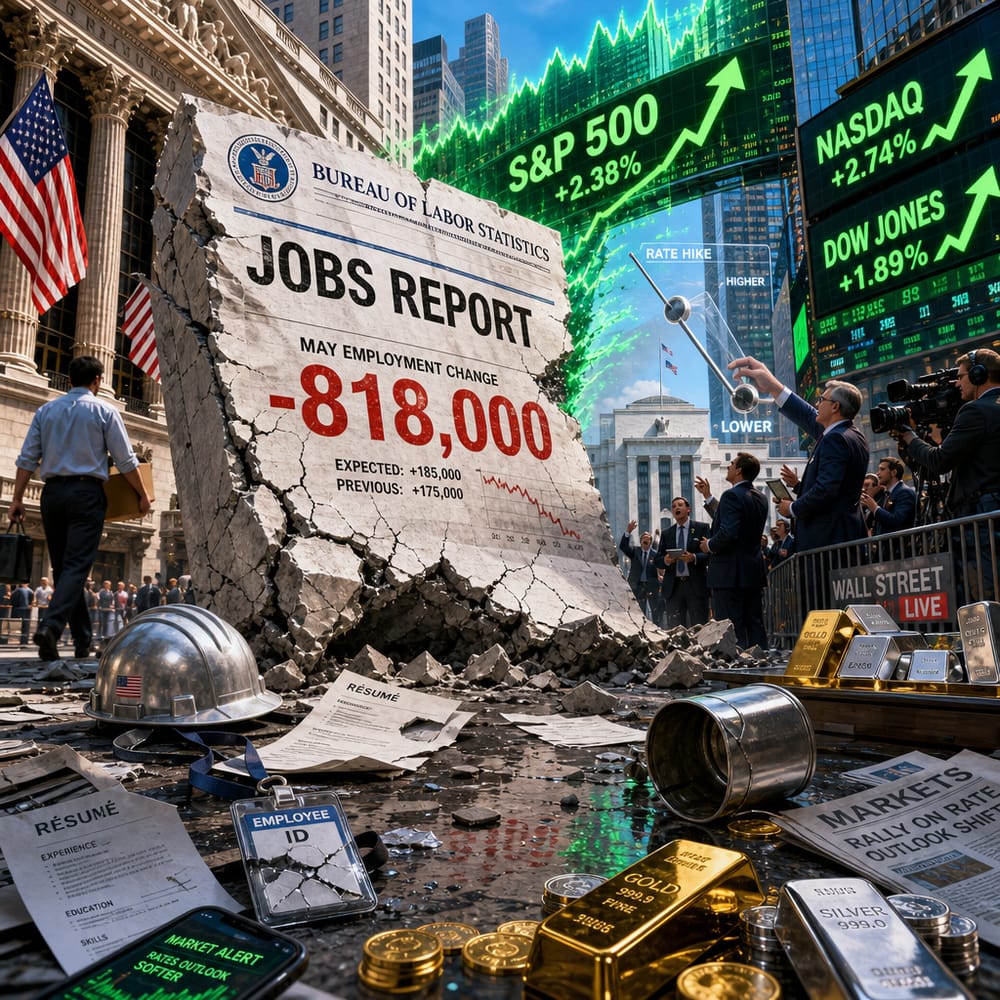
Picture this: it's a classic summer day in the stock market world. Investors are sipping their morning coffee, expecting mundane updates from the labor market. But suddenly, the Bureau of Labor Statistics drops a bombshell — the U.S. economy lost 23,000 jobs in July. Panic? Sell-off? Nah, not this time. Instead, the market threw on its party hat and rallied like a college kid who just learned finals were canceled.
So, what on Earth is going on? How did an unexpected job loss lead to a market rally, and what does it mean for those of us interested in the delicate dance of stocks, gold, and the almighty dollar?
THE MARKET'S CURIOUS REACTION
First off, let's take a peek at our trusty market barometers: the S&P 500, the Nasdaq, and the Dow Jones. When the bad news about jobs hit the wires, these indexes didn't flinch — they soared. The S&P 500 continued its upward trajectory, the Nasdaq got a boost worthy of a caffeine-fueled techie, and the Dow Jones strutted its stuff with a confident rise.
What’s behind this curious market behavior? It’s all about the curious alchemy of interest rates. Investors, those ever-astute analysts of economic tea leaves, suddenly felt that the pressure might ease on the Federal Reserve to continue hiking rates. With fewer jobs popping up, inflation worries also took a breather, giving the Fed room to possibly pause or rethink its rate-hike path.
FED RATE DECISIONS: THE MIND READER'S GAME
The Federal Reserve and its interest rate decisions are like the ultimate season finale cliffhanger. Everyone wants to know what will happen, but no one really knows for sure. With the recent job loss, investors are betting that the Fed might ease its foot off the interest rate pedal, which has been pressing harder than a relentless gym trainer.
The idea is simple: fewer jobs mean less wage pressure, which equals potentially lower inflation. And lower inflation means the Fed can take it easy on the rate hikes. Think of it as a dance where one partner stops stepping on the other’s toes. Ah, harmony.
SECTORS IN THE SPOTLIGHT
Now, let's shine a light on the big winners in this market shake-up. Tech stocks, with their futuristic ambitions, are loving the idea of lower future interest rates. It’s a bit like having a macroeconomic wind in their sails, pushing them forward at full speed.
Precious metals like gold and silver also basked in the glow of the market’s mood swing. When the dollar showed signs of softening due to shifting Fed expectations, these glittery assets became more attractive. Think of them as the financial world’s comfort food — always there when the going gets uncertain.
WHAT'S NEXT?
Of course, the future is murkier than a cup of office coffee left out for a week. Are we in for a series of job losses that spell deeper economic trouble, or is this just a blip on the radar of economic recovery? Investors and economists alike are watching closely to see if this job report was an anomaly or the beginning of a new trend.
The next few months will be critical for the Fed’s decision-making process. If job losses continue, the Fed might indeed hit pause on rate hikes, and stocks could continue to dance in celebration. But if the economy bounces back with stronger job numbers, we might see a swift pivot back to rate-increase chatter.
So, as we sip our own metaphorical coffee and watch the markets, we are reminded once again of the curious and often unpredictable interplay of economic indicators and market reactions. One thing’s for sure: it’s never a dull moment when the economy and the stock market take center stage. Keep your eyes peeled and your wits about you, because in the world of investing, surprises are just part of the ride.
This article is for informational purposes only and is not investment advice. Always do your own research or consult a licensed financial professional before making investment decisions.
© Copyright 2024. All Rights Reserved.
© Copyright 2024. All Rights Reserved.