

U.S. Job Growth Falls Sharply in September: Only 29,000 Jobs Added, Unemployment Rises to 4.2%
Saturday, October 10, 2026
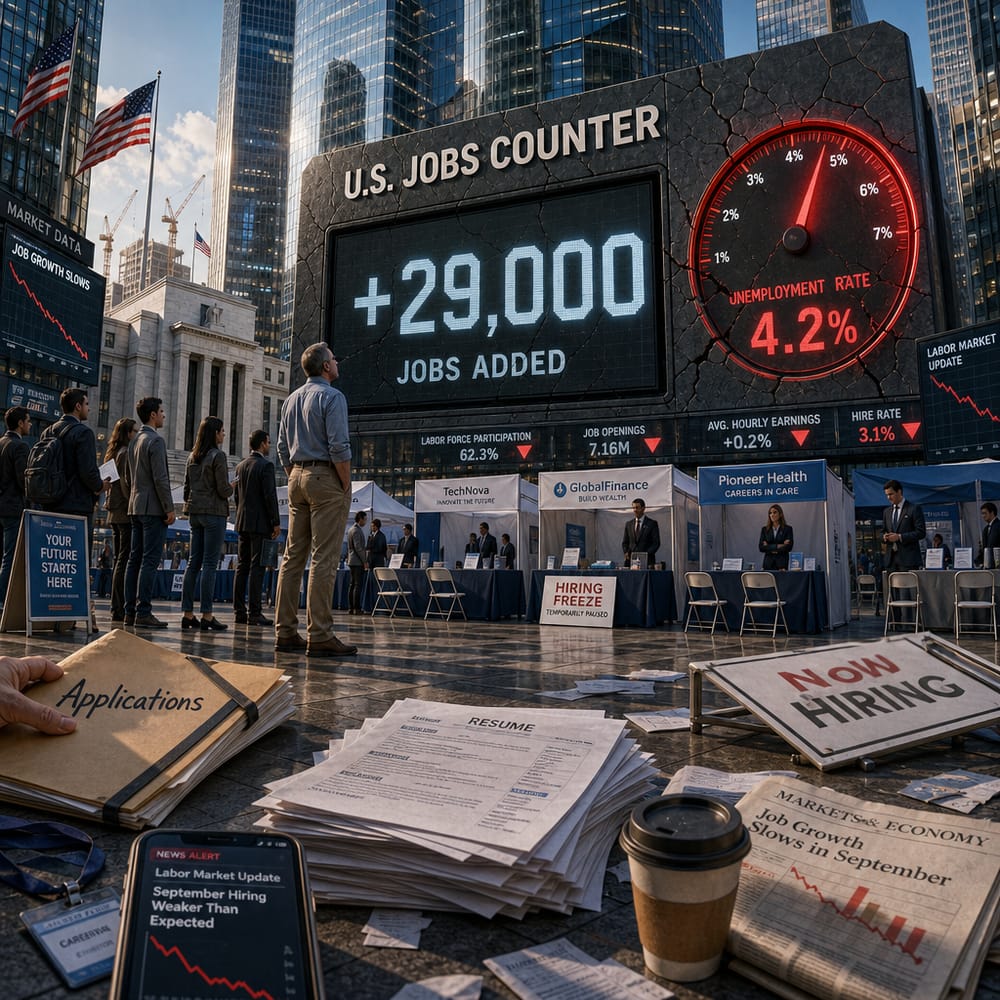
US JOB GROWTH FALLS SHARPLY IN SEPTEMBER: ONLY 29,000 JOBS ADDED, UNEMPLOYMENT RISES TO 4.2%
Did the U.S. job market just hit a speed bump, or are we headed for the automotive equivalent of a flat tire? September’s job growth numbers are in, and they’re about as disappointing as leftovers from last week's office pizza party. With only 29,000 jobs added, the nation’s unemployment rate has ticked up to 4.2%. If you were hoping for a robust labor market to swoon into the holidays, you might want to plan a backup.
For those of us who enjoy a good market drama, this could be the opening scene of a new act. The Federal Reserve is probably clutching its pearls, wondering whether it should ease up on interest rate hikes or prepare for a dance-off with inflation. A slowing labor market could influence their decision, and, let’s be honest, when the Fed sneezes, the economy catches a cold.
HOW THE FED MIGHT PLAY THIS GAME
So, what’s going on, you ask? The Fed has been raising interest rates like they're going out of style, all in a valiant attempt to tame inflation. But with job growth crawling and unemployment inching up, they might need to rethink their strategy. Imagine trying to run a marathon while juggling—it's all about balance. And that's what the Fed needs right now: a delicate balance between curbing inflation and not stalling the economy.
The Fed’s next move could be critical. Will they pause their rate hikes to give the economy some breathing room, or will they go all-in on their inflation-fighting crusade? The suspense is more intense than the latest streaming docuseries.
MIDTERM POLITICAL DRAMA
As if the Fed didn’t have enough on its plate, there’s also a little thing called the midterms coming up. With Americans’ confidence in the economy looking more dodgy than an expired carton of milk, the job numbers could be a political hot potato.
Candidates from both sides of the aisle are likely scrambling to adjust their talking points. Democrats may need to explain why the job market isn't firing on all cylinders, while Republicans might use these figures to hammer home calls for economic reform. Either way, it’s a political chess game, and every move counts.
INDUSTRY WINNERS AND LOSERS
Now, let’s talk about which industries are holding up like champs and which ones are lagging behind. Some sectors are still chugging along like a well-oiled machine. The healthcare and tech sectors remain relatively robust, consistently adding jobs even when others are faltering. Health services are in high demand—thanks, aging population—and tech never sleeps, thanks to our insatiable appetite for gadgets and gizmos.
On the flip side, manufacturing and retail are having a less-than-stellar performance. Manufacturing has been hit by supply chain issues and global economic uncertainties that hang around like an unwanted guest. Meanwhile, retail is taking a gut punch from a combo of rising costs and cautious consumer spending. It’s not quite as dire as a 'Closing Sale' sign, but it's a real worry.
WHAT TO WATCH NEXT
So, where does this leave the everyday retail investor? While the job numbers might seem like a bummer, they’re an indicator—not the whole story. Keep an eye on the Fed’s next moves, as that will likely ripple through the markets.
And with the midterms on the horizon, expect rhetoric to swirl like autumn leaves. Watch for industries that are managing to stay afloat; they might be your safest port in this economic storm.
In the meantime, let's hope the labor market catches a second wind soon. Otherwise, we might all have to settle for more pizza and tap water at the next office party.
This article is for informational purposes only and is not investment advice. Always do your own research or consult a licensed financial professional before making investment decisions.
© Copyright 2024. All Rights Reserved.
© Copyright 2024. All Rights Reserved.