

U.S.–Japan Coordinated FX Intervention Signals Informal Currency Alliance
Saturday, August 22, 2026
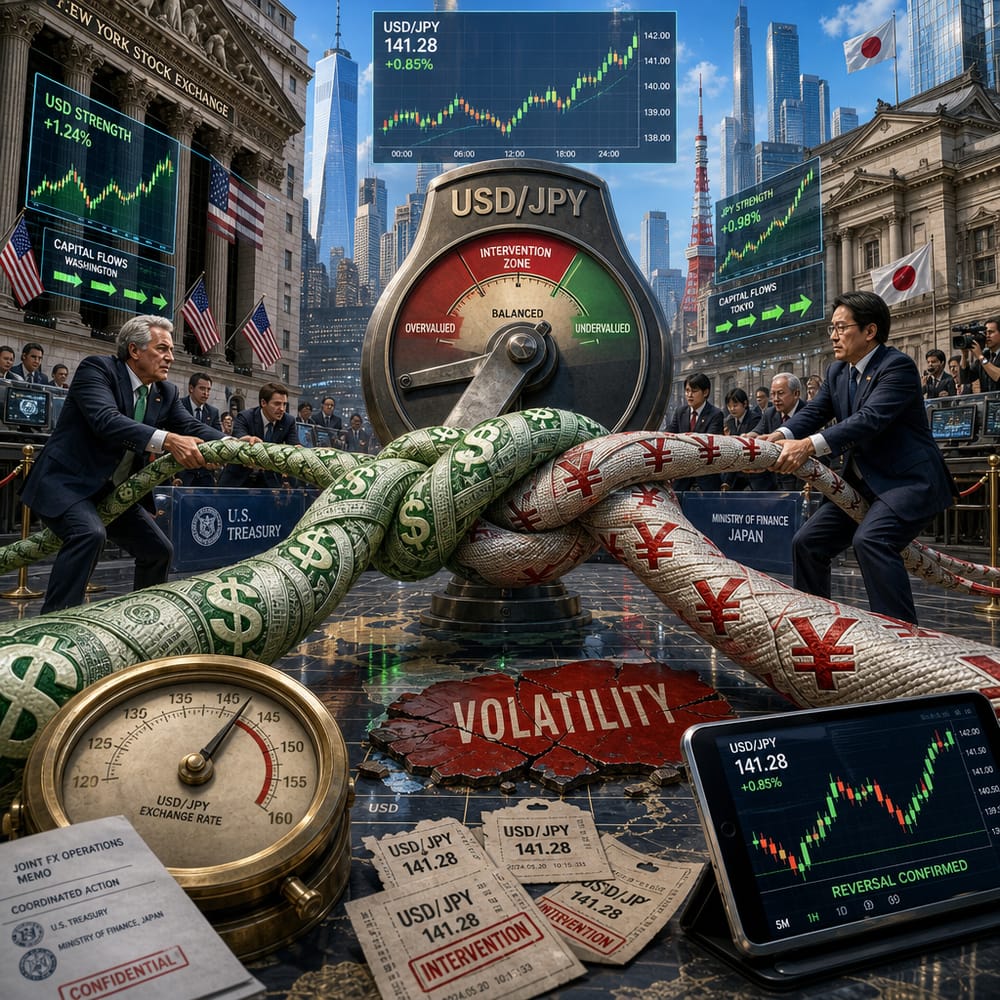
U.S.–JAPAN COORDINATED FX INTERVENTION SIGNALS INFORMAL CURRENCY ALLIANCE
In the world of global finance, a coordinated currency intervention is like spotting a unicorn grazing on Wall Street. Rare, unexpected, and a spectacle that makes even the most seasoned traders sit up and pay attention. So when whispers emerged about the U.S. and Japan joining forces on a foreign exchange intervention, the financial world didn't just perk its ears—it reached for the popcorn.
Let's dive into this intriguing drama. At the heart of the story is the USD/JPY exchange rate, the financial heartbeat that pulses between two of the world's largest economies. Recently, Japan's yen has been lounging in the corner like a tired party guest, while the U.S. dollar has been strutting its stuff with all the confidence of a Wall Street wolf. A lopsided exchange rate like that can wreak havoc on trade and economic balance.
But why exactly are Uncle Sam and the Land of the Rising Sun teaming up? You see, when one country's currency starts doing somersaults while the other is stuck doing the cha-cha, it can create economic friction. Enter: the intervention. By acting in concert, the U.S. and Japan can inject a bit of balance back into the currency markets—like tag-team wrestlers taking down the beast of economic disparity.
The specifics of this intervention, while shrouded in the usual veils of central bank secrecy, likely involved coordinated buying and selling to push the yen up and the dollar down—or at least nudge them back into a more manageable rhythm. It’s the kind of behind-the-scenes maneuvering that makes you wonder if these central bankers moonlight as synchronized swimmers.
So, how did the currency markets react to this surprise duet? Initially, traders were caught in a flurry of excitement, as they always are when major players show their cards. The USD/JPY rate shifted, with the yen finding a bit more pep in its step against the dollar. That’s the immediate impact—a quick shimmy on the exchange rate dance floor. But it's the long-term choreography that investors are really watching.
The potential impacts on the USD/JPY exchange rate are multi-layered. First, there's the psychological boost to the yen. Knowing that both the U.S. and Japan are willing to step in can deter speculators from making overly aggressive bets against the yen. It’s like having big brothers with deep wallets standing by your side in the schoolyard.
More importantly, this move could signal an informal currency alliance between the two nations, potentially reshaping how they approach future economic challenges together. If they can coordinate on currency, what's stopping them from teaming up on other economic fronts? This could influence not just bilateral trade policies but also send ripples across global central bank strategies.
For investors, this intervention is a stark reminder of the power central banks wield over currency markets—and by extension, global trade. It's a cue to watch how other central banks might react. Could we see more coordinated moves from other economic pairs? Or will this be a one-time symphony, a rare performance that leaves the audience wanting more?
In the long run, sustained moves from both countries to keep their currencies in check could foster greater economic stability, making it less likely for sudden spikes or drops that can upset global commerce. But that's all assuming that the coordination continues and isn’t just a one-off fling.
In sum, the U.S.-Japan currency intervention is a financial ballet, one that could set the stage for new central bank relationships and strategies. For now, the traders will watch and the markets will dance, waiting to see what the next step will be in this global pas de deux. Whether it's the dawn of a new economic alliance or simply a temporary fix, only time—and perhaps a few more interventions—will tell.
This article is for informational purposes only and is not investment advice. Always do your own research or consult a licensed financial professional before making investment decisions.
© Copyright 2024. All Rights Reserved.
© Copyright 2024. All Rights Reserved.