

U.S.–Japan Coordinated FX Intervention Shakes up USD/JPY: Immediate Impact and Broader Implications
Tuesday, August 11, 2026
U.S.–Japan Coordinated FX Intervention Shakes up USD/JPY: Immediate Impact and Broader Implications
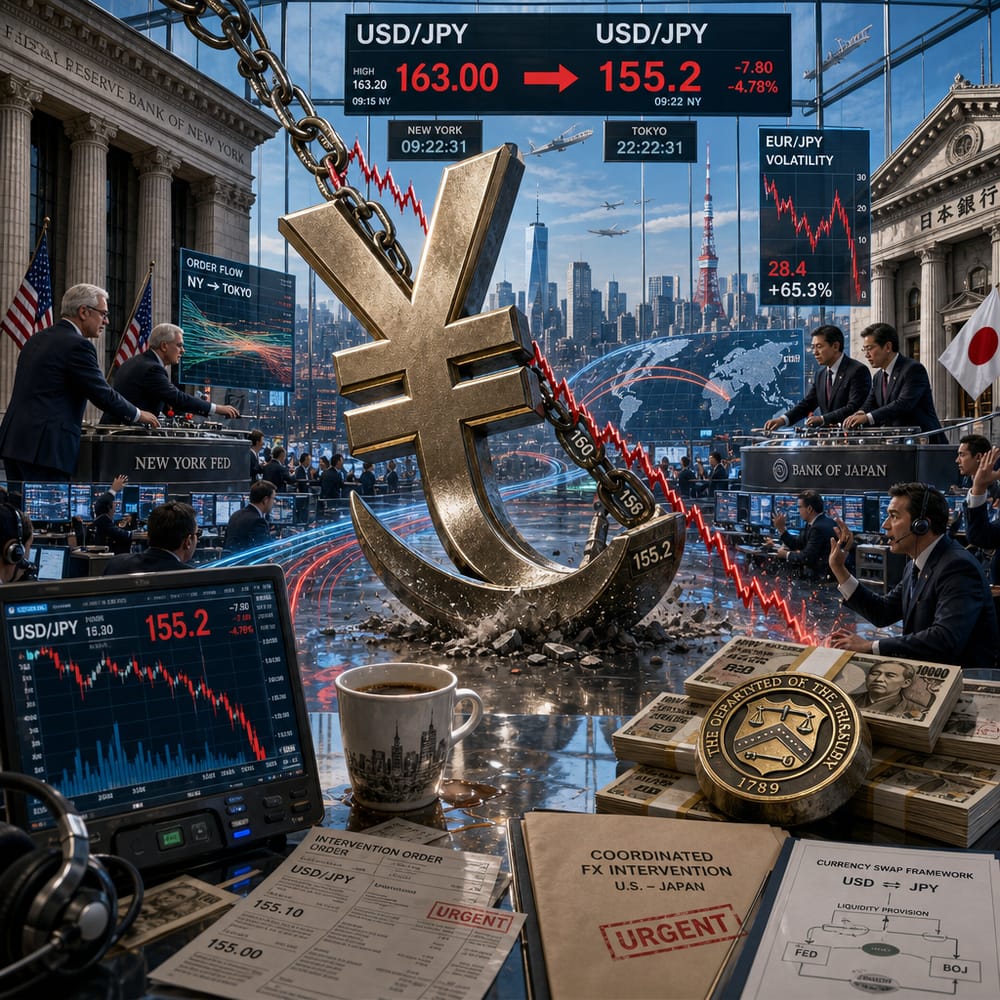
If you were cruising through your financial news feed on August 3 and noticed the USD/JPY exchange rate plunge faster than your enthusiasm for kale smoothies, you're not alone. In a dramatic turn of events, the United States and Japan teamed up like financial Avengers to shake the forex world with a coordinated intervention. The New York Fed was out there swinging, selling euros to buy yen, pulling the USD/JPY rate down from a dizzying ¥163 to a more grounded ¥155.2. But why the sudden alliance, and what does it mean for your wallet and the world economy?
First, let's get right to the big question: what prompted this intervention? In two words: economic stability. With inflation giving investors sweaty palms and the global economy playing a game of "Will they, won't they?" with recovery, currency stability is not just a luxury; it's a necessity. When the USD/JPY flies high, Japanese exports become pricier abroad, crimping profits for some of Japan's biggest players. Meanwhile, a strong dollar can be kryptonite to emerging markets struggling with dollar-denominated debt.
Historically, coordinated interventions in the forex market are about as common as unicorn sightings. They typically happen only when things are spiraling out of control, and the authorities decide it's time to step in with their financial fire extinguishers. By joining forces, the U.S. and Japan aimed to send a clear message: they're not going to sit back and watch as erratic currency moves mess with their economic plans.
But how effective are these interventions, really? The record is mixed. While they can certainly provide a short-term jolt — as seen in the sharp drop in the USD/JPY rate — their long-term effectiveness is akin to a sugar rush: thrilling at first, but potentially short-lived. Traders have short memories, and without persistent follow-up actions, they might just revert to old habits, pushing the exchange rate back up.
On the flip side, interventions can help mitigate volatility, providing a smoother ride for businesses planning their hedging strategies and making international trade decisions. However, the risk is that if interventions are poorly timed or lack coherence with broader monetary policy, they could sow confusion rather than calm.
The strategic benefits are significant, though. For Japan, a stronger yen helps curb imported inflation – a crucial win in today's high-cost environment. For the U.S., displaying a willingness to step in shows its commitment to global economic stability, a reassurance to allies and traders alike.
Of course, this kind of high-stakes financial chess comes with its own set of risks. Currency interventions can lead to retaliation or competitive devaluations from other countries looking to protect their own economic interests. Plus, there's always the danger of becoming too reliant on such measures, potentially stunting more sustainable fiscal or monetary policy interventions.
So, what does this mean for your investment portfolios? Well, if you’re dabbling in forex trading, the USD/JPY and EUR/JPY pairs just got a whole lot more interesting, and volatile. If you’re a general investor, the ripple effects could influence everything from the cost of goods to interest rates, depending on how the situation develops.
In the grand scheme, interventions like this underscore one key theme: the interconnectedness of global markets. Whether you're investing in Japanese electronics or trading in euro-denominated assets, actions taken in Tokyo and New York can shape the playing field, seemingly overnight.
This episode raises a crucial point: Money makes the world move, but sometimes it needs a little nudge in the right direction. As the global economy continues to grapple with inflation and geopolitical tensions, expect more dynamic moves from central banks trying to keep the ship steady amidst the storm.
So, keep your economic radar on high alert. Whether this intervention is a temporary patch or a harbinger of more coordinated efforts, one thing is clear – the currency game just got a whole lot more exciting. And in today's wild economic landscape, that's not something you want to miss.
This article is for informational purposes only and is not investment advice. Always do your own research or consult a licensed financial professional before making investment decisions.
© Copyright 2024. All Rights Reserved.
© Copyright 2024. All Rights Reserved.