

U.S.-Iran Tensions Escalate with Missile Targeting Incident
Saturday, August 08, 2026
THE STRAIT SHOOTER: U.S.-IRAN TENSIONS AND WHAT THEY MEAN FOR YOUR WALLET
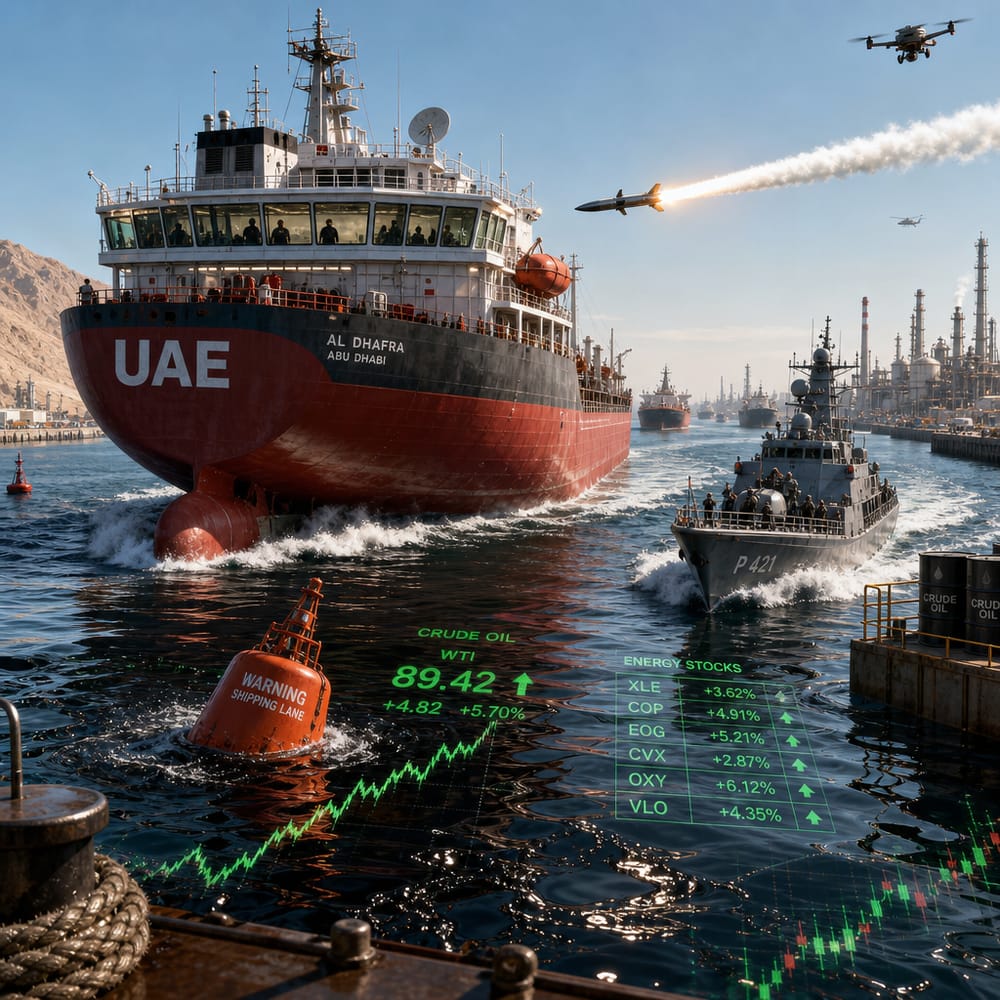
Imagine a missile soaring over the open ocean like a bad omen, aiming for a UAE ship transiting the Strait of Hormuz. At the same time, the global markets, like a bunch of anxious meerkats, are on high alert. This isn't the setup for the latest Hollywood blockbuster — it’s real, and it might just shake up the contents of your wallet.
The Strait of Hormuz is no ordinary puddle; it's the jugular vein of the global oil supply. Picture this: around 20% of the world’s petroleum flows through this narrow waterway. So, when tensions between the U.S. and Iran bubble over, markets don't just sit there sipping tea. They freak out.
In the wee hours of Saturday morning, a missile targeted a UAE ship in this crucial chokepoint. While there were no injuries, and the situation is reportedly under control, the jitters in the market are anything but. With Iran hinting that the waterway will remain a pressure point until the U.S. starts playing nice, investors are left with sweaty palms and a single burning question: What happens next?
THE MARKET'S KNEE-JERK REACTION
The immediate market reaction was predictably—volatile. Oil prices, those slippery devils, climbed almost faster than your favorite meme stock. The fear is palpable: any disruption in the Strait can lead to oil scarcity, shooting prices through the roof like a rocket on takeoff. And when oil prices spike, energy stocks are sure to follow, throwing the energy sector into a bit of a tizzy.
But it’s not just about oil. This kind of geopolitical shakeup ripples through the financial world. Investors, spooked by the potential for escalating conflict, might start pulling money out of riskier assets and seek the safe haven of government bonds. This could lead to broader market instability, affecting your portfolio even if you’ve never invested in a drop of crude.
OIL PRICES: THE HIGHWAY TO... WELL, HIGHER PRICES
So, how high could oil prices go? Well, that's the million-dollar question. If Iran makes good on its threats and further constricts the Strait, prices could skyrocket. We're talking about the kind of increases that make you wince at the gas pump.
But let’s not count our chickens before they hatch. The market loves to speculate, and while prices might climb, they’re also prone to evening out once the initial shock wears off. Unless, of course, the situation escalates.
The energy stocks you have in your portfolio could see some short-term gains as oil prices rise. But remember, friend: what goes up must come down. The energy sector has always been a rollercoaster, and those not strapped in might get thrown off.
GEOPOLITICAL RAMIFICATIONS: MORE THAN JUST A PETROL PROBLEM
Beyond the dollars and cents, the geopolitical ramifications are like a tangled ball of yarn. The U.S. and Iran have had a rocky relationship for, well, almost as long as Mick Jagger's been shaking his hips. This incident could be the fuse that lights up further diplomatic fireworks.
Regional alliances might be tested, and international relations could shift like sand in a desert storm. The U.S. response to this incident will be crucial. Will they tighten sanctions further? Deploy more naval forces? Or pursue a diplomatic avenue that keeps everyone at the table? Each choice could have an entirely different fallout.
YOUR NEXT MOVE
So, what should you, the savvy investor, do? Think of your investment strategy as a ship navigating choppy waters. You can’t control the storm, but you can steer the wheel.
Consider diversifying your portfolio. Don’t keep all your eggs in the energy basket — spread them out across sectors less swayed by geopolitical tumult. Keep an eye on oil prices if you're heavily invested in energy stocks, and be ready to adjust your holdings if the market starts to look more unstable than a house of cards in a hurricane.
And, while you’re at it, maybe stash some extra cash in a high-yield savings account. It’s like having a lifeboat ready when the Titanic hits an iceberg.
In these unpredictable times, staying informed is your best defense. As tensions ebb and flow, the markets will follow suit. So keep a sharp eye and a steady hand. The Strait of Hormuz may be a world away, but its ripple effects are closer to home than we might like.
This article is for informational purposes only and is not investment advice. Always do your own research or consult a licensed financial professional before making investment decisions.
© Copyright 2024. All Rights Reserved.
© Copyright 2024. All Rights Reserved.